
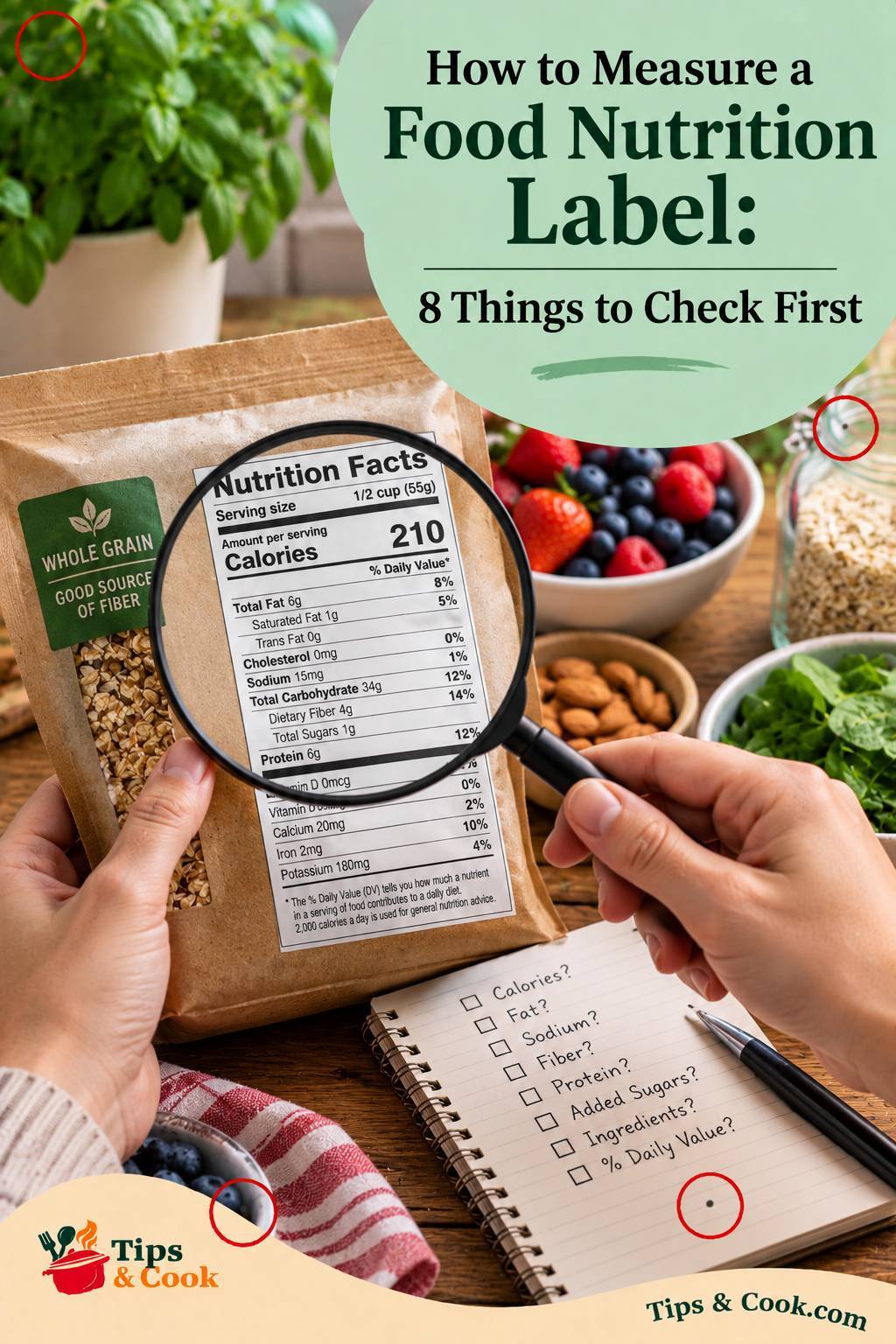
Measure a Food Nutrition Label
Understanding a food nutrition label can help you make better choices about what you eat. But nutrition labels contain several numbers, percentages, and serving measurements that can be confusing at first. Learning how to measure a food nutrition label starts with knowing which information matters most.
You do not need to calculate every number on the package. Instead, focus on the serving size, calories, nutrients, added sugars, sodium, fiber, and % Daily Value. Here are 8 things to check first when reading a nutrition label.
1. Check the Serving Size
The first thing to look at is the serving size. It tells you how much of the food the nutrition information applies to.
For example, a package may contain 2 cups of a snack, while the serving size is only 1 cup. If you eat the entire package, you may be consuming twice the calories and nutrients listed on the label.
Serving sizes can be shown in familiar measurements such as:
- Cups
- Tablespoons
- Pieces
- Grams
- Milliliters
Always compare the amount you actually eat with the serving size listed on the package.
2. Look at the Number of Servings
Next, check how many servings are in the entire package. This is especially important for foods that look like they contain only one serving.
If a package contains 3 servings and you eat the whole package, you need to multiply the listed calories and nutrients by three.
For example, if one serving contains 200 calories:
200 calories × 3 servings = 600 calories
This simple calculation can prevent you from underestimating how much you have eaten.
3. Check the Calories
Calories indicate how much energy you get from a serving of food.
When comparing similar products, calories can help you understand which option provides more or less energy per serving. However, calories should not be considered by themselves.
A food with more calories may also provide useful nutrients such as protein, fiber, vitamins, or minerals. Therefore, use calories together with the rest of the nutrition label.
Also remember that the calorie number usually applies to one serving, not necessarily the entire package.
4. Check Total Fat and Saturated Fat
The nutrition label usually lists total fat along with specific types of fat.
Pay particular attention to saturated fat. Eating too much saturated fat can make it harder to maintain a heart-healthy eating pattern.
You may also see trans fat listed separately. When comparing foods, look for options that fit your overall dietary needs rather than focusing on total fat alone.
The type of fat matters, not just the number of grams.
5. Look at Added Sugars
The amount of sugar on a label can be easier to understand when you distinguish between total sugars and added sugars.
Total sugars include naturally occurring sugars as well as sugars added during processing. Added sugars are those added to the food during manufacturing or preparation.
For example, plain milk naturally contains sugar, while a sweetened flavored product may contain both naturally occurring and added sugars.
Checking added sugars is particularly useful when comparing:
- Breakfast cereals
- Yogurt
- Snack bars
- Sauces
- Sweetened drinks
- Packaged desserts
A lower amount of added sugar can be a useful factor when choosing between similar products.
6. Check Sodium
Sodium is another important number to check, especially when comparing packaged and processed foods.
Common sources of dietary sodium include:
- Canned soups
- Processed meats
- Sauces
- Instant noodles
- Packaged snacks
- Frozen meals
Two foods can have similar calories but very different amounts of sodium. Comparing the sodium values can therefore help you make a more informed choice.
If you eat several servings, remember to account for each serving rather than looking only at the number printed on the label.
7. Look for Dietary Fiber and Protein
Not all parts of a nutrition label are about nutrients you may want to limit. Dietary fiber and protein can also be useful when comparing foods.
Fiber is found in foods such as whole grains, beans, fruits, vegetables, nuts, and seeds. Protein can come from foods such as meat, fish, eggs, dairy products, beans, lentils, nuts, and other foods.
When comparing two similar products, a food with more fiber or protein may better fit your nutritional goals, depending on your individual diet.
For example, when choosing between breakfast cereals, checking both fiber and protein can give you more information than comparing calories alone.
8. Understand the % Daily Value
The % Daily Value (%DV) shows how much a nutrient in one serving contributes to a general daily diet based on the Daily Value used on the nutrition label.
It can make comparing products easier.
As a general guide, a lower %DV means the food provides less of that nutrient per serving, while a higher %DV means it provides more.
For nutrients such as sodium, saturated fat, and added sugars, you may generally want to avoid consuming excessive amounts. For nutrients such as fiber, a higher amount can be useful as part of a balanced diet.
However, %DV is not a personalized recommendation. Your nutritional needs may differ depending on factors such as age, activity level, health conditions, and overall diet.
How to Compare Two Nutrition Labels
Once you know what to check, comparing two products becomes much easier.
Start by making sure their serving sizes are similar. Then compare:
- Calories
- Total fat
- Saturated fat
- Sodium
- Added sugars
- Dietary fiber
- Protein
- % Daily Value
For example, suppose you are choosing between two breakfast cereals. One may have fewer calories but significantly less fiber and protein. Another may contain slightly more calories but provide more fiber and protein.
Looking at the complete label gives you a better picture than choosing a product based on calories alone.
A Simple Nutrition Label Checklist
Before buying or eating a packaged food, quickly ask:
What is one serving?
How many servings are in the package?
How many calories are in my actual portion?
How much saturated fat and sodium does it contain?
How much added sugar is included?
Does it provide useful amounts of fiber or protein?
What does the % Daily Value tell me?
These questions can help you understand a nutrition label without needing complicated calculations.
Conclusion
Learning how to measure a food nutrition label is mainly about understanding serving sizes and comparing the nutrients that matter most. Start with the serving size and number of servings, then check calories, fats, added sugars, sodium, fiber, protein, and % Daily Value.
Remember that no single number tells you whether a food is healthy or unhealthy. Consider the entire nutrition label, the type of food, your portion size, and how the food fits into your overall eating pattern.
With a little practice, reading nutrition labels can become a quick and useful part of grocery shopping and meal planning.