
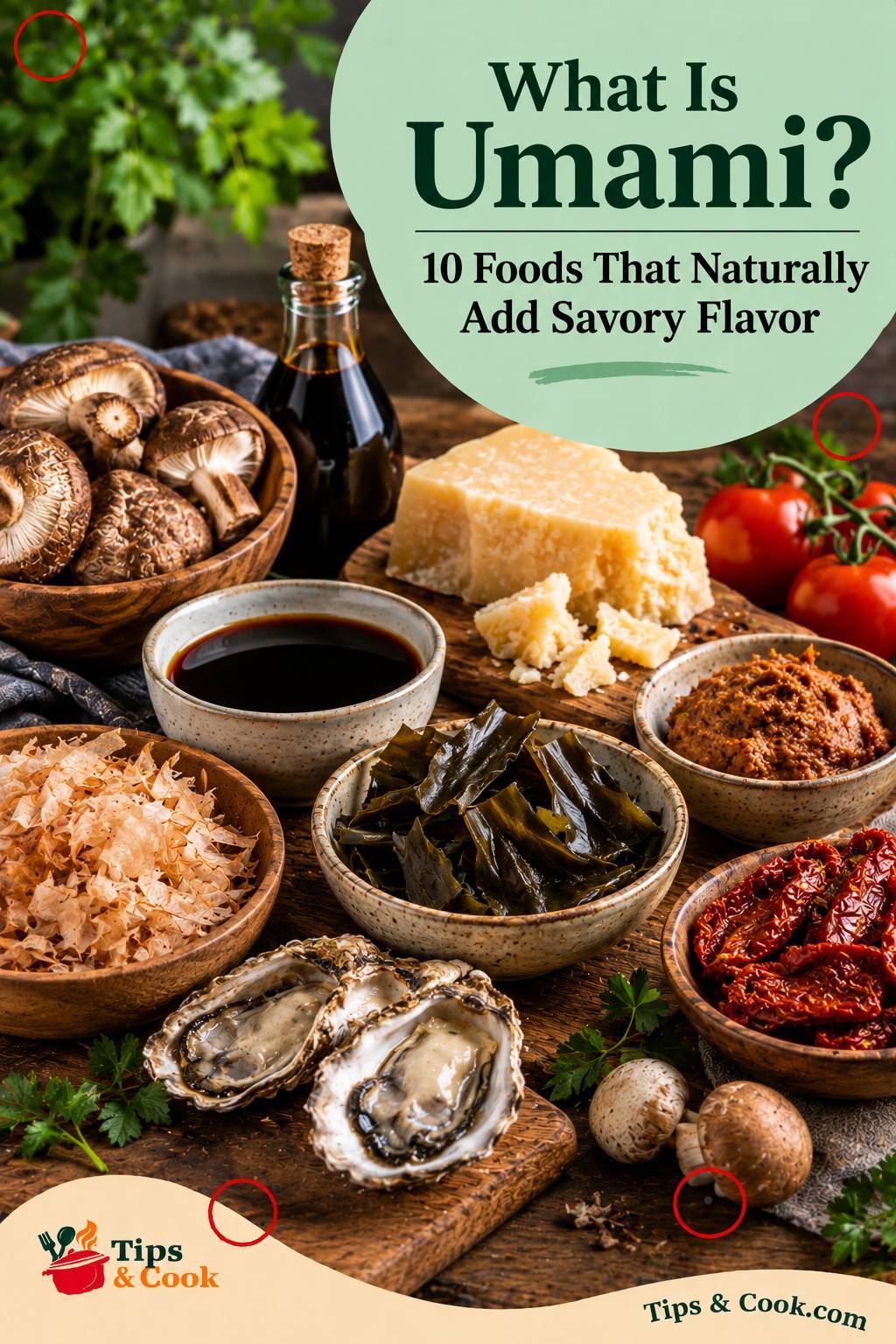
Have you ever eaten a bowl of soup, a mushroom dish, or a piece of aged cheese and noticed a deep, satisfying flavor that is difficult to describe? That rich, savory taste is called umami.
Umami is one of the five basic tastes, along with sweet, sour, salty, and bitter. It is often described as savory, meaty, brothy, or deeply satisfying. Many foods naturally contain compounds that create umami flavor, making them useful for adding more depth to meals without simply adding more salt.
What Is Umami?
Umami is a savory taste produced mainly by naturally occurring glutamate and related compounds in food.
The word “umami” comes from Japanese and is commonly translated as “pleasant savory taste.” Unlike a specific flavor such as garlic or tomato, umami describes a taste sensation.
Umami can make food taste fuller and more rounded. It is commonly found in foods such as tomatoes, mushrooms, aged cheese, fermented foods, meat, seafood, and certain vegetables.
The taste is often especially noticeable in foods that have been aged, fermented, dried, cooked, or otherwise concentrated.
How Does Umami Taste?
Umami is difficult to describe with one word because it is different from the other basic tastes.
It can taste:
- Savory
- Brothy
- Meaty
- Rich
- Full-bodied
- Satisfying
For example, plain cooked mushrooms may have a mild flavor, but sautéing them can create a deeper, more savory taste. Similarly, simmering ingredients in a soup or sauce can concentrate their natural umami compounds.
Umami does not necessarily make food salty. Instead, it can add depth and make other flavors seem more balanced.
10 Foods That Naturally Add Umami Flavor
You do not need specialty ingredients to add umami to your meals. Many everyday foods are naturally rich in savory flavor.
1. Tomatoes
Tomatoes are a convenient source of natural umami. Fresh tomatoes contain glutamate, while cooking tomatoes can concentrate their flavor.
Tomato paste is particularly useful when you want to add intense savory depth to soups, sauces, stews, and pasta dishes.
Try it: Add a small amount of tomato paste to a soup or vegetable sauce.
2. Mushrooms
Mushrooms are well known for their earthy, savory flavor. Some varieties, particularly dried mushrooms, can provide a concentrated umami taste.
Dried mushrooms can be soaked and added to soups, sauces, rice dishes, and stir-fries.
Try it: Sauté mushrooms until they become golden brown before adding them to a meal.
3. Parmesan Cheese
Parmesan and other aged cheeses can provide a strong umami character. Aging allows flavor compounds to develop, giving these cheeses a complex and savory taste.
A little grated Parmesan can add depth to pasta, soups, salads, roasted vegetables, and risotto.
Try it: Sprinkle freshly grated Parmesan over pasta or roasted vegetables.
4. Soy Sauce
Soy sauce is a fermented ingredient commonly used to add salty and savory flavor to food. Its combination of salt and umami makes it particularly effective in small amounts.
It works well in stir-fries, marinades, noodle dishes, soups, and sauces.
Try it: Add a small splash to a vegetable stir-fry for extra depth.
5. Seaweed
Certain types of seaweed naturally contain glutamate and can contribute a noticeable umami taste. Kombu, a type of edible kelp, is traditionally used to create flavorful Japanese broths.
Seaweed can also be added to soups, rice dishes, and other recipes.
Try it: Use kombu when making a broth to build a savory base.
6. Fermented Foods
Fermentation can increase the savory complexity of many foods. Ingredients such as miso, fermented bean products, and some fermented vegetables can provide strong umami notes.
Miso, for example, can be used in soups, sauces, dressings, and marinades.
Try it: Stir a small amount of miso into soup or a warm sauce.
7. Meat
Meat naturally contains compounds associated with umami. Cooking methods can also influence its flavor.
Roasting, grilling, braising, and browning meat can create additional layers of flavor, making dishes taste richer and more satisfying.
Try it: Brown meat well before adding it to a stew or sauce.
8. Fish and Seafood
Fish and seafood can naturally contribute savory flavor to meals. Certain fish are especially useful for creating flavorful broths, sauces, and stocks.
Fish sauce, which is made through fermentation, is another concentrated source of savory flavor.
Try it: Use a small amount of fish sauce in a soup or stir-fry.
9. Green Peas
Green peas may not be the first food you associate with umami, but they naturally contain glutamate and can contribute savory depth to meals.
Fresh or frozen peas can be added to pasta, rice dishes, soups, and vegetable-based recipes.
Try it: Add peas to a creamy pasta or vegetable soup.
10. Broth and Stock
Broth and stock can bring together several sources of umami in one ingredient. Depending on how they are prepared, they may contain vegetables, meat, bones, mushrooms, seaweed, or other flavorful ingredients.
A flavorful stock can serve as the foundation for soups, sauces, gravies, and rice dishes.
Try it: Replace some of the water in a recipe with unsalted or low-sodium stock for more depth.
Why Does Umami Make Food Taste Better?
Umami can make a dish feel more complete and satisfying. When combined with other basic tastes, it can help create a more balanced overall flavor.
For example, tomato sauce may contain sweetness and acidity, while Parmesan contributes saltiness and umami. Together, these flavors create a more complex taste than any one ingredient would provide alone.
This is one reason umami-rich ingredients are useful when cooking simple meals.
How to Add More Umami to Your Cooking
You can increase savory depth without relying on one ingredient. Try combining several umami-rich foods.
For example:
- Add tomato paste to a mushroom sauce.
- Finish pasta with Parmesan cheese.
- Use mushrooms in vegetable soups.
- Add a little soy sauce to stir-fries.
- Cook grains in flavorful stock.
- Add miso to soups or sauces.
- Use dried mushrooms to strengthen broths.
The key is to start with small amounts and taste as you go. Some umami-rich ingredients, such as soy sauce and fish sauce, are also high in sodium.
Is Umami the Same as Salt?
No. Umami and saltiness are different tastes.
Salt produces a salty taste, while umami creates a savory sensation associated with foods containing glutamate and certain related compounds.
However, many umami-rich ingredients are also salty. Soy sauce, Parmesan, miso, and fish sauce are good examples. Using them carefully can provide both saltiness and savory depth.
Conclusion
Umami is the savory taste that gives many foods their rich, satisfying character. It occurs naturally in a wide range of ingredients, including tomatoes, mushrooms, aged cheese, seaweed, fermented foods, meat, seafood, peas, and broth.
Understanding what umami is can make everyday cooking easier because you can use naturally umami-rich ingredients to build flavor and depth. Start with familiar foods such as mushrooms, tomatoes, Parmesan, or stock, and experiment with different combinations until you find the flavors you enjoy.