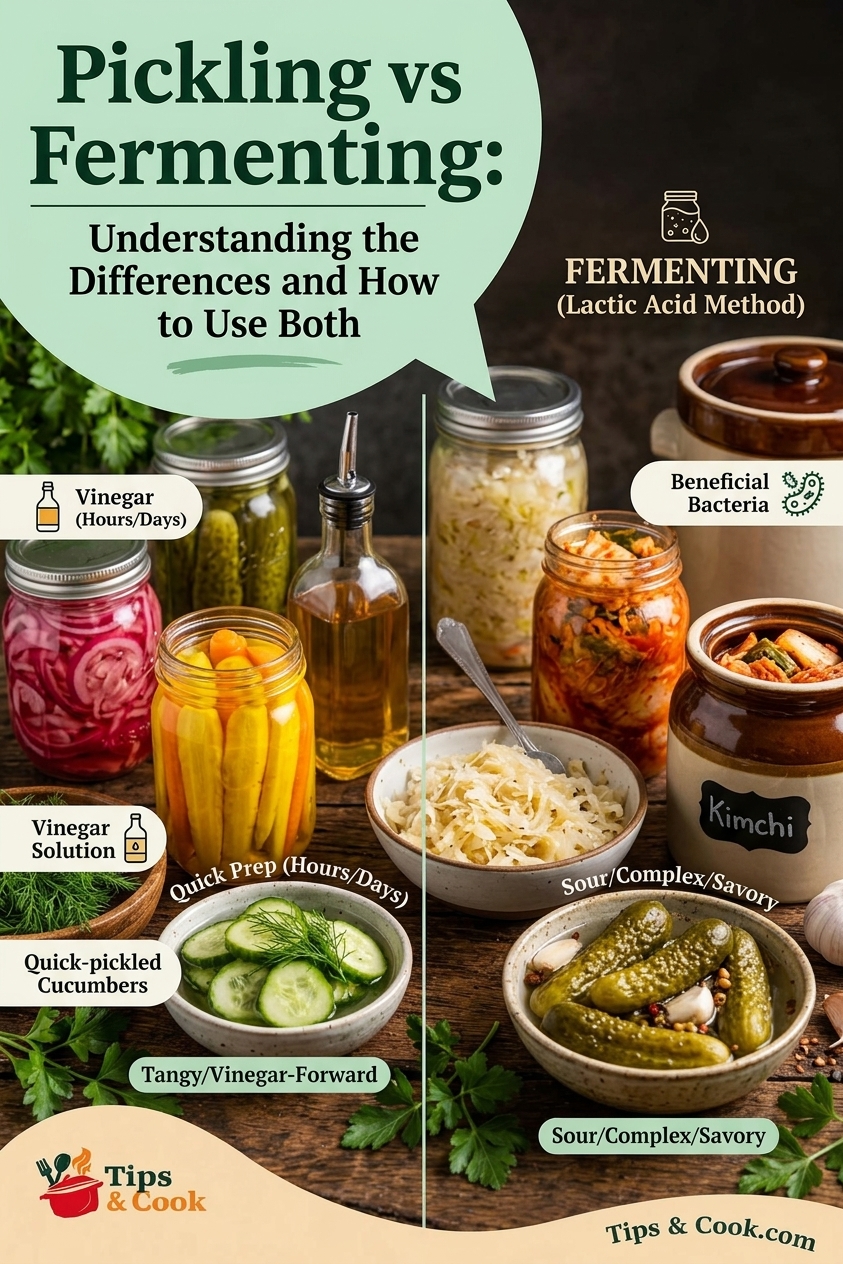
Pickling and fermenting are two popular ways to preserve food, improve flavor, and extend its usability. Although the terms are sometimes used interchangeably, pickling vs fermenting involves different processes. Pickling often uses an acidic liquid such as vinegar, while fermentation relies on beneficial microorganisms that convert sugars into acids and other compounds.
Both methods can produce tangy, flavorful foods, but they differ in ingredients, preparation time, taste, and how the food becomes acidic. Understanding these differences can help you choose the right method for vegetables, fruits, and other foods.
What Is Pickling?
Pickling is a food preservation method that uses an acidic solution, usually vinegar, or another process that creates acidity. Vinegar pickling is a common method for preserving cucumbers, onions, carrots, and other vegetables.
In a typical vinegar-pickling process, vegetables are placed in a prepared solution containing vinegar, water, salt, and sometimes sugar or spices. The acidity helps prevent the growth of many harmful microorganisms when the recipe and storage instructions are followed correctly.
Common examples include:
- Vinegar-pickled cucumbers
- Pickled red onions
- Pickled carrots
- Pickled beets
- Pickled jalapeños
Vinegar-pickled vegetables can develop a tangy flavor relatively quickly. Some quick-pickled recipes are ready within hours, although the flavor often improves after refrigeration for a longer period.
Not all pickled foods are made with vinegar. Some are preserved through fermentation, which is why the two methods can overlap.
What Is Fermenting?
Fermentation is a process in which microorganisms, such as bacteria or yeast, transform sugars and other compounds in food. In vegetable fermentation, lactic acid bacteria commonly convert available sugars into lactic acid, creating the characteristic sour flavor.
For example, cucumbers can ferment in a saltwater brine, while cabbage can ferment to produce sauerkraut.
Common fermented foods include:
- Sauerkraut
- Traditional fermented dill pickles
- Kimchi
- Fermented carrots
- Fermented radishes
Unlike a typical vinegar-pickling recipe, vegetable fermentation depends on microbial activity. Salt concentration, temperature, time, and the condition of the ingredients can affect the result.
Fermentation generally takes days or weeks rather than just a few hours. The food becomes acidic as fermentation progresses, but the process must be controlled to produce a safe result.
Pickling vs Fermenting: Key Differences
The main difference is how acidity develops and how the food is preserved.
| Feature | Vinegar Pickling | Fermenting |
| Main process | Food is placed in an acidic solution | Microorganisms transform sugars into acids and other compounds |
| Typical acid source | Vinegar | Acids produced during fermentation |
| Main ingredients | Vinegar, water, vegetables, salt, and optional seasonings | Vegetables, salt, and sometimes water |
| Preparation time | Often hours to a few days for refrigerated quick pickles | Usually several days to weeks |
| Flavor | Tangy, often sharp and vinegar-forward | Sour, complex, and sometimes savory |
| Texture | Often crisp when properly prepared | Can remain crisp but may soften during fermentation |
| Microbial activity | Vinegar provides acidity; fermentation is not required | Microbial activity is essential |
| Examples | Vinegar-pickled onions and cucumbers | Sauerkraut, kimchi, and fermented cucumbers |
These comparisons describe common methods. Exact preparation times, textures, and storage requirements depend on the recipe.
1. How the Preservation Process Works
Vinegar pickling relies on an acidic liquid to create conditions that inhibit many harmful microorganisms. For refrigerator pickles, the prepared vegetables are kept refrigerated, and the recipe should specify appropriate storage and use.
Fermentation works differently. Beneficial microorganisms consume available sugars and produce acids that gradually lower the food’s pH. Salt helps create favorable conditions for the desired fermentation while discouraging many unwanted microorganisms.
Neither method makes every recipe automatically safe. For shelf-stable pickled foods, use a tested canning recipe and follow its processing instructions. For fermented vegetables, follow a reliable fermentation recipe, including its salt concentration, temperature, and fermentation guidance.
2. Differences in Taste and Texture
Vinegar-pickled foods usually have a distinct, immediate tang. Depending on the recipe, they may taste sweet, spicy, or strongly acidic.
Fermented vegetables often have a more layered flavor. The acids and other compounds created during fermentation can contribute sour, savory, and sometimes slightly funky notes.
Texture also varies. Fresh vegetables, appropriate salt concentrations, and correct preparation can help maintain crispness in either method. Fermented vegetables may soften over time, especially if fermented at warmer temperatures or stored improperly.
For example, vinegar-pickled red onions offer a sharp, bright flavor that works well in tacos and sandwiches. Fermented cabbage develops the characteristic sourness and complexity of sauerkraut.
3. Which Method Takes Less Time?
Vinegar pickling is generally faster when making quick refrigerator pickles. Some recipes need only a few hours before serving, while others benefit from sitting overnight.
Fermentation takes longer because microorganisms need time to transform the food. Depending on the vegetable, temperature, salt concentration, and desired flavor, fermentation may take several days or longer.
Choose vinegar pickling when you want a quick, tangy topping. Choose fermentation when you want the distinctive flavor produced by microbial activity and are prepared to follow a controlled process.
4. Are Pickled and Fermented Foods Equally Healthy?
Both pickled and fermented vegetables can contribute to a varied diet, but their nutritional properties differ by ingredient and preparation method.
Vegetables may retain useful nutrients after either process. However, heating, storage, acidity, and fermentation can change particular nutrients.
Some fermented foods contain live microorganisms when they have not been pasteurized or otherwise processed to eliminate them. However, not every fermented food contains live cultures at the time you eat it, and fermented foods should not automatically be described as probiotics without evidence that they meet the relevant criteria.
Vinegar-pickled vegetables are not necessarily fermented and therefore do not necessarily contain fermentation-derived live cultures.
Also check sodium content. Both methods can involve significant amounts of salt, depending on the recipe. Sweetened pickles may contain added sugar as well.
5. When Should You Choose Pickling or Fermenting?
The best method depends on the food you are preparing, the flavor you prefer, and how you plan to store it.
Choose vinegar pickling when:
- You want a quick, sharp, tangy flavor.
- You are making refrigerator pickles or pickled onions.
- You want to control the acidity and seasoning of a tested recipe.
- You need a simple topping for burgers, salads, or sandwiches.
Choose fermentation when:
- You want the distinctive flavor of fermented vegetables.
- You are making foods such as sauerkraut or kimchi.
- You have time to allow microbial activity to develop.
- You can follow a reliable recipe and maintain suitable fermentation conditions.
For either method, use clean equipment and follow appropriate food-safety and storage guidance. Do not assume that a homemade recipe is shelf-stable simply because it tastes sour.
6. Can Pickling and Fermenting Be Used Together?
Yes. The terms overlap because fermentation is one method of producing pickled foods.
For example, cucumbers can be preserved by adding vinegar or by fermenting them in a saltwater brine. Both may be called pickles, but their preparation methods and flavors are different.
A fermented product may also undergo additional processing, such as pasteurization or packaging in an acidic brine. This can change its live-culture content and storage requirements.
When comparing two products, check the ingredient list and preparation method rather than relying only on the word pickled on the label.
Frequently Asked Questions
Is pickling the same as fermenting?
No. Vinegar pickling uses an acidic solution to preserve food, while fermentation uses microorganisms to transform sugars and produce acids. Some pickled foods are fermented, so the methods can overlap.
Are fermented pickles better than vinegar pickles?
Neither method is universally better. Fermented pickles offer flavors created by microbial activity, while vinegar pickles provide a sharper vinegar-based taste. The better choice depends on your preferences, recipe, and dietary needs.
Do all pickles contain probiotics?
No. Many commercial and homemade vinegar pickles are not fermented. Even fermented pickles may not contain live microorganisms after pasteurization or other processing.
How long does pickling take compared with fermentation?
Quick refrigerator pickles may be ready in a few hours, although many benefit from additional time. Vegetable fermentation often takes several days to weeks, depending on the recipe and conditions.
Can I ferment vegetables using vinegar?
Traditional vegetable fermentation generally relies on microorganisms and does not require vinegar. Adding vinegar changes the acidity of the mixture and may interfere with the intended fermentation process. Follow a recipe specifically developed for the method you want to use.
Conclusion
The main difference between pickling vs fermenting is how the food becomes acidic. Vinegar pickling uses an acidic solution, while fermentation relies on microorganisms that produce acids during the process.
Both methods offer useful ways to prepare flavorful vegetables. Vinegar pickling is convenient for quick, tangy results, while fermentation produces distinctive flavors through microbial activity. Choose the method that suits your recipe, and always follow tested preparation and storage instructions for food safety.