Semolina is a versatile ingredient made from durum wheat and is commonly used in pasta, bread, desserts, and breakfast dishes. But did you know that there are different types of semolina, and each one works better for certain recipes?
Understanding the differences can help you choose the right semolina for cooking and baking. From fine semolina for desserts to coarser varieties for pasta, each type has unique characteristics.
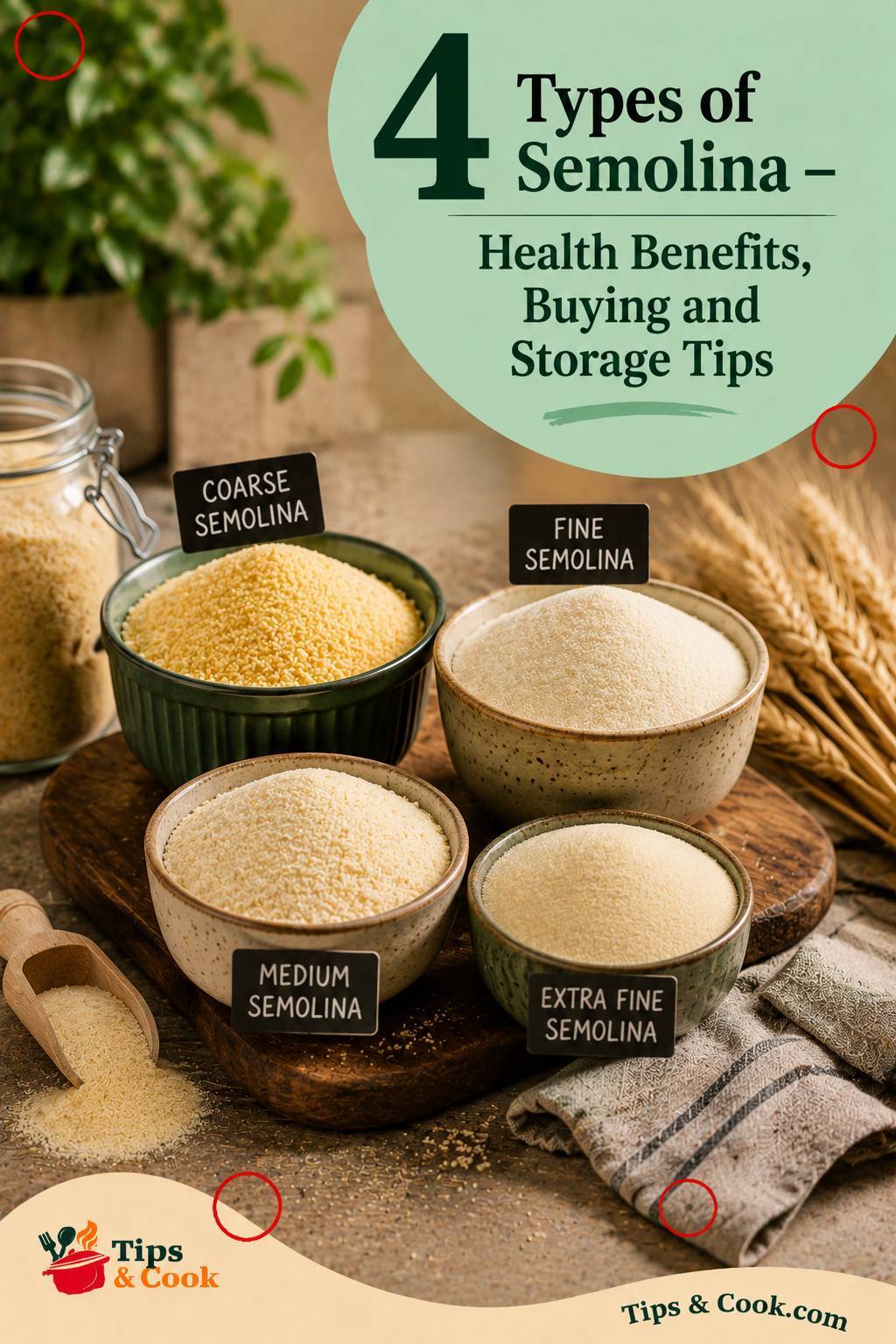
In this guide, we’ll explore 4 types of semolina, their potential health benefits, how to choose the right one, and the best ways to store semolina.
What Is Semolina?
Semolina is a coarse flour traditionally produced by milling durum wheat. It has a distinctive yellow color and a slightly grainy texture.
Because durum wheat contains a relatively high amount of protein and gluten, semolina is particularly popular for making pasta and other foods that benefit from a firm texture.
The texture of semolina can vary depending on how finely the wheat is milled. This is one reason why different types are better suited to different recipes.
4 Types of Semolina You Should Know
1. Fine Semolina
Fine semolina has a smoother texture than coarse varieties. It is often used in desserts, puddings, cakes, and some types of bread.
Its fine texture allows it to blend more easily with liquids and other ingredients.
Best uses:
- Puddings
- Cakes
- Sweet dishes
- Bread
- Breakfast recipes
Fine semolina is a good option when you want the nutritional characteristics of semolina without a very coarse texture.
2. Coarse Semolina
Coarse semolina has larger granules and a more noticeable texture. It is commonly used in pasta-making and some traditional dishes.
The coarse texture can help provide structure and a firm bite, which is especially useful when making homemade pasta.
Best uses:
- Homemade pasta
- Couscous-style dishes
- Dumplings
- Savory recipes
If you’re making pasta from scratch, coarse semolina is often a popular choice.
3. Durum Wheat Semolina
Durum wheat semolina is made specifically from durum wheat, a hard variety of wheat commonly associated with pasta production.
It has a golden-yellow color and relatively high protein content. These characteristics make it particularly useful for pasta and other foods where structure and firmness matter.
Best uses:
- Pasta
- Noodles
- Bread
- Pizza dough
- Savory baked foods
When shopping for semolina, check the package to see whether it is made from durum wheat and whether the texture matches your recipe.
4. Semolina Flour
Semolina flour is a more finely milled version of semolina. Although the terminology can vary between brands and regions, the finer texture makes it easier to incorporate into doughs and baked recipes.
It can be used alone or combined with other flours depending on the recipe.
Best uses:
- Bread
- Cakes
- Pasta
- Pizza
- Baked goods
Always check the package instructions because products labeled “semolina flour” can differ in texture.
What Are the Health Benefits of Semolina?
Semolina can be part of a balanced diet, especially when consumed alongside vegetables, lean proteins, healthy fats, and other nutrient-rich foods.
Good Source of Carbohydrates
Semolina provides carbohydrates, which are an important source of energy for the body. This makes semolina-based foods useful as part of meals that need to provide sustained energy.
Provides Protein
Durum wheat semolina contains protein, although the exact amount varies by product. Combining semolina dishes with foods such as beans, eggs, dairy, fish, or meat can help create a more balanced meal.
Contains Important Nutrients
Semolina naturally contains several nutrients, including iron, magnesium, and B vitamins, although amounts vary depending on the product and whether it has been enriched.
May Provide Dietary Fiber
Whole-grain versions of wheat products generally contain more fiber than refined versions. If increasing fiber is your goal, check the nutrition label and look for products made with whole grains.
Is Semolina Gluten-Free?
No. Semolina is made from wheat and naturally contains gluten.
Therefore, people with celiac disease, wheat allergies, or gluten sensitivity should avoid regular semolina unless a product is specifically certified and appropriate for their dietary needs.
Don’t assume that a grain-based flour is gluten-free simply because it is used in a particular type of recipe.
How to Choose the Right Semolina
Choosing the right semolina depends mainly on what you plan to make.
For pasta: Choose coarse durum wheat semolina when the recipe calls for it.
For desserts: Fine semolina is usually easier to mix into puddings and sweet dishes.
For bread: Look for fine semolina or semolina flour, depending on the recipe.
For everyday cooking: Check the package texture and recommended uses before purchasing.
It’s also a good idea to check the ingredient list and nutrition facts panel, particularly if you’re looking for whole-grain or enriched products.
How to Store Semolina Properly
Proper storage can help keep semolina fresh and protect it from moisture and pantry pests.
Keep It in an Airtight Container
After opening the package, transfer semolina to a clean, dry, airtight container. This helps prevent moisture and unwanted odors from affecting the flour.
Store It in a Cool, Dry Place
Keep semolina away from heat, humidity, and direct sunlight. A dry pantry or kitchen cupboard is generally suitable.
Check for Pantry Pests
Grains and flours can sometimes attract pantry pests. Check the package and storage container regularly for insects, webbing, unusual odors, or other signs of contamination.
Refrigerate or Freeze for Longer Storage
If you don’t use semolina frequently, refrigeration or freezing can extend its storage life. Place it in a well-sealed container or freezer-safe bag to prevent moisture and odors from getting in.
How Long Does Semolina Last?
The shelf life depends on the product, packaging, storage conditions, and whether it has been opened.
Always follow the manufacturer’s best-before or expiration date and inspect semolina before use.
Discard it if you notice:
- A rancid or unusual smell
- Mold
- Insects
- Excessive moisture
- Significant changes in appearance
When in doubt, it’s safer to replace the product.
Can You Substitute Semolina With Other Flours?
Sometimes, but the best substitute depends on the recipe.
For some baked goods, all-purpose flour may work. However, replacing semolina in pasta recipes can significantly change the texture and structure.
Possible alternatives include:
- All-purpose flour
- Bread flour
- Durum wheat flour
- Whole-wheat flour
Before substituting, consider whether the recipe depends on semolina’s distinctive texture and gluten characteristics.
Conclusion
Semolina is more versatile than many people realize. The 4 types of semolina discussed above—fine semolina, coarse semolina, durum wheat semolina, and semolina flour—can serve different purposes in cooking and baking.
Choosing the right variety comes down to understanding its texture, ingredients, and intended use. Store it in a cool, dry place in an airtight container, and always check the product label before buying.
Whether you’re making homemade pasta, baking bread, or preparing a traditional dessert, selecting the right semolina can make a noticeable difference in the final result.