If you’re looking for a nutritious ingredient that’s easy to add to everyday meals, quinoa is worth knowing about. This tiny seed is often treated like a grain and has become popular because it provides protein, fiber, and several important nutrients.
But what is quinoa, and is it really a superfood? From its nutrition profile to simple ways to prepare it, here’s what you need to know about this versatile ingredient.
What Is Quinoa?
Quinoa is a seed from the Chenopodium quinoa plant, which is native to the Andes region of South America. Although quinoa is technically a seed, it’s commonly prepared and eaten like grains such as rice or couscous.
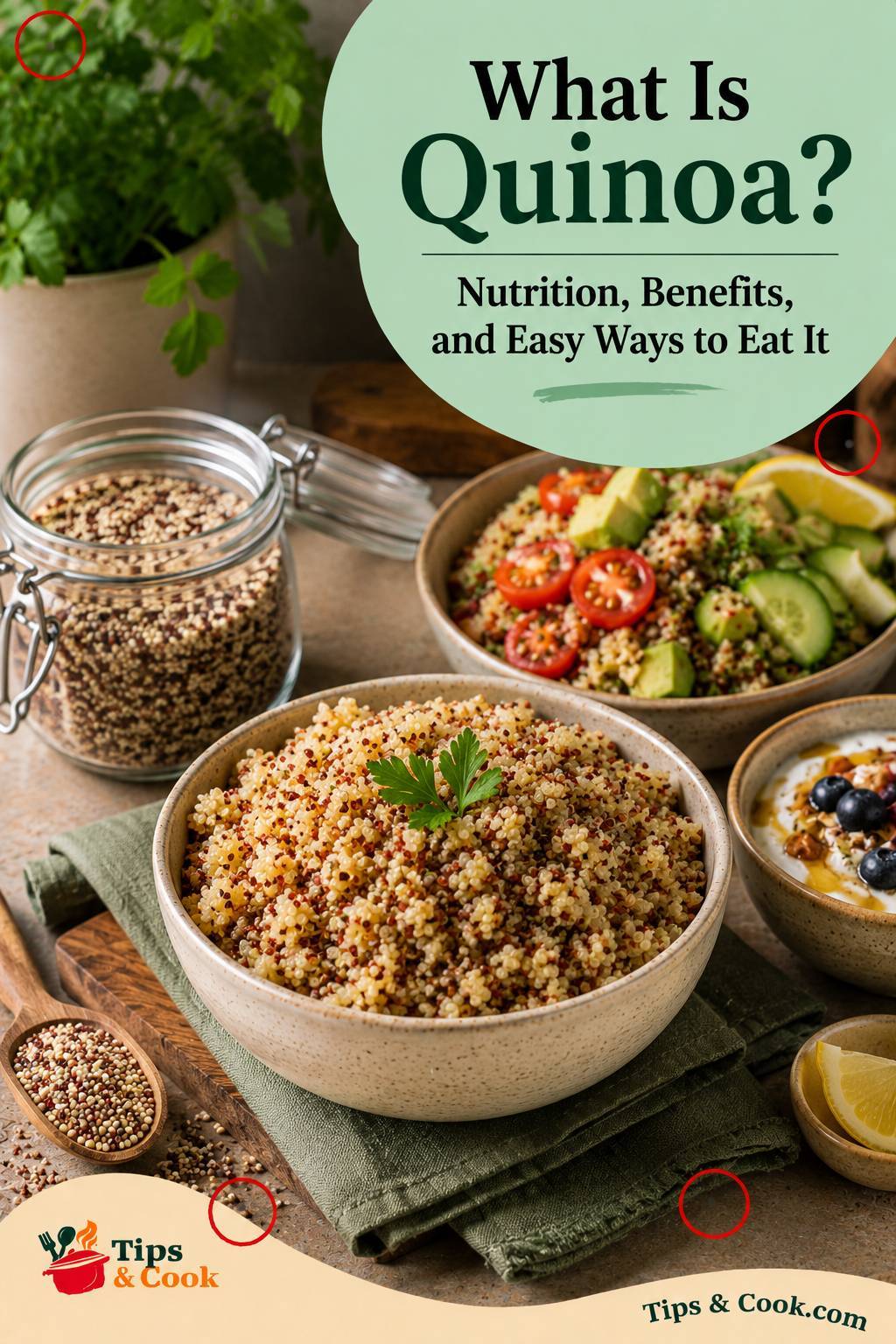
It comes in several varieties, including white, red, and black quinoa. The different varieties can vary slightly in texture and cooking time, but all can be used in a wide range of dishes.
Quinoa is also naturally gluten-free, making it an option for people who avoid gluten.
Quinoa Nutrition
Quinoa is valued for its combination of protein, fiber, vitamins, minerals, and complex carbohydrates.
A typical serving of cooked quinoa provides nutrients such as:
- Protein
- Dietary fiber
- Iron
- Magnesium
- Phosphorus
- Manganese
- Folate
- Complex carbohydrates
The exact nutritional values depend on the serving size and preparation method, so check the nutrition label when using packaged quinoa.
One feature that makes quinoa especially interesting is its protein quality. Unlike many plant foods, quinoa contains all nine essential amino acids, although the amount of each nutrient can vary.
7 Potential Benefits of Quinoa
1. Provides Plant-Based Protein
Quinoa can be a useful source of protein for people who eat plant-based meals.
Adding quinoa to salads, bowls, soups, or vegetable dishes can help increase the protein content of a meal.
2. Contains Dietary Fiber
Quinoa provides dietary fiber, which is important for normal digestive health.
Eating fiber-rich foods as part of a balanced diet can also help you feel satisfied after meals.
3. Supports a Nutrient-Rich Diet
Quinoa contains several vitamins and minerals, including magnesium, phosphorus, manganese, iron, and folate.
Including different nutrient-rich foods rather than relying on one ingredient is the best way to build a balanced diet.
4. Naturally Gluten-Free
Because quinoa is a seed rather than a wheat-based grain, it is naturally gluten-free.
However, people with celiac disease or significant gluten sensitivity should choose products labeled or certified gluten-free when cross-contact is a concern.
5. Easy to Add to Balanced Meals
Quinoa has a mild, slightly nutty flavor that works well with vegetables, beans, lean proteins, herbs, and dressings.
This makes it easy to use in both simple everyday meals and more elaborate recipes.
6. Provides Important Minerals
Quinoa contains minerals such as magnesium, phosphorus, manganese, and iron.
These nutrients have different roles in the body, including supporting normal energy metabolism, bones, and other physiological functions.
7. Can Be a Versatile Alternative to Rice
Quinoa can be used in many of the same situations as rice or couscous.
You can serve it alongside vegetables, use it as a salad base, or add it to soups and bowls.
How to Cook Quinoa
Cooking quinoa is relatively simple.
Step 1: Rinse the Quinoa
Place the quinoa in a fine-mesh strainer and rinse it thoroughly under cool running water.
Rinsing helps remove naturally occurring compounds called saponins, which can give quinoa a bitter or soapy taste.
Step 2: Add Water
A common starting point is to combine quinoa with water according to the package directions.
Different brands and varieties can require slightly different amounts of liquid, so checking the package instructions is a good idea.
Step 3: Simmer
Bring the mixture to a boil, then reduce the heat and cover the pot.
Allow it to simmer until the quinoa absorbs the liquid and the grains become tender.
Step 4: Let It Rest
Remove the pot from the heat and let the quinoa rest for several minutes with the lid on.
Then fluff it gently with a fork before serving.
Easy Ways to Eat Quinoa
One of the best things about quinoa is its versatility. Here are some simple ways to use it.
1. Add Quinoa to a Breakfast Bowl
Combine cooked quinoa with milk or a dairy-free alternative, fruit, nuts, and seeds for a filling breakfast.
You can add cinnamon or a small amount of honey for extra flavor.
2. Make a Quinoa Salad
Mix cooled quinoa with vegetables such as cucumber, tomatoes, bell peppers, and leafy greens.
Add lemon juice, olive oil, herbs, and your preferred seasoning for a simple salad.
3. Make a Quinoa Bowl
Use quinoa as the base of a balanced bowl.
Add roasted vegetables, beans, chicken, tofu, avocado, or other ingredients you enjoy.
4. Add It to Soup
Cooked quinoa can be stirred into vegetable, bean, or chicken soups.
It can add texture and make the dish more substantial.
5. Use Quinoa Instead of Rice
Quinoa can replace rice in many dishes.
Try serving it with stir-fried vegetables, grilled chicken, beans, or roasted vegetables.
6. Add Quinoa to Stuffed Vegetables
Combine cooked quinoa with vegetables, beans, herbs, and seasonings and use the mixture to fill bell peppers, tomatoes, or other vegetables.
7. Make Quinoa Patties
Mix cooked quinoa with vegetables, herbs, and suitable binding ingredients, then shape the mixture into patties.
Cook them in a pan or oven until they’re firm and lightly browned.
White vs Red vs Black Quinoa
Quinoa is available in several colors, with white, red, and black being among the most common.
White quinoa:
Usually has a softer, fluffier texture and relatively mild flavor.
Red quinoa:
Often holds its shape well after cooking and has a slightly firmer texture.
Black quinoa:
Typically has a deeper color and somewhat earthier flavor.
All three can be nutritious additions to a balanced diet. The best choice often comes down to the texture and flavor you prefer.
Is Quinoa a Grain or a Seed?
Quinoa is technically a seed, not a true cereal grain.
However, it is commonly classified and prepared as a pseudocereal because it is used in much the same way as grains such as rice, wheat, and oats.
This distinction is mostly botanical. In the kitchen, you can think of quinoa as a versatile grain-like ingredient.
Is Quinoa Good for Weight Management?
Quinoa can fit into a balanced eating pattern, but no single food automatically causes weight loss.
Because quinoa contains protein and fiber, it can be part of satisfying meals. Portion size and what you eat alongside it also matter.
For a balanced meal, pair quinoa with vegetables, a protein source, and healthy fats.
Are There Any Downsides to Eating Quinoa?
Quinoa is generally well tolerated by many people, but eating large amounts of any high-fiber food can cause digestive discomfort in some individuals, particularly if their diet is normally low in fiber.
Increasing fiber gradually and drinking enough fluids can help.
People with specific food allergies, digestive conditions, or dietary restrictions should follow advice from their healthcare professional.
How to Store Cooked Quinoa
Allow cooked quinoa to cool appropriately and store it in a clean, covered container in the refrigerator.
For longer storage, cooked quinoa can also be frozen in suitable airtight containers or freezer bags.
When reheating leftovers, make sure they are heated thoroughly and follow standard food-safety practices.
Conclusion
Quinoa is a versatile, naturally gluten-free seed that can add protein, fiber, vitamins, and minerals to a balanced diet. Its mild flavor and quick preparation make it useful for breakfast bowls, salads, soups, side dishes, and complete meal bowls.
Whether you’re trying quinoa for the first time or looking for new ways to use it, start with a simple salad or replace rice with cooked quinoa in one of your favorite meals.