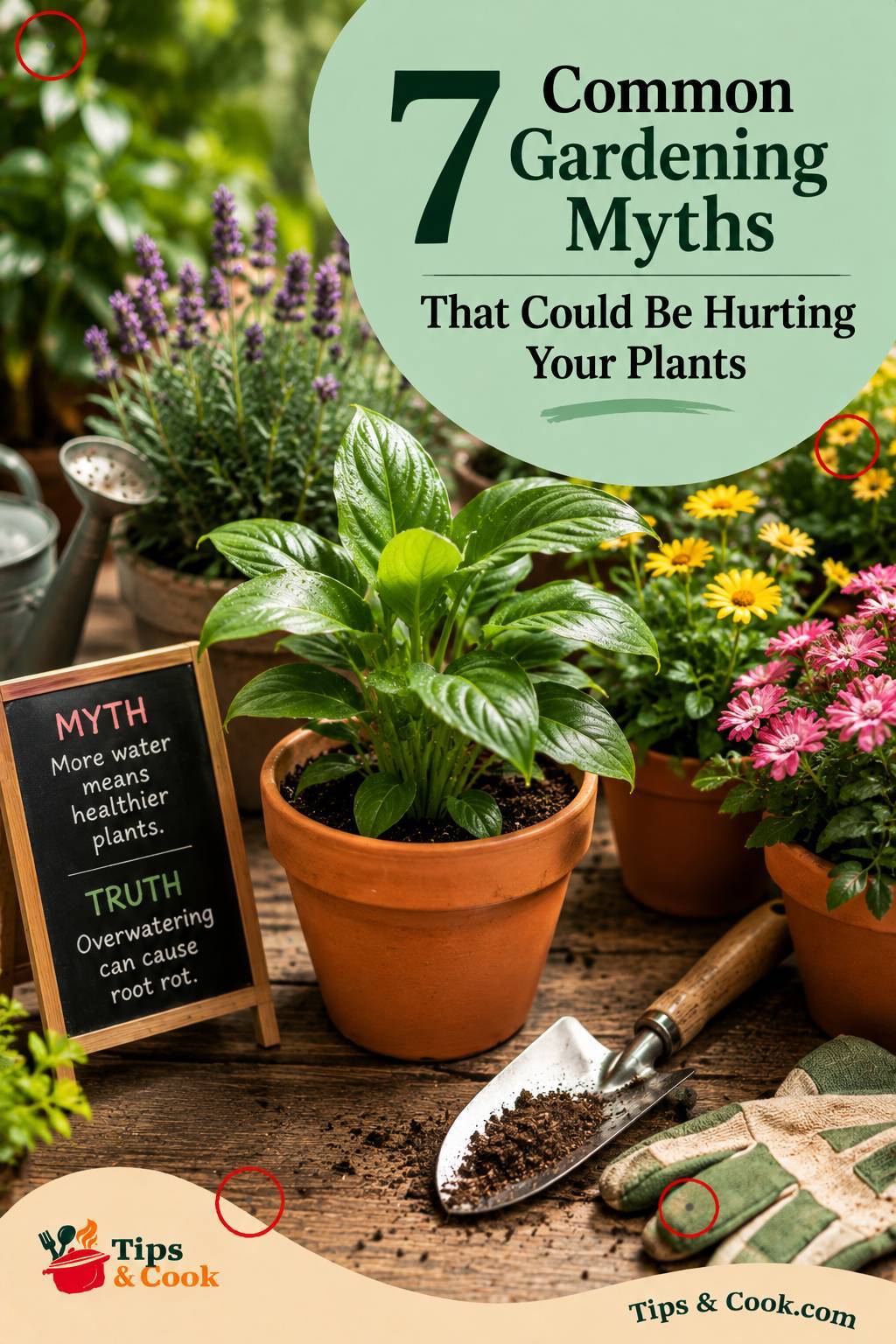
Gardening advice is everywhere. You may have heard that plants need water every day, coffee grounds are a perfect fertilizer, or adding rocks to the bottom of a pot improves drainage. Some of these tips sound reasonable, but they aren’t always true.
Following the wrong gardening advice can waste your time, damage your plants, or make it harder to maintain a healthy garden.
Here are 7 common gardening myths worth reconsidering before they cause problems in your garden.
1. You Need to Water Plants Every Day
Myth: Every plant needs daily watering to stay healthy.
Reality: Plants have different water requirements, and watering needs depend on the weather, soil, plant type, and growing environment.
Watering too frequently can leave soil constantly saturated. This can reduce the air available around roots and potentially contribute to root problems.
Instead of following a strict daily schedule, check the soil before watering. If the soil is still moist below the surface, your plant may not need more water.
During hot, dry weather, plants may need water more frequently. During cool or rainy periods, they may need much less.
Better approach: Water according to soil moisture and plant needs rather than the calendar.
2. Adding Rocks to the Bottom of a Pot Improves Drainage
Myth: A layer of gravel or rocks at the bottom of a container helps water drain better.
Reality: Adding a coarse layer beneath potting soil doesn’t necessarily improve drainage. It can actually cause water to accumulate above the layer before it moves through.
The most important drainage feature is a container with drainage holes.
Use a quality potting mix designed for containers and make sure excess water can escape through the bottom.
Better approach: Choose a pot with drainage holes and use an appropriate container-growing medium.
3. Coffee Grounds Are a Perfect Fertilizer
Myth: Used coffee grounds are an all-purpose fertilizer that will make every plant grow faster.
Reality: Coffee grounds aren’t a magic plant food. While used grounds contain organic material and can contribute to compost, using large amounts directly around plants can cause problems with soil structure or nutrient availability.
If you enjoy composting, adding coffee grounds to a balanced compost pile can be a better approach.
Better approach: Use coffee grounds as one component of compost rather than relying on them as your primary fertilizer.
4. More Fertilizer Means Faster Growth
Myth: If a little fertilizer helps plants grow, more fertilizer will make them grow even faster.
Reality: Excess fertilizer can damage plant roots and create nutrient imbalances.
Different plants also have different nutritional requirements. A plant producing lots of leaves doesn’t necessarily need more fertilizer, and excessive nitrogen can encourage foliage at the expense of flowers or fruit in some situations.
Always follow the instructions on the fertilizer label.
Better approach: Fertilize based on the plant’s needs, soil conditions, and product recommendations.
5. Watering Leaves in the Sun Will Burn Them
Myth: Water droplets on leaves act like tiny magnifying glasses and burn holes in foliage when exposed to sunlight.
Reality: This is generally not a major concern for typical garden plants. Watering during intense midday heat can still be inefficient because water evaporates quickly, but the main concern isn’t usually leaf burn caused by droplets.
For most plants, early morning is a better time to water because temperatures are cooler and plants have time to absorb moisture before the hottest part of the day.
Better approach: Water the soil around the roots, preferably during the cooler parts of the day.
6. Yellow Leaves Always Mean the Plant Needs More Water
Myth: Yellowing leaves are a clear sign that a plant is thirsty.
Reality: Yellow leaves can have many causes.
Depending on the plant and growing conditions, yellow foliage may result from:
- Overwatering
- Underwatering
- Poor drainage
- Nutrient deficiencies
- Insufficient light
- Pests
- Natural aging
Adding more water without identifying the cause could make the problem worse.
Better approach: Check the soil moisture, drainage, light conditions, and overall plant health before changing your watering routine.
7. You Should Always Remove All Fallen Leaves
Myth: Every fallen leaf should immediately be removed from the garden.
Reality: Fallen leaves can be useful organic material. In appropriate situations, leaves can contribute nutrients and organic matter as they break down.
However, diseased leaves or heavily infested plant material may need to be removed rather than left around healthy plants.
A thick layer of wet leaves can also create an unsuitable environment for some plants, so moderation matters.
Better approach: Compost healthy fallen leaves or use them appropriately as mulch while removing diseased material.
Why Gardening Myths Spread So Easily
Gardening is full of advice passed from one generation to another. Some tips may have started with a useful observation but become oversimplified over time.
The problem is that gardening isn’t one-size-fits-all.
A technique that works for one plant, climate, soil type, or growing environment may not work somewhere else.
That’s why it’s better to understand why you’re doing something instead of following a gardening rule blindly.
How to Avoid Gardening Mistakes
Before trying a popular gardening tip, ask yourself a few questions:
- Does the advice apply to my specific plant?
- What type of soil am I using?
- How much sunlight does the plant receive?
- Is the soil actually dry?
- Could the advice cause overwatering or overfertilizing?
- Is the recommendation based on reliable horticultural information?
A little research can prevent unnecessary problems.
Conclusion
Not every gardening tip you hear is completely wrong, but many popular rules are too simplistic to apply to every plant and growing situation.
Watering every day, adding rocks to pots, overusing fertilizer, and assuming yellow leaves always mean a plant needs water can all lead gardeners in the wrong direction.
The best approach is to observe your plants, understand their individual needs, and adjust your care routine based on soil, weather, light, and growing conditions.
Sometimes, the healthiest thing you can do for your garden is stop following a gardening rule that was never quite true in the first place.