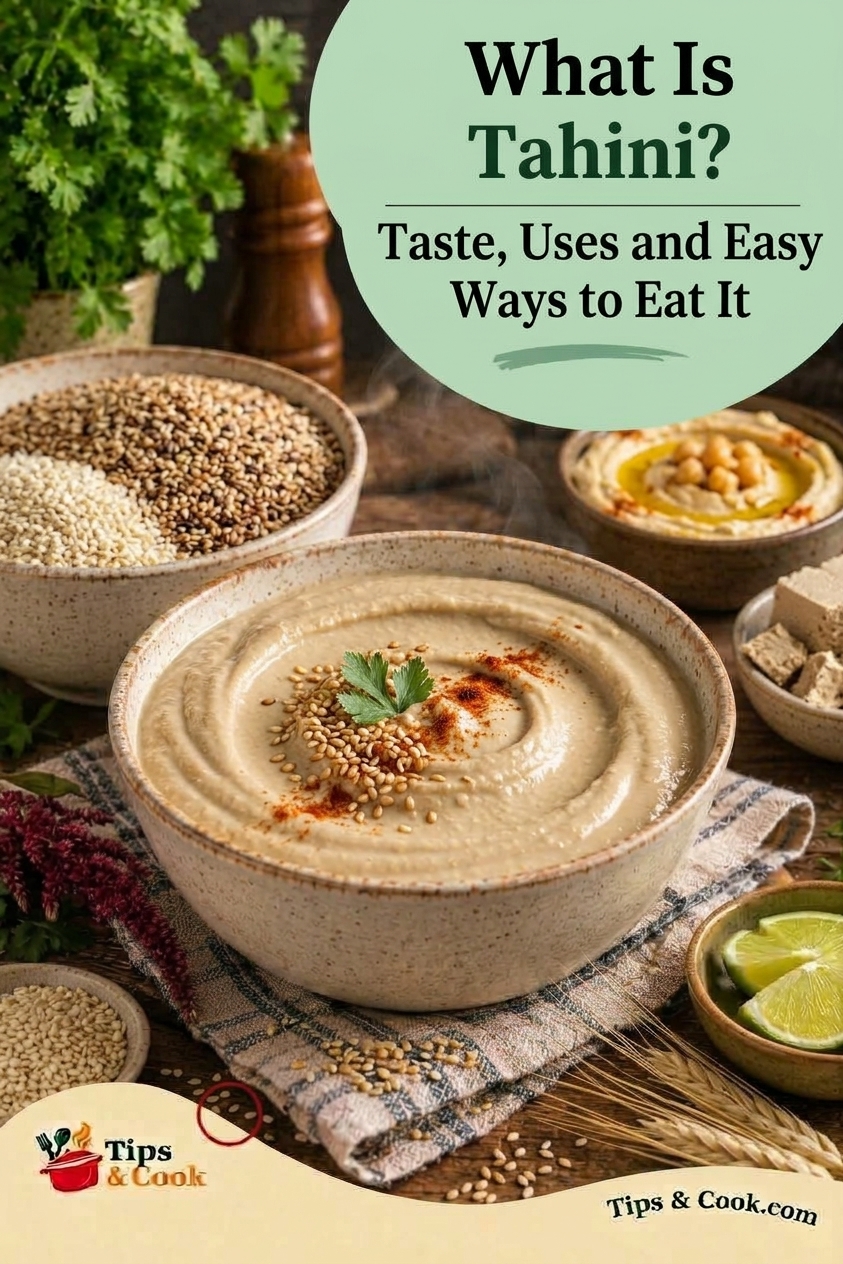
Tahini is a creamy paste made from sesame seeds. It is a popular ingredient in Middle Eastern and Mediterranean cooking and is known for its nutty flavor and smooth texture. You may have tasted tahini in hummus, salad dressings, sauces, or sweet treats without realizing it.
If you are wondering what is tahini, it is simply ground sesame seeds transformed into a versatile paste. Depending on the recipe, it can add richness to savory dishes, balance acidic flavors, or bring a distinctive taste to desserts.
In this guide, you will learn how tahini is made, what it tastes like, its nutritional qualities, and easy ways to use it at home.
What Is Tahini Made Of?
Traditional tahini is made from sesame seeds that are ground into a smooth or slightly coarse paste. Some manufacturers use hulled sesame seeds, while others use unhulled seeds.
Hulled sesame seeds have had their outer coverings removed. Tahini made from hulled seeds is often lighter in color and milder in flavor. Unhulled sesame seeds retain their outer coverings, so the resulting paste may taste more bitter and have a darker appearance.
Sesame seeds may be lightly toasted before grinding, depending on the product and regional tradition. Toasting can create a deeper, more pronounced flavor.
Most traditional tahini contains only sesame seeds. Check the ingredient label because some products may contain added oil, salt, or other ingredients.
What Does Tahini Taste Like?
Tahini has a rich, nutty, earthy flavor with a mild bitterness. Its taste can vary depending on the sesame seeds used and how they are processed.
Tahini made from lightly processed hulled sesame seeds often tastes smoother and milder. Products made from unhulled or more heavily toasted seeds may have a stronger, more bitter flavor.
Its texture is usually creamy and thick, although natural tahini can separate during storage. A layer of oil on top is normal for many products. Stir it thoroughly to bring the oil and sesame solids back together.
Tahini is not usually sweet on its own. However, it pairs well with ingredients such as honey, dates, lemon juice, garlic, and spices.
7 Easy Ways to Use Tahini
Tahini is more versatile than it may first appear. Here are seven practical ways to add it to everyday meals.
1. Make Creamy Hummus
Tahini is a classic ingredient in hummus, a dip commonly made with chickpeas, lemon juice, garlic, and other seasonings.
It contributes a rich sesame flavor and creamy texture. Blend tahini with chickpeas, lemon juice, garlic, and a little water until smooth, adjusting the seasoning to taste.
Serve hummus with vegetables, pita bread, or crackers.
2. Prepare a Lemon-Tahini Dressing
Tahini can become a creamy salad dressing when mixed with lemon juice, water, garlic, and seasoning.
Start with a spoonful of tahini and lemon juice, then gradually whisk in water until the mixture reaches your preferred consistency. It may thicken at first before becoming smooth.
Drizzle the dressing over salads, roasted vegetables, grain bowls, or falafel.
3. Spread It on Toast
Tahini makes a simple spread for toast and sandwiches. Its nutty flavor works well with both sweet and savory toppings.
For a sweet breakfast, spread tahini on whole-grain toast and add banana slices or a little honey. For a savory option, pair it with sliced tomatoes, cucumber, or roasted vegetables.
4. Add It to Smoothies
A small spoonful of tahini can make a smoothie richer and creamier. It pairs particularly well with bananas, dates, cocoa powder, and oats.
Blend a modest amount with your favorite smoothie ingredients and adjust the quantity to taste. Because tahini is energy-dense, a little can go a long way.
5. Use It in Sauces and Marinades
Tahini can form the base of sauces for roasted vegetables, grilled chicken, tofu, or chickpeas.
Mix it with lemon juice, garlic, water, and spices for a quick sauce. You can also combine it with yogurt for a tangier, creamier dressing.
Add water gradually because tahini can become thick when first mixed with acidic liquids.
6. Include It in Baking
Tahini works well in cookies, brownies, cakes, and other baked goods. It adds sesame flavor and richness to sweet recipes.
You can mix it into cookie dough or swirl it through brownie batter. Its slightly bitter, nutty flavor complements chocolate, cinnamon, and sweeteners.
Use a recipe designed for tahini because replacing butter or other fats directly may change the final texture.
7. Make a Quick Tahini Dessert Sauce
For an easy dessert topping, combine tahini with honey or maple syrup and a little warm water. Stir until smooth and pourable.
Drizzle the sauce over fruit, oatmeal, pancakes, or baked goods. You can also add a pinch of cinnamon or cocoa powder for extra flavor.
Is Tahini Healthy?
Tahini provides several nutrients because it is made from sesame seeds. Its nutritional content varies by brand and processing method.
- Unsaturated fats: Sesame seeds contain predominantly unsaturated fats, which can fit into a balanced eating pattern.
- Plant-based protein: Tahini contributes some protein, although the amount depends on the serving size.
- Minerals: Sesame seeds provide minerals such as copper, manganese, and magnesium. Calcium content varies depending on whether the seeds are hulled.
- Energy: Tahini is calorie-dense, so even a small serving can contribute meaningful energy to a meal.
Tahini can be a nutritious ingredient, but it is not a cure or treatment for any health condition. Consider portion sizes and the overall nutritional balance of your meals.
Allergy note: Sesame is a major food allergen. People with a sesame allergy should avoid tahini and check food labels carefully.
How to Store Tahini
Store tahini according to the manufacturer’s instructions. Many unopened products can be kept in a cool, dry cupboard, while opened products may require refrigeration depending on the label.
Natural tahini often separates during storage. Stir it thoroughly before use, and always use a clean, dry utensil to reduce contamination.
Follow the product’s storage instructions and discard tahini if it develops an unusual smell, visible mold, or other signs of spoilage.
Tahini vs. Peanut Butter: What Is the Difference?
Tahini and peanut butter look similar, but they are made from different seeds or nuts.
Tahini is made from sesame seeds and typically has an earthy, nutty flavor with some bitterness. Peanut butter is made from peanuts and usually has a more familiar roasted-peanut flavor.
Both provide fats and some protein, but their nutritional profiles differ. Peanut butter may contain added sugar, salt, or oils, while traditional tahini often contains only sesame seeds. Always check the product label.
Tahini is not a direct substitute for peanut butter in every recipe because its flavor, texture, and bitterness can affect the result.
Frequently Asked Questions
Is tahini the same as sesame paste?
Tahini is a type of sesame seed paste. However, sesame pastes made in different culinary traditions may use different sesame varieties or roasting methods, which can affect their flavor and texture.
Does tahini need to be refrigerated?
Storage requirements depend on the product. Follow the label’s instructions for refrigeration and use after opening.
Can you eat tahini straight from the jar?
Yes, tahini can be eaten directly from the jar if it is a food-grade product stored properly. Its thick texture and slightly bitter flavor mean many people prefer mixing it with other ingredients.
Is tahini sweet or savory?
Tahini is generally nutty, earthy, and slightly bitter rather than sweet. It works in savory sauces and dips as well as sweet dishes when combined with ingredients such as honey or dates.
What can I use instead of tahini?
Depending on the recipe, sunflower seed butter may be a useful alternative for people who need to avoid sesame. Peanut butter or other nut butters may work in some recipes, but they change the flavor and are unsuitable for people with the relevant allergies. Always consider cross-contact risks and individual dietary needs.
Conclusion
Understanding what is tahini opens up many easy ways to add flavor and texture to everyday meals. This sesame seed paste is a key ingredient in hummus, but it can also be used in salad dressings, sauces, smoothies, toast, baked goods, and desserts.
Start with a small amount, experiment with sweet and savory combinations, and store the product according to its label. With its distinctive nutty flavor and versatility, tahini can be a useful ingredient to keep in your kitchen.