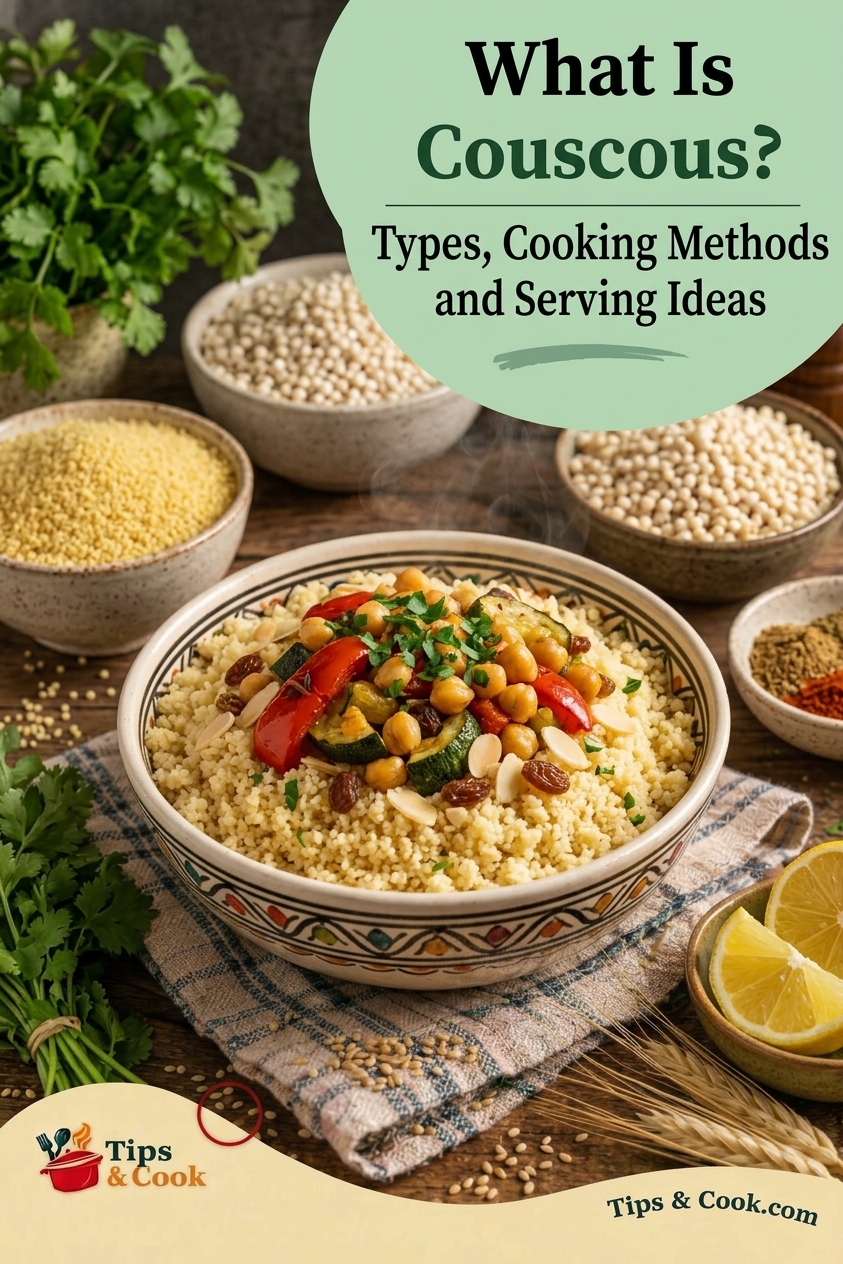
Couscous is a popular food enjoyed in North African, Mediterranean, and international cuisines. It looks similar to a grain and is often served with vegetables, meat, seafood, or flavorful sauces. Its mild taste and quick preparation make it a convenient ingredient for everyday meals.
If you’re wondering what is couscous, it is a type of pasta traditionally made from semolina, which comes from durum wheat. Semolina is moistened and rolled into tiny granules, then dried for storage. Although couscous resembles rice or other grains, traditional couscous is made from wheat rather than being a whole grain itself.
In this guide, you’ll learn about different types of couscous, how to prepare them, their nutritional qualities, and easy ways to serve them.
What Is Couscous Made Of?
Traditional couscous is made from semolina flour and water. The semolina is moistened and worked into small granules, which are then dried.
Commercial couscous is often partially precooked, making it quick to prepare at home. Some products require only hot water or broth and a few minutes of covered resting time. Other varieties, particularly traditional handmade couscous, may require steaming.
Couscous has a mild, slightly nutty flavor and a light, fluffy texture when prepared properly. Because it absorbs surrounding flavors well, it works with herbs, spices, vegetables, sauces, and proteins.
Most traditional couscous contains gluten because it is made from wheat. People with celiac disease or a wheat allergy should check labels carefully and choose a suitable alternative.
3 Common Types of Couscous
Couscous is available in several forms. The size of the granules affects its texture, cooking method, and how it works in different recipes.
1. Moroccan Couscous
Moroccan couscous is the small-grained variety commonly found in supermarkets. Its tiny granules become light and fluffy after preparation.
Many packaged varieties are precooked, so they can be prepared by adding boiling water or broth according to the package instructions.
Best uses: Serve it with vegetable stews, roasted vegetables, grilled chicken, or chickpeas. It also works well as a base for quick weeknight meals.
2. Israeli Couscous
Israeli couscous, also called pearl couscous or ptitim in some contexts, consists of larger, round pasta pieces. It has a chewier texture than Moroccan couscous.
Unlike many small-grained varieties, pearl couscous is generally cooked in simmering water or broth until tender. Some recipes toast it briefly in oil before adding liquid to develop a deeper flavor.
Best uses: Add it to warm salads, vegetable bowls, soups, or dishes with roasted tomatoes and herbs.
3. Lebanese Couscous
Lebanese couscous, often called moghrabieh, is typically larger than Moroccan couscous and is used in traditional dishes from the Levant.
Its large, chewy granules are often cooked in a stew or prepared separately and served with chickpeas, onions, meat, or aromatic spices.
Best uses: Try it in hearty stews and traditional dishes where a larger, more substantial pasta texture is desirable.
Cooking times and product names can vary, so follow the instructions supplied with the specific variety you buy.
How to Cook Couscous
The best cooking method depends on the type of couscous and whether it has already been precooked.
How to Prepare Moroccan Couscous
For many instant or precooked varieties, follow these basic steps:
- Measure the couscous: Place the amount you need in a heatproof bowl.
- Heat the liquid: Bring water or broth to a boil. Use the liquid ratio listed on the package.
- Add the liquid: Pour it over the couscous and stir briefly if the instructions recommend it.
- Cover and rest: Let it stand for the time specified on the package, often around five minutes.
- Fluff with a fork: Separate the granules gently and add a little olive oil, herbs, or seasoning if desired.
Avoid adding too much liquid, as it can make the couscous soggy.
How to Cook Pearl Couscous
Pearl couscous is usually simmered rather than simply soaked.
- Heat a small amount of oil in a saucepan.
- Add the pearl couscous and stir briefly if you want to toast it.
- Pour in water or broth according to the package directions.
- Simmer until the granules are tender, stirring occasionally.
- Drain any excess liquid if necessary and season before serving.
The cooking time varies by product, so use the package instructions as your guide.
6 Easy Ways to Serve Couscous
Couscous is versatile enough for simple lunches, side dishes, and complete meals.
1. Couscous with Roasted Vegetables
Combine prepared couscous with roasted carrots, zucchini, bell peppers, or eggplant. Add olive oil, black pepper, and fresh herbs for a simple side dish or lunch.
2. Mediterranean Couscous Salad
Mix cooled couscous with cucumber, tomatoes, parsley, lemon juice, and olive oil. Chickpeas or crumbled feta can add extra substance and flavor.
3. Couscous with Chicken
Serve couscous with grilled or roasted chicken and steamed vegetables. Season the couscous with garlic, cumin, paprika, or herbs to complement the main dish.
4. Spiced Chickpea Couscous Bowl
Combine couscous with cooked chickpeas, roasted vegetables, and spices such as cumin and coriander. Finish with a lemon dressing or yogurt sauce.
5. Couscous Soup
Pearl couscous can be added to soups with vegetables, beans, or chicken. Add it at the appropriate stage of cooking so it becomes tender without absorbing too much liquid.
6. Sweet Couscous Breakfast
Prepare couscous with milk or a suitable plant-based alternative if the recipe calls for it. Add cinnamon, fruit, nuts, or dried fruit for a breakfast-style dish.
Is Couscous Healthy?
Couscous can fit into a balanced diet, but its nutritional value depends on the type, portion size, and accompanying ingredients.
Provides carbohydrates: Couscous is primarily a source of carbohydrates, which supply energy.
Offers some protein: Wheat-based couscous contains some protein, although it is not a complete substitute for a varied range of protein-rich foods.
May provide fiber: Whole-wheat couscous generally contains more fiber than refined semolina couscous. Check the nutrition label to compare products.
Works with nutrient-rich ingredients: Pairing couscous with vegetables, beans, lentils, or lean protein can make a meal more varied and satisfying.
Couscous is not inherently healthier than rice or other starches. The best choice depends on your nutritional needs, dietary preferences, and how the meal is prepared.
Couscous vs. Rice: What’s the Difference?
Couscous and rice are often served in similar ways, but they are different foods.
| Feature | Couscous | Rice |
|---|---|---|
| Food type | Small pasta granules | Cereal grain |
| Main ingredient | Usually durum wheat semolina | Rice grain |
| Texture | Fluffy or chewy, depending on variety | Varies by rice type |
| Gluten | Usually contains gluten | Naturally gluten-free when uncontaminated |
| Common uses | Salads, stews, side dishes, bowls | Curries, stir-fries, pilafs, side dishes |
Both can be part of a balanced diet. Whole-grain alternatives, portion sizes, and the other ingredients in a meal all influence its overall nutritional value.
Frequently Asked Questions
Is couscous a grain or pasta?
Traditional couscous is a pasta product made from semolina wheat, even though it looks similar to a grain. It is not the same as a whole grain such as rice or barley.
Does couscous contain gluten?
Yes, traditional wheat-based couscous contains gluten. People with celiac disease or a wheat allergy should avoid it unless they have verified that a product is suitable for their needs.
Does couscous need to be rinsed before cooking?
Most packaged couscous does not need to be rinsed. Follow the manufacturer’s preparation instructions for the specific product.
Can you prepare couscous ahead of time?
Yes. Prepared couscous can be made ahead and refrigerated promptly in a covered container. Keep it at a safe refrigerator temperature and follow food-safety guidance for leftovers.
What can I use instead of couscous?
Depending on the recipe, rice, quinoa, millet, or small pasta can be suitable alternatives. If you need to avoid gluten, choose a naturally gluten-free option and check the product label for cross-contact warnings.
Conculasion
Understanding what is couscous helps you use this versatile ingredient with confidence. Traditional couscous is made from semolina wheat, cooks quickly in many commercial forms, and pairs well with vegetables, meat, legumes, herbs, and sauces.
Choose Moroccan couscous for a light side dish, pearl couscous for a chewier salad or bowl, or larger Lebanese-style couscous for hearty stews. With a suitable cooking method and a few fresh ingredients, couscous can become a convenient addition to everyday meals.
Explore More>>