
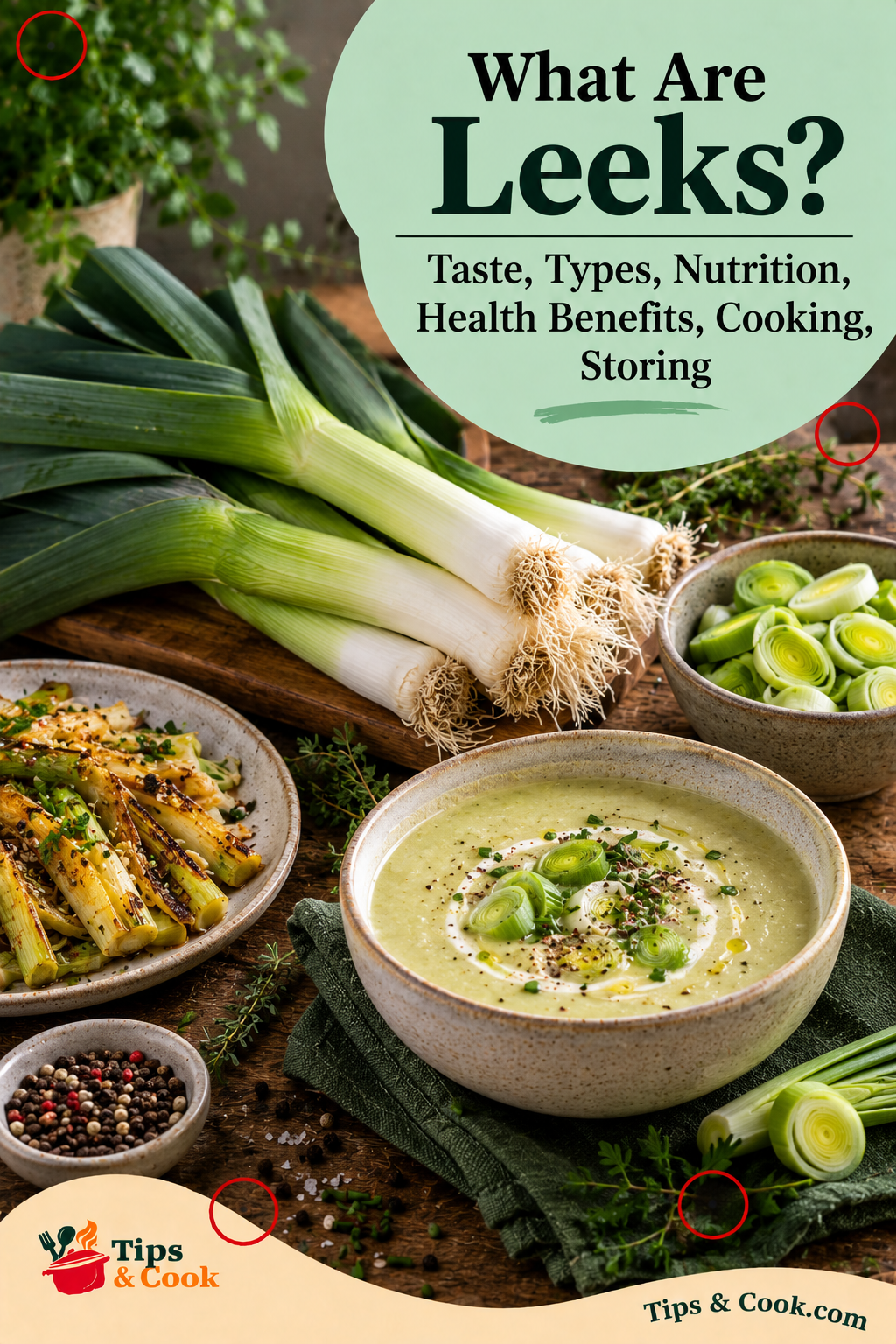
Leeks are one of the most versatile yet often overlooked vegetables in the kitchen. Belonging to the allium family, which includes onions, garlic, and chives, leeks bring a gentle sweetness and subtle onion flavor to dishes.
If you’ve ever wondered what are leeks, how they taste, or how to cook and store them, this guide will give you a complete overview. From their history and types to nutrition and health benefits, leeks deserve a place in your cooking repertoire.
What Are Leeks?
Leeks (Allium ampeloprasum) grow as long stalks with a white base and green leafy tops. Unlike onions, they don’t form bulbs but instead develop layers of leaves. The white and pale green parts are tender and commonly used in cooking, while the darker green tops are tougher and often reserved for stocks or slow simmering.
Appearance: Long cylindrical stalks with white bases and green tops.
Flavor: Mild, sweet, onion‑like taste, less pungent than garlic or raw onion.
History: Cultivated for thousands of years, leeks were eaten in ancient Egypt and Rome and remain a national symbol of Wales.
Leeks are often described as a “gentle onion,” making them perfect for dishes where you want flavor without overwhelming sharpness.
Taste & Types
Leeks have a delicate, buttery flavor that becomes sweeter when cooked. They add aromatic depth without overpowering dishes, making them ideal for soups, stews, and sautés.
Taste profile:
- Raw leeks: crisp, mild onion flavor.
- Cooked leeks: soft, sweet, and slightly creamy.
Types of leeks include:
- Common garden leeks – widely available, medium‑sized, and versatile.
- Elephant garlic (a leek variety) – larger, with a very mild flavor.
- Kurrat (Egyptian leek) – grown mainly for its leaves, often used in Middle Eastern cooking.
Nutrition Profile
Leeks are low in calories but rich in vitamins, minerals, and fiber. A 100‑gram serving of raw leeks provides:
- Calories: ~61 kcal
- Protein: 1.5 g
- Carbohydrates: 14 g
- Fiber: 2 g
- Fat: 0.3 g
- Key Nutrients: Vitamin C, Vitamin A, Vitamin K, Vitamin B6, Folate, Manganese, Potassium, Iron, Calcium
This makes leeks a nutrient‑dense food that supports overall health while being light and versatile.
Health Benefits
Including leeks in your diet offers several health advantages:
- Heart health: Potassium helps regulate blood pressure.
- Immunity boost: Vitamin C strengthens immune function.
- Digestive support: Fiber aids gut health and regularity.
- Antioxidants: Compounds like kaempferol may reduce inflammation.
- Weight management: Low in calories but filling, making them ideal for healthy eating plans.
Leeks are also linked to improved bone health due to their vitamin K content, which supports calcium absorption.

Cooking With Leeks
Leeks are incredibly versatile in the kitchen. Their mild flavor pairs well with a wide range of ingredients.
Popular uses include:
- Soups: Classic potato leek soup, chicken broth bases.
- Sautés & braises: Gentle sweetness complements fish, chicken, and grains.
- Egg dishes: Quiches, frittatas, and omelets.
- Stocks: Dark green tops add depth to broths.
Tip: Always wash leeks thoroughly-soil often hides between their layers. Slice lengthwise and rinse under running water before cooking.
Storing Leeks
Proper storage keeps leeks fresh and flavorful:
- Refrigerator: Store unwashed leeks loosely wrapped in plastic or in the crisper drawer for 1–2 weeks.
- Freezing: Slice, blanch briefly, and freeze in airtight bags.
- Cut leeks: Keep in an airtight container and use within a few days.
Culinary Inspiration
Leeks shine in both simple and gourmet recipes. Try them in:
- Potato leek soup for a classic comfort dish.
- Leek and mushroom risotto for a creamy, savory meal.
- Grilled leeks with olive oil as a side dish.
- Leek tart for an elegant brunch option.
Their versatility makes them a staple ingredient worth keeping in your kitchen.
How to Select Leeks
When buying leeks, look for:
- Firm stalks with crisp, bright green tops.
- No yellowing or wilting leaves.
- Smaller leeks, which tend to be more tender and flavorful.
Avoid leeks that feel limp or have excessive dirt trapped in the layers.
Read More: How to Clean and Prepare Foraged Wild Foods Safely
Conclusion
So, what are leeks? They’re mild, sweet members of the onion family that add depth and nutrition to countless dishes.
With their delicate flavor, rich nutrient profile, and long culinary history, leeks are a vegetable every cook should embrace. Whether you’re making soups, sautés, or gourmet recipes, leeks bring a unique touch that elevates everyday meals.
For more inspiration, explore BBC Good Food’s leek recipes.