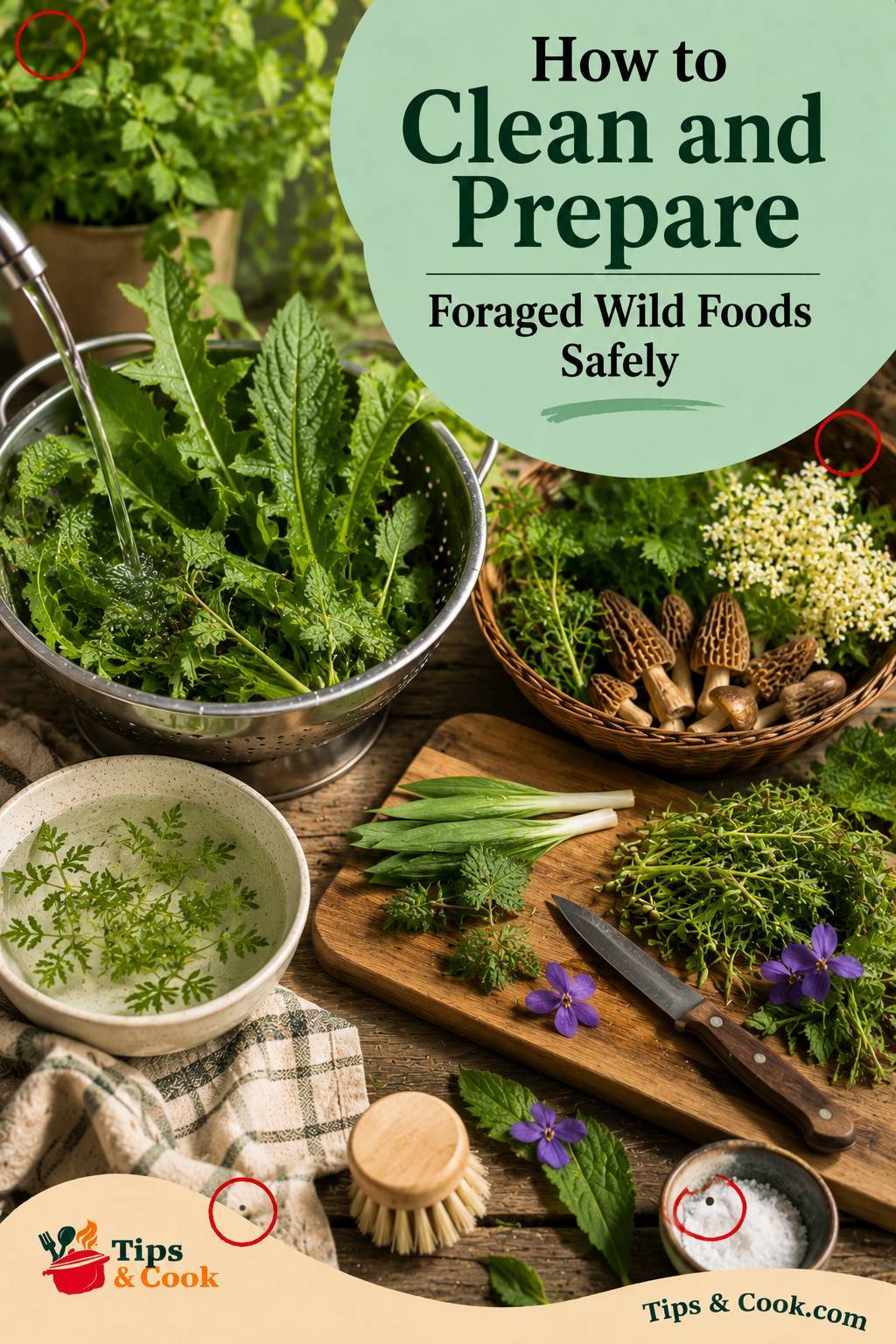
Foraging can be an enjoyable way to discover edible plants, berries, herbs, and other foods growing naturally around you. But finding edible wild food is only the first step. Knowing how to clean and prepare foraged wild foods properly is equally important.
Wild foods can carry soil, insects, plant debris, and environmental contaminants. Some also require cooking or special preparation before they can be safely eaten.
In this guide, you’ll learn simple steps for cleaning, preparing, cooking, and storing common foraged foods while avoiding common mistakes.
Important: Never eat a wild plant, berry, mushroom, or other foraged food unless you have positively identified it as safe. Washing or cooking cannot make an incorrectly identified poisonous species safe.
Why Cleaning Foraged Foods Matters
Foraged foods come directly from outdoor environments, so they may contain:
- Soil and sand
- Small insects
- Leaves and debris
- Animal contamination
- Pesticide residue
- Other environmental contaminants
Cleaning can remove visible dirt and debris, but it cannot eliminate every possible contaminant or make an unsafe plant edible.
That’s why proper identification and safe harvesting should always come first.
1. Sort Your Foraged Foods
Before washing your harvest, spread it on a clean surface and inspect each item carefully.
Remove anything that is:
- Moldy or rotten
- Heavily damaged
- Contaminated
- Unidentified
- Past its best condition
This is also a good time to remove sticks, insects, leaves, and other unwanted material.
If you’re unsure what something is, don’t eat it.
2. Wash Your Hands and Equipment
Before preparing your harvest, wash your hands thoroughly with soap and water.
Also clean your:
- Cutting board
- Knife
- Bowls
- Colander
- Kitchen counter
Keeping your equipment clean helps reduce the risk of transferring dirt or contaminants to other foods.
3. Rinse Wild Greens and Herbs
Wild greens and herbs can collect soil and small insects, especially near the base of the plant.
Rinse correctly identified edible greens under clean running water. Pay particular attention to the underside of leaves, stems, and areas where dirt can collect.
You may need to rinse particularly dirty greens more than once.
Don’t use household soap or cleaning products on food.
Remember that washing removes surface dirt but does not make an unidentified plant safe to eat.
4. Handle Wild Berries Carefully
Wild blackberries, raspberries, and strawberries are delicate and can bruise easily.
First, sort through the berries and remove fruit that is moldy, rotten, or badly damaged. Then gently rinse suitable berries under clean running water.
Avoid rough handling or prolonged soaking, which can damage delicate fruit.
After washing, allow the berries to drain before eating or storing them.
5. Prepare Foods According to the Species
Not every wild food should be prepared in the same way.
Some edible foods may be suitable for eating after cleaning, while others require cooking or additional processing.
For example, certain wild greens are traditionally cooked, while acorns require additional preparation before they are commonly used as food.
Always follow a reliable preparation method for the specific species you have identified.
6. Take Extra Care With Nettles and Acorns
Some wild foods require special attention.
Stinging nettles can cause skin irritation when handled fresh. If you are preparing correctly identified edible nettles, handle them carefully and follow a reliable cooking method.
Acorns generally require more processing than berries or greens. Traditional preparation can involve shelling and leaching to reduce tannins before they are used for cooking or flour.
Don’t experiment with unfamiliar preparation methods.
7. Be Careful With Wild Mushrooms
Wild mushrooms deserve extra caution because some edible species have poisonous look-alikes.
If you’re a beginner, don’t rely on a photograph alone to identify a mushroom for eating.
Never consume a wild mushroom unless you are completely confident about its identification and appropriate preparation.
When there is any doubt, leave it alone.
8. Avoid Contaminated Harvesting Areas
Where you collect wild food matters just as much as how you clean it.
Avoid harvesting from:
- Busy roadsides
- Industrial areas
- Recently treated lawns
- Areas sprayed with pesticides
- Polluted waterways
- Places with heavy animal activity
Thorough washing cannot necessarily remove environmental contaminants.
Also check local rules before collecting plants, berries, mushrooms, or other natural materials from public land.
9. Store Foraged Foods Properly
After cleaning, prepare your harvest for storage as soon as practical.
Fresh greens and herbs should generally be drained and stored appropriately in the refrigerator. Fresh berries should also be refrigerated and used relatively quickly because they can spoil easily.
Some suitable wild foods can be preserved by drying or freezing. However, preservation requirements vary by species.
Avoid storing foods while excessively wet because moisture can encourage spoilage.
Common Mistakes to Avoid
When learning how to clean and prepare foraged wild foods, avoid these mistakes:
Eating an Unknown Plant
Never eat something simply because it looks familiar. Correct identification comes first.
Harvesting From Polluted Areas
Wild doesn’t automatically mean clean. Consider the environment where the food grows.
Using Soap on Food
Don’t wash edible plants with household soap or cleaning products. Use clean running water for appropriate foods.
Assuming Cooking Removes Every Risk
Cooking is not a substitute for correct identification. Some natural hazards cannot simply be eliminated through ordinary cooking.
Ignoring Local Regulations
Some parks and public lands restrict the collection of plants and other natural materials. Always check the rules for your location.
Simple Foraged Food Safety Checklist
Before eating your harvest, ask:
- Did I correctly identify it?
- Did I collect it from a suitable location?
- Did I remove damaged or spoiled pieces?
- Did I clean away visible dirt and debris?
- Does this food require cooking or special processing?
- Am I following a reliable preparation method?
- Am I storing it properly?
If you’re not confident about any of these points, don’t consume the food.
Conclusion
Learning how to clean and prepare foraged wild foods is an important part of responsible foraging. Start with accurate identification, harvest from appropriate locations, remove dirt and debris, and follow preparation instructions specific to each species.
Some wild foods need little preparation, while others require cooking or additional processing.
Most importantly, remember that cleaning cannot make an incorrectly identified wild food safe. When in doubt, leave it out and continue learning before your next foraging trip.