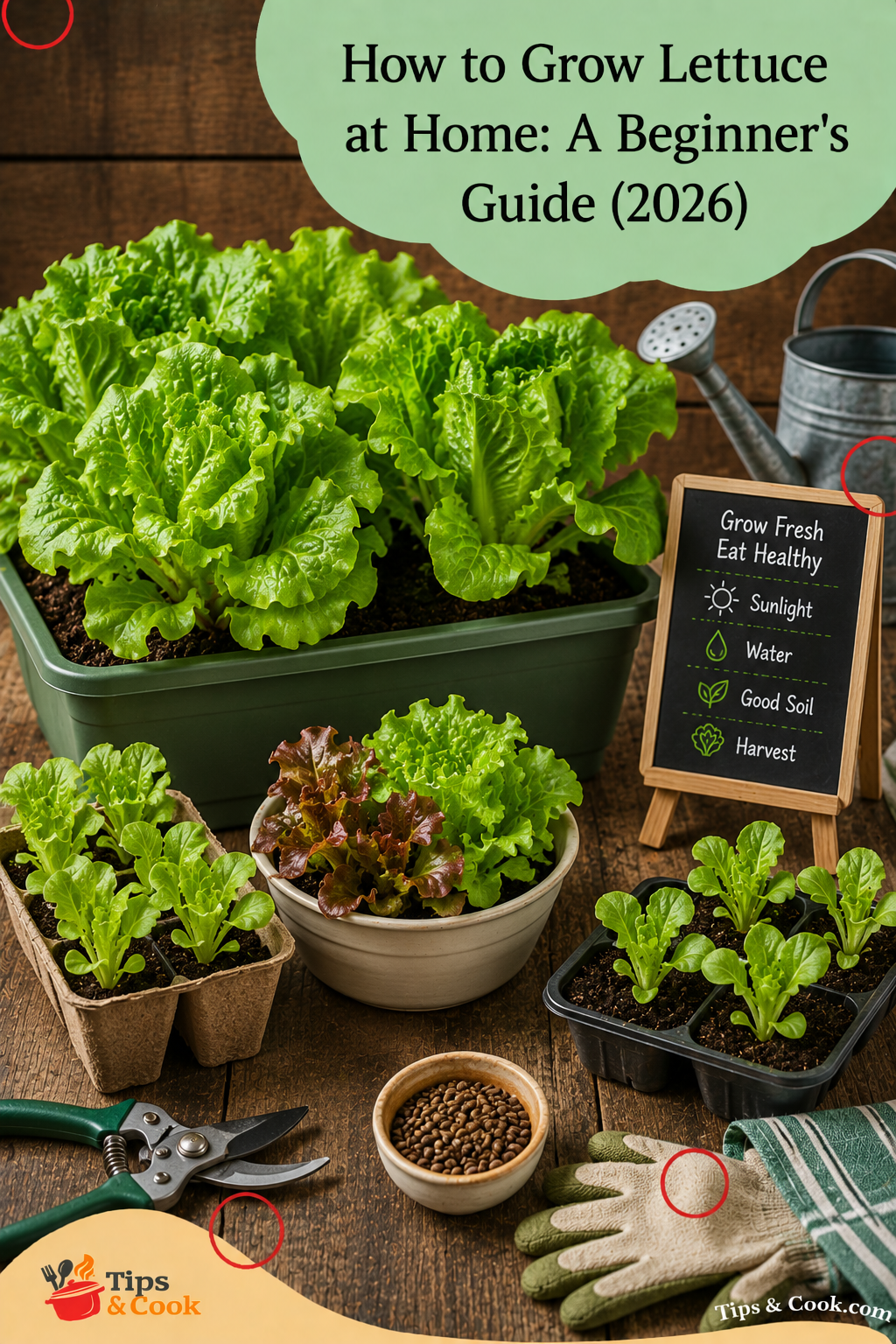
Growing your own lettuce is one of the easiest and most rewarding gardening projects for beginners. If you’re wondering how to grow lettuce at home, you’ll be happy to know that lettuce grows quickly, requires minimal maintenance, and thrives in gardens, raised beds, and containers. Fresh, homegrown lettuce is perfect for salads, sandwiches, and wraps, giving you a healthy harvest right outside your door.
In this guide, you’ll learn everything you need to know about planting, caring for, and harvesting lettuce successfully.
Why Grow Lettuce at Home?
Lettuce is an excellent choice for home gardeners because it offers several benefits:
- Grows quickly, with many varieties ready to harvest in 30–60 days
- Suitable for small spaces and balconies
- Produces fresh, chemical-free leaves
- Easy for beginners to grow
- Can be harvested multiple times with proper care
Whether you have a backyard or a few pots on a patio, lettuce is a great addition to your home garden.
Choose the Right Lettuce Variety
There are several popular types of lettuce to grow:
- Leaf Lettuce: Fast-growing and ideal for continuous harvesting.
- Romaine Lettuce: Crisp leaves that are perfect for Caesar salads.
- Butterhead Lettuce: Soft, tender leaves with a mild flavor.
- Crisphead (Iceberg): Forms tight heads but requires a longer growing season.
Choose a variety based on your climate, available space, and personal preference.
Select the Best Growing Location
Lettuce grows best in cool weather and prefers:
- 4–6 hours of sunlight each day
- Well-draining, fertile soil
- Good air circulation
- Temperatures between 45°F and 75°F (7°C–24°C)
In warmer climates, provide afternoon shade to prevent the plants from bolting, which causes the leaves to become bitter. Before planting, check your local USDA Plant Hardiness Zone Map to determine the best planting season for your area.
How to Plant Lettuce
You can grow lettuce from seeds or young seedlings.
Planting from Seeds
- Loosen the soil and mix in compost.
- Sow seeds about ¼ inch (6 mm) deep.
- Space rows 12–18 inches apart.
- Lightly cover the seeds with soil.
- Water gently after planting.
Seeds usually germinate within 7–10 days under suitable conditions.
Growing Container Lettuce
If you have limited space, container lettuce is an excellent option.
Choose a container that:
- Is at least 6–8 inches deep
- Has drainage holes
- Is filled with quality potting mix
Place the container where it receives morning sunlight and protect it from intense afternoon heat.
Watering and Lettuce Care
Proper lettuce care helps produce tender, flavorful leaves.
Follow these watering tips:
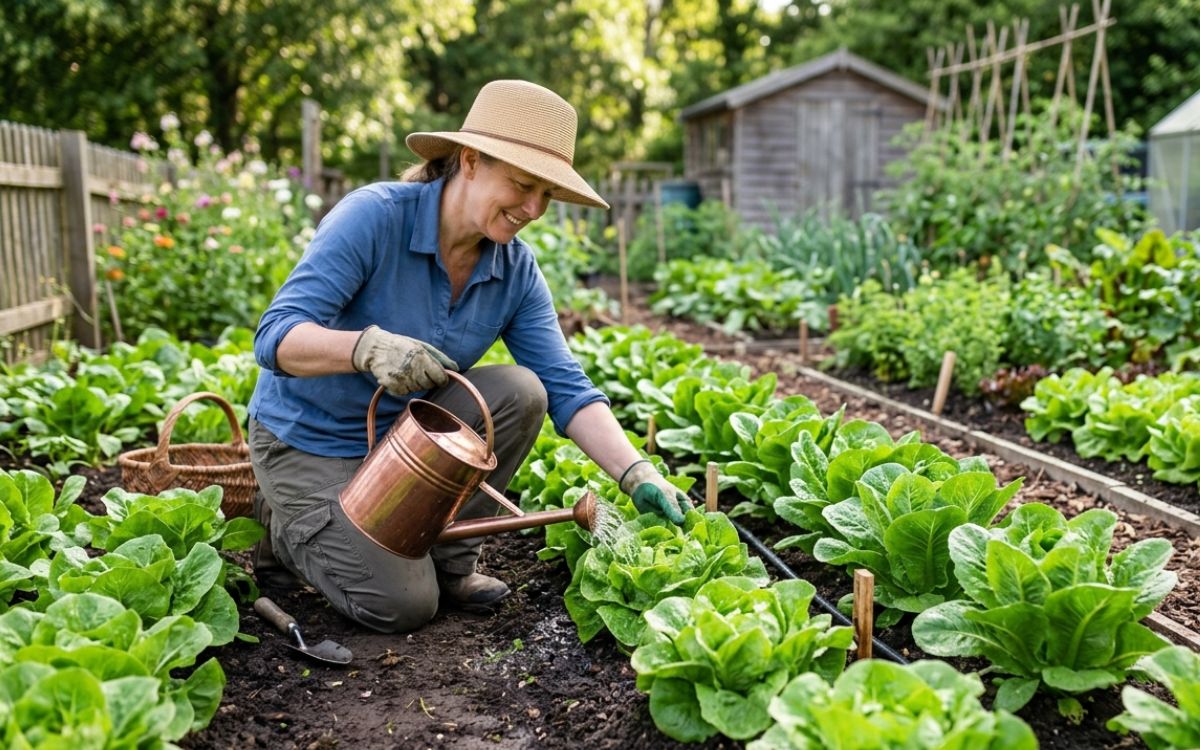
- Keep the soil consistently moist but not waterlogged.
- Water early in the morning.
- Avoid letting the soil dry out completely.
- Water at the base of the plant to reduce the risk of disease.
Mulching around the plants can help retain moisture and keep the soil cool.
Fertilizing Your Lettuce
Lettuce doesn’t require heavy feeding, but it benefits from nutrient-rich soil.
You can improve growth by:
- Adding compost before planting
- Applying a balanced organic fertilizer every few weeks if needed
- Avoiding excessive nitrogen, which can produce weak, overly leafy growth
Healthy soil is often enough for a successful crop.
Common Problems and Solutions
Here are a few common issues gardeners may face:
Bolting
Hot weather causes lettuce to flower early, making the leaves bitter.
Solution: Plant during cooler seasons and provide afternoon shade.
Slugs and Snails
These pests enjoy eating young lettuce leaves.
Solution: Remove them by hand, use barriers, or encourage natural predators.
Aphids
Small insects may gather on the undersides of leaves.
Solution: Spray plants with water or use insecticidal soap if necessary.
Harvesting Lettuce
You can harvest lettuce in two ways:
- Cut-and-come-again: Pick the outer leaves while leaving the center to continue growing.
- Whole-head harvest: Cut the entire plant at the base once it reaches full size.
Harvest in the morning for the freshest and crispiest leaves.
Tips for a Healthy Salad Garden
If you’re creating a salad garden, consider growing lettuce alongside other easy crops such as:
- Spinach
- Arugula
- Kale
- Radishes
- Green onions
- Herbs like parsley and cilantro
These plants have similar growing requirements and provide fresh ingredients for homemade salads.
Common Mistakes to Avoid
To achieve the best results:
- Don’t overcrowd your plants.
- Avoid overwatering.
- Protect lettuce from extreme heat.
- Harvest regularly to encourage new growth.
- Keep weeds under control.
Simple maintenance helps ensure a continuous supply of fresh leaves.
Conclusion
Learning how to grow lettuce at home is an excellent way to enjoy fresh, healthy produce while developing your gardening skills. With the right location, consistent lettuce care, and proper watering, you can grow delicious leafy greens in a backyard garden, raised bed, or even a small container. Whether you’re planting a complete salad garden or trying container lettuce for the first time, this fast-growing vegetable rewards you with multiple harvests and flavorful homegrown salads throughout the season.
Explore More..