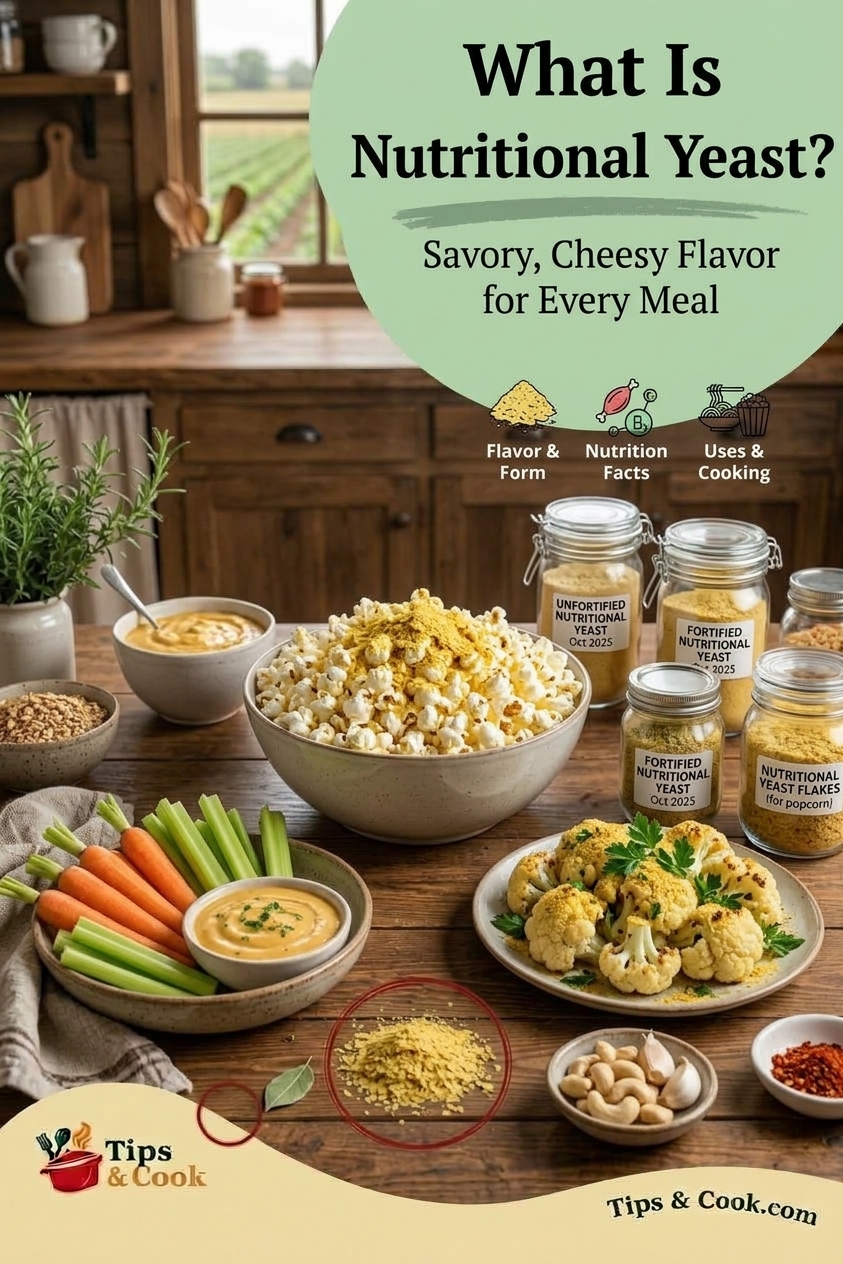
What Is Nutritional Yeast? Nutritional yeast is an inactive form of yeast commonly used to add a savory, cheesy flavor to everyday meals. It usually comes in yellow flakes or powder and is popular in vegan cooking because it can provide a cheese-like taste without using dairy products. You can sprinkle it over popcorn, stir it into pasta, or mix it into sauces, soups, and vegetable dishes.
If you have seen nutritional yeast in a grocery store or recipe, you may wonder what it tastes like, how to use it, and whether it offers nutritional benefits. Understanding its characteristics can help you decide how to incorporate this versatile ingredient into your kitchen.
What Is Nutritional Yeast?
Nutritional yeast is made from yeast, commonly Saccharomyces cerevisiae, that has been grown and then deactivated using heat. Unlike active baking yeast, it does not make bread rise or cause dough to ferment.
After processing, the yeast is harvested, dried, and packaged as flakes, granules, or powder. Some products are fortified with additional vitamins and minerals, while others contain only the naturally occurring nutrients from the yeast.
Nutritional yeast is often used in plant-based recipes because its savory flavor can make foods taste richer. However, its nutritional composition varies by brand, so checking the product label is important if you are buying it for a specific nutrient.
What Does Nutritional Yeast Taste Like?
Nutritional yeast has a savory, slightly nutty flavor that many people describe as cheesy. Its taste can also resemble toasted nuts or umami-rich seasonings.
The flavor is usually mild enough to blend into a variety of dishes. When sprinkled over popcorn or roasted vegetables, it adds a savory coating. When mixed into pasta sauce, soup, or mashed potatoes, it can create a richer flavor without requiring cheese.
Nutritional yeast is not identical to Parmesan or other dairy cheeses. It does not melt or stretch like cheese, but it can provide a similar savory note in recipes.
If you are trying it for the first time, start with a small amount and adjust according to your taste preferences.
Nutritional Yeast Nutrition Facts
Nutritional yeast contains protein, fiber, and several B vitamins. Fortified varieties may provide substantial amounts of certain vitamins, including vitamin B12, depending on the product.
The exact nutrition facts depend on the serving size, manufacturing process, and whether the yeast has been fortified. Always consult the nutrition label on the package rather than assuming every product has the same composition.
Some potential nutritional characteristics include:
- Protein: Nutritional yeast contributes plant-based protein to meals.
- B vitamins: It can contain several B vitamins, and fortified varieties may provide additional amounts.
- Fiber: Some products contain dietary fiber, including beta-glucans.
- Minerals: Depending on the product, it may provide minerals such as zinc and iron.
Nutritional yeast should be considered one ingredient in a balanced diet rather than a complete source of nutrition. In particular, unfortified nutritional yeast should not be relied upon as a source of vitamin B12.
Is Nutritional Yeast Good for You?
Nutritional yeast can be a useful addition to a balanced diet, especially for people who want to add savory flavor and plant-based protein to meals.
Fortified products may also help people obtain certain B vitamins. For people following vegan or vegetarian diets, a fortified product can be one way to increase vitamin B12 intake, although individual needs and the amount supplied by the product should be considered.
Nutritional yeast is also useful for adding flavor without relying entirely on cheese, butter, or creamy sauces.
However, nutritional yeast is not a substitute for a varied diet or medical advice. Some people may need to consider its nutrient content, particularly if they have been advised to limit certain vitamins or minerals. People with yeast sensitivities or specific medical conditions should consult a qualified healthcare professional if they are unsure whether it is suitable for them.
How to Use Nutritional Yeast in Everyday Cooking
Nutritional yeast is easy to incorporate into meals because it can be sprinkled, stirred, or blended into many recipes.
1. Sprinkle It Over Popcorn
Popcorn is one of the simplest ways to enjoy nutritional yeast. Sprinkle a small amount over freshly popped popcorn and toss well so the flakes stick to the surface. A little olive oil can help the seasoning distribute more evenly.
You can also combine it with paprika, garlic powder, or black pepper for a more complex snack flavor.
2. Add It to Pasta and Noodles
Stir nutritional yeast into pasta, noodles, or vegetable-based dishes to add a savory, cheese-like flavor. It works particularly well with garlic, olive oil, black pepper, and sautéed vegetables.
You can also blend it into a creamy plant-based sauce made with ingredients such as cashews or white beans. Nutritional yeast enhances the flavor but does not replace the liquid or thickening ingredients needed to create the sauce’s texture.
3. Make Dairy-Free Cheese Sauce
Nutritional yeast is a common ingredient in dairy-free cheese-style sauces. Blend it with cooked potatoes, carrots, cashews, or other suitable ingredients, depending on the recipe.
Lemon juice, garlic, and spices can help create a more balanced flavor. Because nutritional yeast does not melt like dairy cheese, the other ingredients provide the sauce’s smooth texture.
4. Season Roasted Vegetables
Sprinkle nutritional yeast over broccoli, cauliflower, potatoes, or carrots before or after roasting. Combine it with herbs, pepper, and a small amount of oil for a savory seasoning.
Adding some after cooking can help preserve its distinctive flavor, while adding it earlier may allow the seasoning to blend with the other ingredients.
5. Stir It Into Soups and Sauces
Nutritional yeast can deepen the savory taste of vegetable soups, bean stews, gravies, and sauces. Start with a small amount, stir thoroughly, and taste before adding more.
It can also be mixed into mashed potatoes, risotto, savory oatmeal, or homemade salad dressings.
6. Use It in Tofu Scrambles
For a simple plant-based breakfast, crumble tofu into a pan with sautéed vegetables, turmeric, black pepper, and nutritional yeast. Cook until the mixture is heated through and the flavors combine.
The nutritional yeast adds a savory note that complements the tofu and seasonings.
Nutritional Yeast vs. Brewer’s Yeast
Nutritional yeast and brewer’s yeast are related products, but they are not always interchangeable.
| Feature | Nutritional Yeast | Brewer’s Yeast |
|---|---|---|
| Common use | Seasoning and cooking | Supplements and some food products |
| Flavor | Savory, nutty, often cheesy | Often more bitter |
| Activity | Inactive | Usually inactive in commercial food products |
| Fortification | Common in some products | Depends on the product |
| Typical format | Flakes or powder | Powder, flakes, or tablets |
Their flavor, processing, and nutritional profiles can differ. Check the packaging carefully before substituting one for the other in a recipe.
Is Nutritional Yeast the Same as Baking Yeast?
No. Nutritional yeast and baking yeast serve different purposes.
Baking yeast is used in bread and other baked goods because it can produce carbon dioxide during fermentation, helping dough rise. Nutritional yeast is deactivated and cannot perform this function.
Although both products are made from yeast, nutritional yeast is used mainly for flavor and nutrition rather than leavening. It should not be used as a direct replacement for active dry yeast or instant yeast in bread recipes.
How to Store Nutritional Yeast
Store nutritional yeast in an airtight container in a cool, dry place away from direct sunlight and moisture. Follow the package instructions and use a clean, dry spoon when handling it.
Always check the best-before date and inspect the product for unusual odors, moisture, or changes in appearance. If the package provides specific refrigeration instructions after opening, follow those recommendations.
Proper storage helps maintain its flavor and quality for longer.
How to Choose Nutritional Yeast
When shopping for nutritional yeast, consider how you plan to use it.
- Choose fortified nutritional yeast if you want a product that supplies additional vitamins or minerals.
- Check the ingredient list if you prefer an unfortified product without added nutrients.
- Review the nutrition label to compare protein, fiber, sodium, and vitamin content.
- Consider the texture because flakes and fine powders may work differently in toppings and sauces.
- Look for relevant allergen information if you have dietary restrictions or known sensitivities.
Do not assume that every nutritional yeast product is a reliable source of vitamin B12. Confirm the amount listed on the label and consider the serving size.
Conclusion
Nutritional yeast is a versatile ingredient that adds savory, nutty, and cheese-like flavor to many foods. It works well in popcorn, pasta, dairy-free sauces, roasted vegetables, soups, and tofu dishes.
Its nutritional value depends on the product, particularly whether it is fortified with vitamins and minerals. By checking the label, starting with small amounts in recipes, and storing it properly, you can explore different ways to use nutritional yeast in everyday cooking.