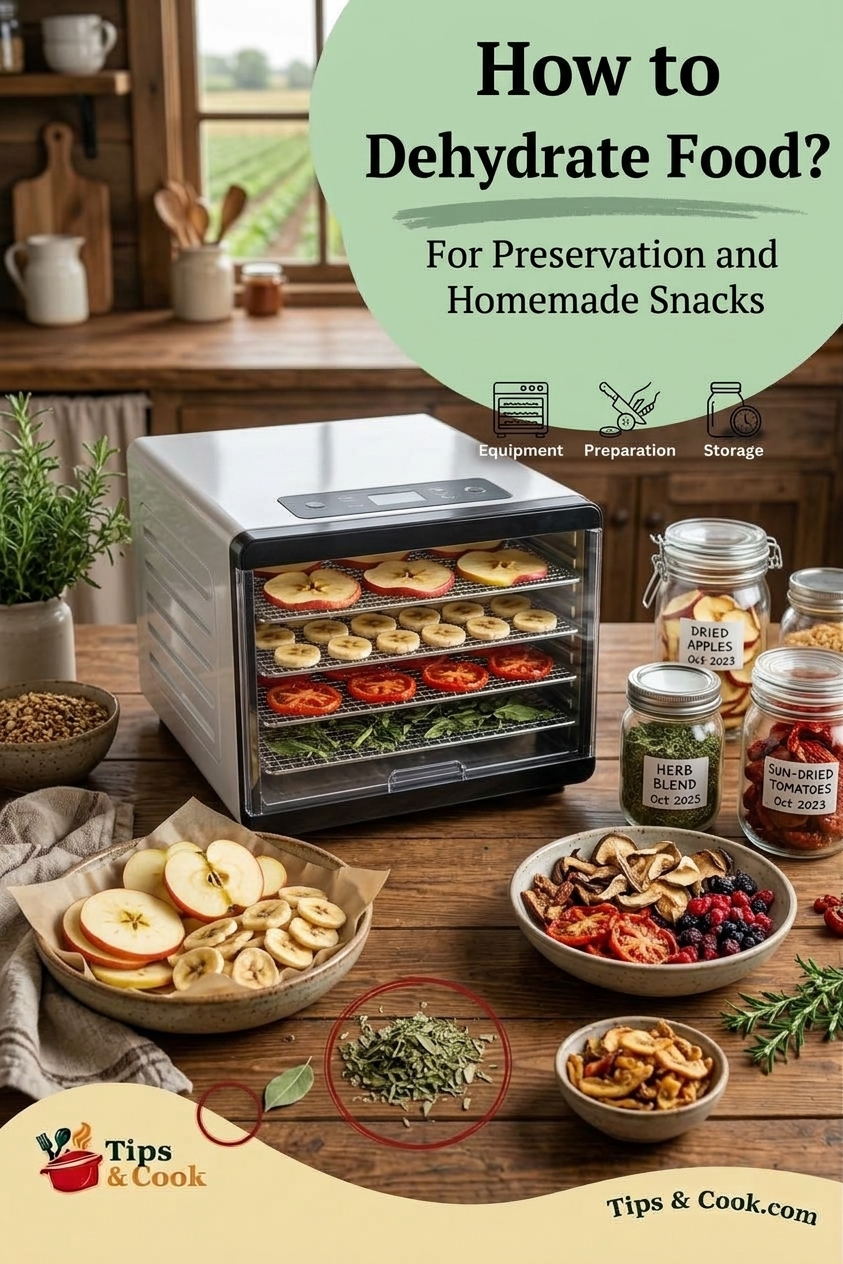
How to Dehydrate Food for Preservation? Dehydrating food is a simple way to preserve fruits, vegetables, herbs, and other ingredients by removing moisture that supports spoilage. If you want to store seasonal produce, reduce food waste, or prepare lightweight snacks for travel, learning how to dehydrate food for preservation can help you make better use of ingredients at home.
Food dehydration uses controlled heat and airflow to remove water from food. Although the process can extend shelf life, proper preparation, drying, cooling, and storage are essential for maintaining quality and reducing food safety risks. Different foods also require different preparation methods and drying conditions.
What Is Food Dehydration?
Food dehydration is a preservation method that removes much of the water from food. Bacteria, yeasts, and molds need available moisture to grow, so reducing moisture can slow spoilage.
Common foods suitable for dehydration include apples, bananas, berries, tomatoes, mushrooms, leafy herbs, and certain vegetables. Meat can also be dried, but it requires specific food safety procedures because drying alone may not destroy harmful pathogens.
Dehydration does not make every food shelf-stable automatically. The final result depends on the food, drying process, moisture level, packaging, and storage conditions.
What Equipment Do You Need to Dehydrate Food?
You can dehydrate food using several types of equipment, depending on your budget and the ingredients you want to preserve.
- Food dehydrator: A dedicated appliance that circulates warm air around food trays. It usually provides more consistent drying conditions.
- Oven: A conventional oven may work for some foods if it can maintain a sufficiently low temperature and allow moisture to escape.
- Drying trays: Clean trays or food-safe racks help arrange ingredients in a single layer for better airflow.
- Sharp knife or slicer: Uniform slices dry more evenly than pieces of different thicknesses.
- Airtight containers: Moisture-resistant containers or suitable food-storage bags help protect dried ingredients after processing.
A thermometer can help you monitor drying temperatures. For foods requiring pathogen control, such as meat, follow a tested food safety procedure rather than relying on appearance or dryness alone.
How to Dehydrate Food for Preservation Step by Step
Follow these general steps to dehydrate suitable fruits, vegetables, and herbs at home.
1. Choose Fresh, High-Quality Ingredients
Select fresh, ripe produce without signs of mold, rot, or serious damage. Remove spoiled portions and discard foods that are unsafe to use.
Wash fruits and vegetables under clean running water before preparation. Clean your hands, knives, cutting boards, and drying equipment to reduce the risk of contamination.
2. Cut Food into Uniform Pieces
Slice the ingredients into pieces of similar thickness so they dry at a similar rate. Thin slices generally dry faster, while thicker pieces may retain moisture in the center.
For example, apples and bananas can be cut into relatively thin slices. Tomatoes can be sliced or cut into smaller pieces, depending on their size and intended use.
Keep the pieces separated on the trays. Overlapping ingredients restrict airflow and may cause uneven drying.
3. Prepare the Food Before Drying
Some foods benefit from additional preparation.
- Fruits: A suitable pretreatment, such as an ascorbic acid solution, can help reduce browning in certain fruits.
- Vegetables: Blanching some vegetables before drying can help preserve color, texture, and quality. Follow food-specific preparation guidance.
- Herbs: Remove damaged leaves and gently wash them if needed. Dry surface water before placing them in the dehydrator.
Preparation requirements vary by ingredient, so use tested instructions for the food you are preserving.
4. Set the Appropriate Drying Temperature
Arrange the food in a dehydrator or other suitable appliance and follow the manufacturer’s instructions for temperature and airflow.
Different ingredients require different drying conditions. Herbs generally need gentler heat than many fruits and vegetables. Food thickness, humidity, appliance performance, and the amount loaded onto the trays also affect drying time.
Avoid guessing that food is ready based only on the number of hours it has been drying. Check the recommended endpoint for the particular ingredient.
5. Check Whether the Food Is Dry Enough
Properly dried food should have the texture specified by a tested drying guide. Depending on the ingredient, it may become leathery, brittle, or crisp.
For example, many dried fruits remain flexible, while some dried vegetables become brittle. Texture alone, however, cannot confirm that food is safe for long-term storage.
If pieces dry unevenly, remove finished pieces and continue drying the remaining ingredients. Do not package food that may still contain excess moisture.
6. Cool the Food Before Packaging
Allow dried food to cool completely in a clean, dry environment before placing it in storage containers. Packaging warm food can cause condensation, which introduces moisture and increases the risk of spoilage.
For many home-dried fruits and vegetables, conditioning can help identify unevenly dried pieces. Place cooled fruit loosely in a clean, dry container for several days, shake it daily, and check for condensation. If moisture appears, return the fruit to the dehydrator and dry it further.
Conditioning is a quality-control step, not a substitute for correct drying or a validated food safety process.
7. Store Dried Food Properly
Transfer completely dried food into clean, airtight, moisture-resistant containers. Label each container with the food name and drying date.
Store the containers in a cool, dry, dark place. Heat, light, oxygen, and moisture can reduce quality over time. Refrigeration or freezing may help preserve quality for some products, but the correct storage method depends on the ingredient and drying process.
Inspect stored food regularly. Discard it if you notice mold, unusual odors, moisture buildup, or other signs of spoilage. Never taste food to determine whether a suspicious item is safe.
Which Foods Can You Dehydrate at Home?
Many common ingredients can be dehydrated, although each has its own preparation requirements.
| Food | Common Uses After Drying |
|---|---|
| Apples | Snacks, oatmeal, and baking |
| Bananas | Snacks and homemade trail mixes |
| Tomatoes | Soups, sauces, and savory dishes |
| Mushrooms | Soups, stews, and seasoning blends |
| Herbs | Seasonings, marinades, and cooking |
| Peppers | Spice blends and sauces |
| Berries | Snacks, cereals, and baking |
Foods with high fat content generally do not store as well through dehydration because fats can become rancid. Dairy products, eggs, and meat also need special consideration and should not be treated like ordinary dried fruit.
How Long Does Dehydrated Food Last?
The shelf life of dehydrated food varies according to its moisture content, fat content, preparation method, packaging, and storage temperature.
Properly dried fruits and vegetables may remain usable for months, and some can last longer under suitable storage conditions. However, there is no single shelf-life estimate that applies to every dried ingredient.
For better results, dry foods thoroughly, use airtight packaging, protect them from heat and light, and follow recommendations from a reliable food preservation authority. For long-term storage, avoid assuming that food is shelf-stable simply because it feels dry.
Common Food Dehydration Mistakes to Avoid
Several mistakes can reduce food quality or make storage less reliable.
Cutting uneven pieces: Different thicknesses can lead to inconsistent drying and leave moisture in larger pieces.
Overloading the trays: Crowded trays restrict airflow and slow the drying process.
Using unsuitable temperatures: Excessive heat can damage color and flavor, while inadequate processing may leave food insufficiently dried or safely treated.
Packaging food while warm: Trapped steam can create condensation inside the container.
Ignoring storage conditions: Humidity, sunlight, and high temperatures can reduce quality and encourage spoilage.
Assuming all dried foods are safe: Dehydration does not necessarily kill harmful microorganisms. Meat and other higher-risk foods require tested safety procedures.
Is Dehydrating Food Worth It?
Dehydrating food can be useful if you have extra seasonal produce, want lightweight snacks, or enjoy keeping ingredients available for cooking. It can reduce waste when excess produce is dried and stored correctly.
However, dehydration requires preparation time, electricity or another suitable heat source, and appropriate storage. Some foods also lose certain heat-sensitive nutrients during processing, and the final texture may differ from fresh produce.
Start with a small batch of apples, herbs, or another suitable ingredient. Follow a tested recipe, record the drying conditions, and check the quality before preparing larger quantities.
Conclusion
Learning how to dehydrate food for preservation can help you make better use of seasonal ingredients and keep a variety of foods available for later meals. Successful dehydration depends on choosing suitable ingredients, preparing them correctly, using appropriate drying conditions, and storing the finished food in a way that prevents moisture from returning.
For reliable results, consult food-specific guidance from a trusted food preservation authority, especially when processing vegetables that require pretreatment or foods such as meat that need additional safety controls.