7-Day Vegetarian Meal Plan for Beginners
Starting a vegetarian diet can feel difficult when you are not sure what to cook every day. The good news is that a 7-day vegetarian meal plan for beginners does not need to be complicated. With vegetables, fruits, beans, lentils, whole grains, dairy or plant-based alternatives, nuts, and seeds, you can create simple and satisfying meals.
This beginner-friendly plan includes easy breakfast, lunch, dinner, and snack ideas for seven days. You can adjust the portions and ingredients based on your appetite, dietary needs, and food preferences.
How to Build a Balanced Vegetarian Meal
A healthy vegetarian meal should include a combination of different food groups. Try to include a source of protein, fiber-rich carbohydrates, vegetables or fruit, and healthy fats throughout the day.
Good vegetarian protein sources include beans, lentils, chickpeas, tofu, tempeh, eggs, Greek yogurt, cottage cheese, nuts, and seeds. Whole grains such as oats, brown rice, quinoa, and whole-wheat bread can provide carbohydrates and additional fiber.
You don’t have to make every meal perfect. Instead, focus on creating variety throughout the week.
Day 1: Simple Start
Breakfast:
Start with oatmeal topped with banana, berries, chia seeds, and a small spoonful of peanut butter. Oatmeal is quick to prepare and provides fiber to help keep you satisfied.
Lunch:
Have a chickpea and vegetable wrap made with whole-wheat tortillas, chickpeas, lettuce, tomato, cucumber, and a simple yogurt-based dressing.
Snack:
Enjoy an apple with a handful of almonds.
Dinner:
Make a simple lentil curry with tomatoes, carrots, spinach, and your favorite spices. Serve it with brown rice or whole-grain flatbread.
Day 2: Colorful and Fresh
Breakfast:
Prepare scrambled eggs with spinach, tomatoes, and whole-grain toast. For a vegan option, replace the eggs with tofu scramble.
Lunch:
Try a quinoa bowl with black beans, corn, cucumber, tomatoes, avocado, and lime juice.
Snack:
Greek yogurt with strawberries and pumpkin seeds makes an easy protein-rich snack.
Dinner:
Make vegetable pasta using whole-wheat pasta, zucchini, bell peppers, mushrooms, tomatoes, and a light tomato sauce.
Day 3: Easy Comfort Food
Breakfast:
Make a banana and peanut butter smoothie using milk or an unsweetened plant-based milk. Add oats or chia seeds for extra fiber.
Lunch:
Enjoy a vegetable and bean soup with whole-grain toast. Use carrots, celery, tomatoes, beans, and leafy greens.
Snack:
Fresh fruit with a small handful of walnuts.
Dinner:
Prepare a tofu stir-fry with broccoli, carrots, bell peppers, mushrooms, and tofu. Serve it with brown rice.
Day 4: High-Fiber Choices
Breakfast:
Have whole-grain toast topped with avocado and sliced tomato. Add a boiled egg if you eat eggs.
Lunch:
Make a lentil salad with cucumber, tomatoes, parsley, carrots, and a simple lemon dressing.
Snack:
Carrot and cucumber sticks with hummus.
Dinner:
Try a chickpea and vegetable curry with cauliflower, spinach, tomatoes, and spices. Serve with brown rice or quinoa.
Day 5: Quick Meals
Breakfast:
Prepare Greek yogurt with oats, blueberries, banana, chia seeds, and a few nuts. Choose plant-based yogurt if you prefer a dairy-free meal.
Lunch:
Make a grilled vegetable sandwich with whole-grain bread, zucchini, bell peppers, spinach, tomato, and hummus.
Snack:
A banana with peanut butter is a quick option when you need something filling.
Dinner:
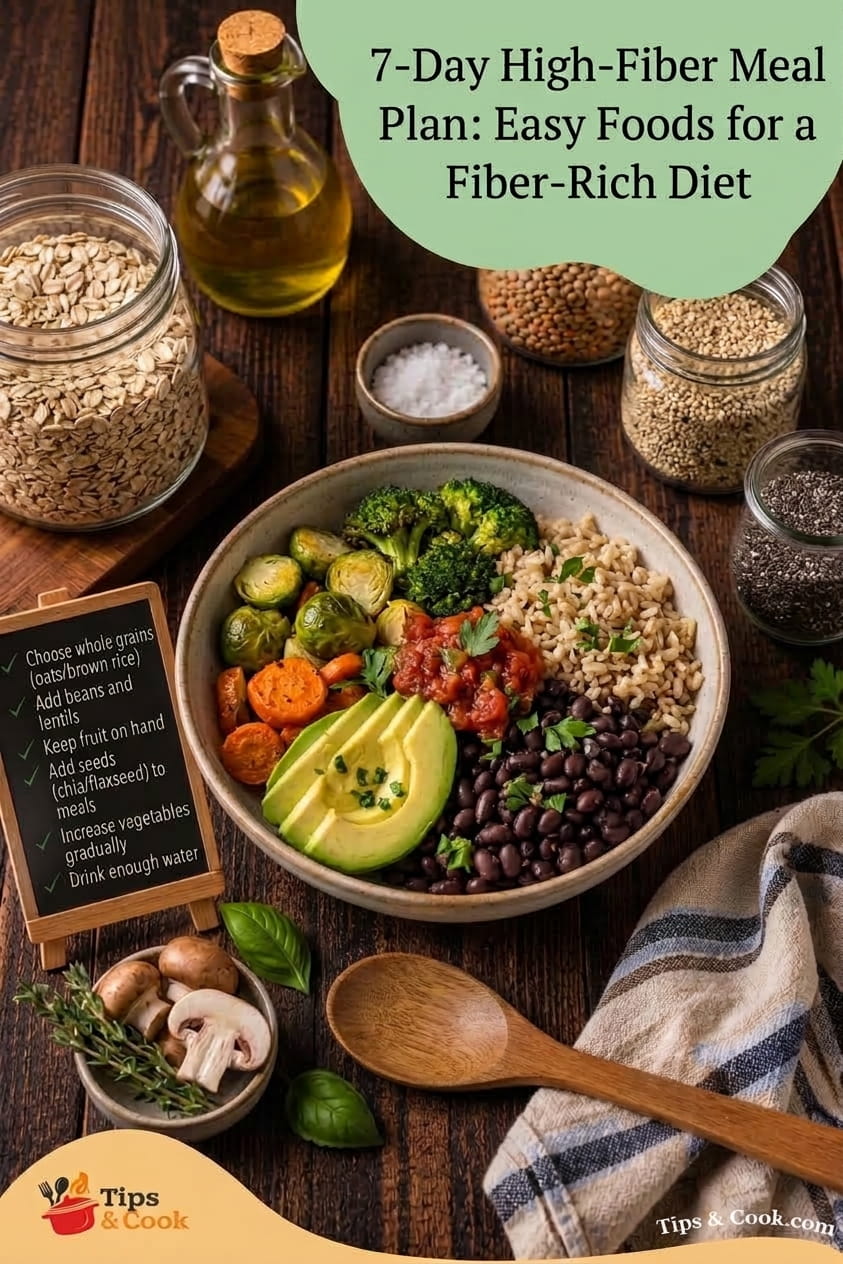
Prepare a black bean burrito bowl with brown rice, black beans, lettuce, tomatoes, corn, avocado, and salsa.
Day 6: Simple Weekend Meals
Breakfast:
Make vegetable omelets with eggs, spinach, mushrooms, onions, and tomatoes. Serve with whole-grain toast.
Lunch:
Try a Mediterranean-style chickpea bowl with cucumber, tomatoes, olives, lettuce, chickpeas, and a yogurt or tahini dressing.
Snack:
Have an orange, pear, or another seasonal fruit with a few almonds.
Dinner:
Make homemade vegetable pizza using a whole-wheat crust. Add mushrooms, bell peppers, onions, spinach, tomatoes, and a moderate amount of cheese.
Day 7: Finish Strong
Breakfast:
Prepare overnight oats with milk or plant-based milk, chia seeds, banana, berries, and peanut butter. Prepare them the night before for an easy breakfast.
Lunch:
Enjoy a hearty bean and vegetable salad with mixed greens, kidney beans, corn, cucumber, tomatoes, avocado, and lemon dressing.
Snack:
Greek yogurt with fruit and seeds, or hummus with fresh vegetables.
Dinner:
Finish the week with vegetable chili made from kidney beans, black beans, tomatoes, peppers, onions, and spices. Serve it with brown rice or whole-grain bread.
Beginner Tips for a Vegetarian Diet
If you’re new to vegetarian eating, don’t feel that you need to change everything overnight. Start by replacing a few meat-based meals with vegetarian alternatives and gradually increase the variety.
Plan your groceries: Make a shopping list before the week begins. Having beans, lentils, vegetables, fruits, whole grains, and protein-rich foods available makes meal preparation much easier.
Keep easy foods available: Canned beans, frozen vegetables, oats, whole-grain bread, hummus, and fruit can help you prepare meals quickly when you don’t have much time.
Focus on protein: Include a protein source in your main meals. Lentils, beans, chickpeas, tofu, eggs, dairy products, nuts, and seeds are useful options.
Drink enough water: Fiber intake may increase when you eat more vegetables, fruits, legumes, and whole grains. Drinking enough water can help support comfortable digestion.
Adjust the portions: The meal plan is a starting point rather than a strict diet. Increase or decrease portions according to your hunger, activity level, and nutritional needs.
Conclusion
This 7-day vegetarian meal plan for beginners shows that eating vegetarian can be simple, flavorful, and varied. You don’t need expensive ingredients or complicated recipes. By combining vegetables, fruits, legumes, whole grains, and vegetarian protein sources, you can create satisfying meals throughout the week.
Use this plan as a foundation and swap ingredients based on what you enjoy and what is available locally. The most important thing is to build sustainable eating habits that you can comfortably maintain.