
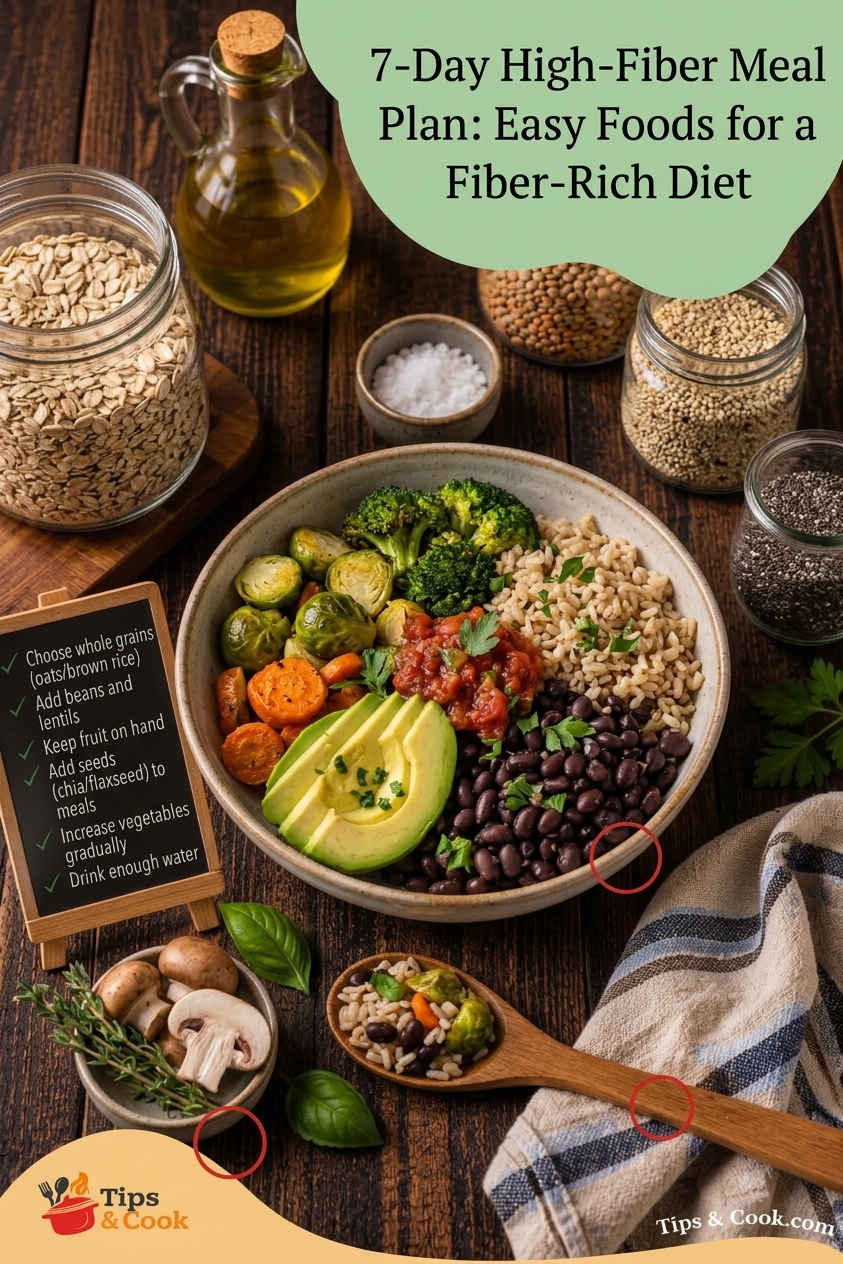
Getting enough high-fiber doesn’t have to mean eating the same bowl of oatmeal or salad every day. With the right combination of fruits, vegetables, beans, whole grains, nuts, and seeds, you can build satisfying meals that naturally increase your fiber intake.
This high-fiber meal plan provides simple ideas for breakfast, lunch, dinner, and snacks throughout the week. You can also adjust the portions and ingredients to match your preferences.
Tip: If you currently eat very little fiber, increase it gradually and drink enough water to help your body adjust.
What Is a High-Fiber Diet?
A high-fiber diet focuses on foods that naturally contain dietary fiber. Fiber is mainly found in plant foods, including fruits, vegetables, legumes, whole grains, nuts, and seeds.
There are two main types of dietary fiber. Soluble fiber dissolves in water and is found in foods such as oats, beans, apples, and some seeds. Insoluble fiber adds bulk to food and is commonly found in whole grains, vegetables, and nuts.
A balanced diet usually includes a variety of both types.
7-Day High-Fiber Meal Plan
Day 1
Breakfast:
Oatmeal topped with blueberries, banana slices, chia seeds, and a small handful of walnuts.
Lunch:
Lentil and vegetable soup with a slice of whole-grain bread and a side salad.
Snack:
An apple with natural peanut butter.
Dinner:
Brown rice with black beans, roasted vegetables, avocado, and salsa.
Day 2
Breakfast:
Whole-grain toast topped with avocado and scrambled eggs, served with an orange.
Lunch:
Chickpea salad with cucumber, tomatoes, spinach, carrots, and a simple olive oil and lemon dressing.
Snack:
A handful of almonds and a pear.
Dinner:
Baked chicken with roasted sweet potatoes, broccoli, and a side of quinoa.
Day 3
Breakfast:
Greek yogurt with raspberries, strawberries, chia seeds, and oats.
Lunch:
Whole-grain wrap filled with hummus, lettuce, cucumber, tomato, shredded carrots, and grilled chicken.
Snack:
Air-popped popcorn with a piece of fruit.
Dinner:
Three-bean chili made with kidney beans, black beans, tomatoes, onions, and peppers. Serve with brown rice.
Day 4
Breakfast:
Overnight oats made with rolled oats, milk, chia seeds, raspberries, and sliced banana.
Lunch:
Quinoa bowl with chickpeas, roasted vegetables, spinach, avocado, and lemon dressing.
Snack:
Carrot and cucumber sticks with hummus.
Dinner:
Grilled fish with a baked sweet potato and steamed green beans.
Day 5
Breakfast:
Whole-grain toast with natural peanut butter and banana slices.
Lunch:
Black bean and corn salad with tomatoes, bell peppers, avocado, and leafy greens.
Snack:
Pear with a small handful of walnuts.
Dinner:
Whole-wheat pasta with tomato sauce, mushrooms, spinach, and white beans.
Day 6
Breakfast:
Oatmeal with chopped apple, cinnamon, flaxseed, and walnuts.
Lunch:
Lentil grain bowl with brown rice, roasted carrots, broccoli, spinach, and tahini dressing.
Snack:
Fresh berries with plain yogurt.
Dinner:
Vegetable and chickpea curry served with brown rice or whole-grain naan.
Day 7
Breakfast:
A high-fiber smoothie made with berries, banana, spinach, chia seeds, oats, and milk or a dairy-free alternative.
Lunch:
Lentil and vegetable salad with cucumber, tomatoes, carrots, greens, and whole-grain bread.
Snack:
Apple slices with peanut butter.
Dinner:
Roasted chicken with quinoa, Brussels sprouts, roasted carrots, and a side salad.
High-Fiber Foods to Keep in Your Kitchen
Following a high-fiber meal plan doesn’t mean you need expensive or hard-to-find ingredients. Many common foods can help you add more fiber to your daily meals. Fresh fruits such as raspberries, pears, apples, oranges, bananas, avocados, and other berries are easy options for breakfast, snacks, smoothies, or desserts.
Vegetables are another simple way to increase your fiber intake. Broccoli, Brussels sprouts, carrots, sweet potatoes, green beans, spinach, and peas can be added to soups, salads, grain bowls, and main dishes. They also make everyday meals more filling and varied.
Beans and legumes are especially useful because they can fit into many different recipes. Lentils, chickpeas, black beans, kidney beans, and white beans can be used in soups, salads, curries, wraps, rice dishes, and homemade spreads.
Whole grains can also become useful staples in a fiber-rich kitchen. Oats, brown rice, quinoa, whole-wheat pasta, and whole-grain bread are easy to include in breakfast, lunch, or dinner. Choosing these options more often can help increase the overall fiber content of your meals.
Don’t forget about nuts and seeds. Chia seeds, flaxseeds, almonds, walnuts, and pumpkin seeds can be added to oatmeal, yogurt, smoothies, salads, or eaten as convenient snacks. Keeping a combination of fruits, vegetables, legumes, whole grains, nuts, and seeds at home makes it much easier to build balanced, fiber-rich meals throughout the week.
How Much Fiber Do You Need?
Fiber needs vary depending on factors such as age and sex. For adults, a commonly used general target is around 25 to 30 grams or more of fiber per day, although individual needs can differ.
Instead of trying to reach a large amount immediately, gradually add more fiber-rich foods to your meals.
For example, you could add berries and chia seeds to breakfast, beans to lunch, vegetables to dinner, and fruit or nuts as snacks.
Tips for Increasing Fiber Without Changing Your Diet Completely
Small changes can make a big difference.
Choose whole grains more often. Replace refined bread, rice, and pasta with whole-grain alternatives when practical.
Add beans to familiar meals. Beans work well in soups, salads, wraps, chili, and rice dishes.
Keep fruit available. Having apples, pears, oranges, or berries ready makes a high-fiber snack easier.
Add seeds to breakfast. Chia or ground flaxseed can be mixed into oatmeal, yogurt, or smoothies.
Increase vegetables gradually. Add an extra serving of vegetables to lunch or dinner rather than completely changing your meals.
Drink enough fluids. Fiber works alongside adequate fluid intake, especially when you are increasing your fiber consumption.
Can You Follow This Meal Plan Every Week?
You can use this plan as a starting point rather than a strict menu. Swap similar foods based on your taste, budget, and availability.
For example, you can replace lentils with black beans, quinoa with brown rice, berries with apples, or chicken with fish or another protein source.
The main goal is to regularly include a variety of fiber-rich meals rather than relying on one particular food.
Conclusion
A high-fiber diet can be simple, affordable, and enjoyable when you build meals around whole plant foods. This 7-day high-fiber meal plan combines oats, fruits, vegetables, beans, lentils, whole grains, nuts, and seeds in different ways so your meals don’t become repetitive.
Start gradually if your current diet is low in fiber, and focus on variety. With a few simple changes to breakfast, lunch, dinner, and snacks, eating more fiber can become a natural part of your everyday routine.