

Need a rice vinegar substitute for a recipe but don’t have any in your pantry? You don’t necessarily need to stop cooking or make a trip to the grocery store. Several common ingredients can provide the acidity your recipe needs, although each option has a slightly different flavor.
Rice vinegar is popular in Asian-inspired dishes because it has a mild, slightly sweet, and less aggressive taste than many other types of vinegar. It is commonly used in sushi rice, stir-fries, dipping sauces, salad dressings, marinades, pickled vegetables, and homemade sauces.
The best replacement depends on the recipe and the flavor you want. Here are seven practical alternatives and tips for using each one.
1. Apple Cider Vinegar
Apple cider vinegar is one of the most convenient alternatives to rice vinegar. It has a noticeable fruity flavor with moderate acidity, so it works particularly well in recipes where a little extra flavor is welcome.
You can use it in salad dressings, marinades, sauces, stir-fries, and many cooked recipes. It can also work in dipping sauces when balanced with other ingredients.
Substitution ratio: Start with 1 tablespoon of apple cider vinegar for every 1 tablespoon of rice vinegar.
Because apple cider vinegar can taste slightly stronger and fruitier, taste the recipe before adding more. If your recipe needs the mild sweetness associated with rice vinegar, a small amount of sugar or honey can help balance the flavor.
2. White Vinegar
Plain white vinegar is another pantry staple that can save your recipe. However, it is considerably sharper and more acidic than rice vinegar, so using too much can overpower the other ingredients.
For that reason, it is better to start with a smaller amount and adjust gradually. White vinegar is particularly suitable for cooked sauces, marinades, and recipes containing other strong flavors.
Substitution ratio: Start with about ¾ tablespoon of white vinegar for every 1 tablespoon of rice vinegar.
If the finished dish tastes too sharp, you can balance it with a little water, sugar, or another ingredient already used in the recipe.
3. Lemon Juice
Fresh lemon juice is a good choice when you need acidity but don’t want to use another type of vinegar. It adds a bright, fresh flavor that works well in dressings, marinades, sauces, seafood dishes, and some vegetable recipes.
The main difference is that lemon juice has a noticeable citrus flavor. Therefore, it won’t produce exactly the same taste as rice vinegar.
Substitution ratio: Start with 1 tablespoon of fresh lemon juice for every 1 tablespoon of rice vinegar.
Lemon juice works best when a fresh, bright flavor complements the recipe. It may be less suitable for dishes where the subtle flavor of rice vinegar is important.
4. Lime Juice
Lime juice can also serve as a practical alternative when you need acidity. Its bright and slightly sharp flavor makes it particularly useful for dipping sauces, marinades, dressings, and Asian-inspired dishes.
Lime juice pairs well with ingredients such as soy sauce, sesame oil, garlic, ginger, and chili. This makes it especially useful for quick homemade sauces.
Substitution ratio: Start with an equal amount of lime juice and adjust according to taste.
Since lime has a stronger citrus character, use it when you don’t mind adding a little extra freshness to the dish.
5. Champagne Vinegar
Champagne vinegar is a milder vinegar with a delicate flavor. It can be a good option when you want acidity without introducing a very strong taste.
It works particularly well in salad dressings, vegetable dishes, light sauces, and marinades. Its subtle flavor allows other ingredients to remain the focus of the dish.
Substitution ratio: Replace rice vinegar with an equal amount of champagne vinegar.
This is a useful option for recipes where maintaining a gentle acidity is more important than reproducing the exact flavor of rice vinegar.
6. Seasoned Rice Vinegar
Seasoned rice vinegar is closely related to regular rice vinegar, but it usually contains additional ingredients such as sugar and salt. If this is what you have available, it can often be used as a direct alternative.
However, you should check the ingredient label before using it. Because seasoned rice vinegar already contains seasoning, adding the same amount of salt or sugar specified in the original recipe could make the dish too salty or sweet.
Substitution ratio: Use seasoned rice vinegar in an equal amount, then adjust the other seasonings if necessary.
It is particularly convenient for Asian-style sauces, dressings, rice dishes, and marinades.
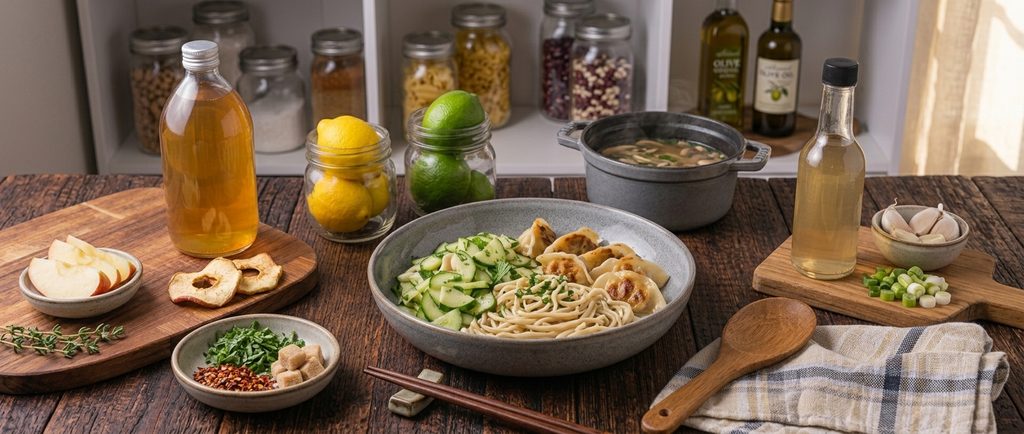
Best Rice Vinegar Substitutes at a Glance
Choosing the right rice vinegar substitute becomes easier when you consider the flavor and recipe.
| Substitute | Best For | Flavor Profile | Starting Ratio |
| Apple cider vinegar | Dressings and marinades | Fruity and tangy | 1:1 |
| White wine vinegar | Sauces and dressings | Mild and clean | 1:1 |
| White vinegar | Cooked sauces | Sharp and acidic | ¾:1 |
| Lemon juice | Dressings and seafood | Fresh and citrusy | 1:1 |
| Lime juice | Dips and marinades | Bright and tangy | 1:1 |
| Champagne vinegar | Light dishes | Delicate and mild | 1:1 |
| Seasoned rice vinegar | Asian-style dishes | Mild, sweet, and salty | 1:1 |
Which Rice Vinegar Substitute Is Best for Sushi?
If you’re making sushi rice, the closest option is usually another mild vinegar rather than a strongly acidic one. White wine vinegar can be used when regular rice vinegar isn’t available.
You may need to add a little sugar and salt to recreate the balanced flavor traditionally used for sushi rice. Avoid adding too much vinegar at once because sushi rice can quickly become overly acidic.
For the most authentic result, however, regular unseasoned rice vinegar remains the preferred option.
Which Substitute Is Best for Salad Dressing?
Apple cider vinegar and white wine vinegar are excellent choices for salad dressings. Apple cider vinegar provides a slightly fruity taste, while white wine vinegar has a cleaner and more neutral flavor.
Lemon juice is another good option if you want a fresh citrus note. Choose the substitute based on the other ingredients in your dressing.
Tips for Choosing a Rice Vinegar Alternative
Before replacing rice vinegar, consider what the ingredient is doing in the recipe. If it is mainly providing acidity, several alternatives can work well. If it also contributes sweetness and a mild flavor, you may need to adjust the recipe.
Start with a smaller amount when using a stronger vinegar such as white vinegar. Taste the dish and gradually add more until you reach the desired level of acidity.
For sauces and dressings, you can also balance a stronger vinegar with a little sugar or honey. This helps recreate the sweet-and-tangy character of rice vinegar.
Conclusion
Finding a good rice vinegar substitute is easier than it may seem. Apple cider vinegar, white wine vinegar, white vinegar, lemon juice, lime juice, champagne vinegar, and seasoned rice vinegar can all work in different situations.
For an everyday replacement, white wine vinegar or apple cider vinegar is a good starting point. Lemon and lime juice are better when you want a fresh citrus flavor, while white vinegar is useful when you need a stronger acidic ingredient.
The key is to start with a reasonable substitution ratio and adjust the flavor gradually. With the right alternative, you can keep cooking without rice vinegar and still create a balanced, flavorful dish.