

If you want to know how to keep cheese from drying out, the key is proper wrapping and refrigerator storage. Cheese can lose moisture quickly when it is exposed to cold, circulating air, especially after the original package has been opened. Fortunately, a few simple storage habits can help keep cheese moist, flavorful, and ready for sandwiches, snacks, and recipes.
Why Does Cheese Dry Out in the Refrigerator?
Your refrigerator is designed to keep food cold, but the circulating air can gradually remove moisture from exposed cheese. This is especially noticeable when cheese is left uncovered or wrapped loosely.
Hard cheeses generally tolerate storage better than soft cheeses, but every type benefits from appropriate packaging. The USDA recommends keeping refrigerated foods covered or wrapped to help retain moisture and prevent them from absorbing odors from other foods.
The type of cheese also matters. Cheddar, Parmesan, and Swiss have different moisture levels from soft cheeses such as Brie, ricotta, and cottage cheese, so they should not always be stored in exactly the same way.
How to Keep Cheese From Drying Out
1. Wrap Cheese Properly
One of the easiest ways to prevent cheese from drying out is to avoid leaving it exposed to refrigerator air.
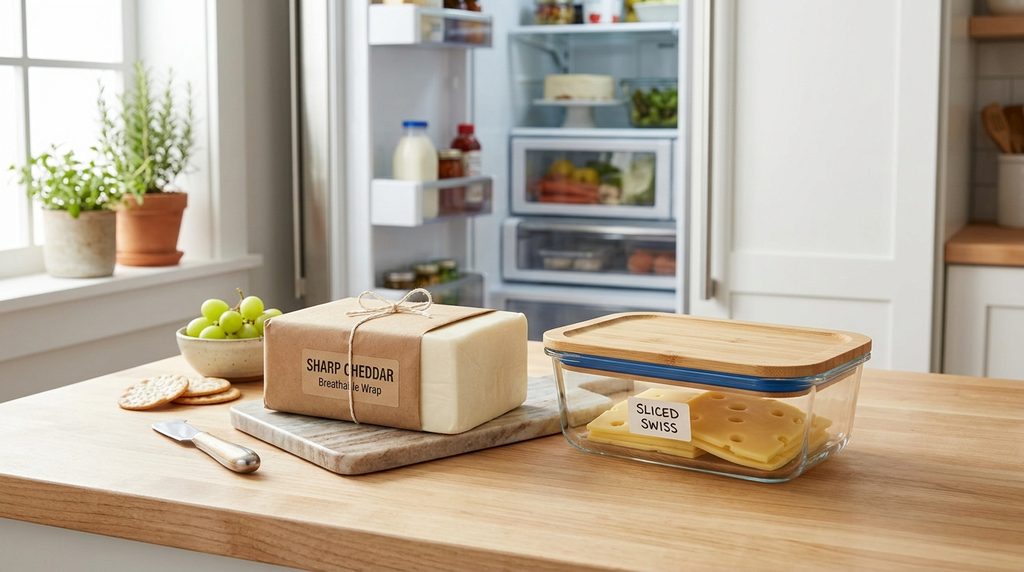
For a block of cheese, wrap it carefully after each use. Cheese paper or wax paper can be useful because it protects the cheese while allowing some airflow. Harvard’s Nutrition Source notes that loosely wrapping cheese in wax paper or foil can help prevent drying while avoiding excessive moisture buildup.
After wrapping, you can place the cheese in a suitable container for additional protection.
2. Don’t Leave Cheese in an Open Package
An opened package is one of the easiest ways for cheese to become dry.
If the original packaging can be resealed effectively, close it tightly after every use. Otherwise, transfer the cheese to appropriate wrapping or a sealed container.
The goal is to reduce unnecessary exposure to refrigerator air while maintaining a suitable environment for the particular type of cheese.
3. Use the Right Storage Container
A food-safe container can provide another layer of protection, especially for cheese that has already been opened.
For sliced or shredded cheese, keeping the original package tightly sealed can be useful. UConn Extension recommends keeping cheese in its original unopened packaging when possible and tightly wrapping or sealing it after opening.
For blocks, a container can help reduce exposure to air and odors from other foods.
4. Store Cheese in the Right Part of the Refrigerator
Don’t automatically put cheese wherever there is empty space.
A refrigerator’s cheese drawer or produce drawer may provide a more suitable environment than an exposed shelf because these compartments can reduce direct exposure to circulating cold air. A higher-humidity drawer can help reduce moisture loss.
Always follow the storage instructions on the cheese’s package, particularly for fresh or soft varieties.
5. Keep Your Refrigerator Cold
Proper temperature is important for both quality and food safety.
The USDA recommends keeping the refrigerator at 40°F (4.4°C) or below.
A refrigerator thermometer can help you check whether your appliance is maintaining the appropriate temperature.
Avoid repeatedly leaving the refrigerator door open for long periods, and return cheese to the refrigerator promptly after serving.
How to Store Different Types of Cheese
Hard Cheese
Cheddar, Parmesan, Swiss, and similar hard cheeses generally have less moisture than soft cheeses.
Wrap blocks properly after cutting and protect them from excessive exposure to refrigerator air. According to USDA guidance, hard cheeses such as cheddar, Swiss, and Parmesan can last several weeks after opening when refrigerated.
Soft Cheese
Soft cheeses contain more moisture and require more careful storage.
Examples include Brie, ricotta, cottage cheese, and cream cheese. Keep them refrigerated and follow the manufacturer’s storage instructions.
Because soft cheese is more moisture-rich, don’t assume that a dry-looking surface can be treated the same way as a hard cheese rind.
Shredded Cheese
Shredded cheese has more exposed surface area than a whole block, so it can dry out more quickly.
Keep the package tightly sealed and use clean utensils when removing cheese. UConn Extension recommends avoiding direct hand contact with cheese that will be returned to the refrigerator.
What Should You Do With Dried-Out Cheese?
If a hard cheese has developed a dry exterior, you may be able to trim the affected portion depending on the cheese and its condition.
However, don’t assume every unusual spot is harmless. If cheese has unexpected mold, an unusual smell, sliminess, or another sign of spoilage, check food-safety guidance for that specific type before eating it.
Soft and shredded cheeses require particular caution when mold develops. UConn Extension recommends discarding sliced or shredded cheese when it has developed mold.
Common Cheese Storage Mistakes
Avoid these habits if you want your cheese to stay fresh longer:
- Leaving cheese uncovered in the refrigerator
- Keeping an opened package loosely folded
- Storing cheese where cold air blows directly onto it
- Using inappropriate wrapping
- Allowing cheese to sit outside the refrigerator for extended periods
- Touching cheese with unclean hands or utensils
- Ignoring the storage instructions on the package
Another common mistake is wrapping cheese so tightly in plastic that moisture becomes trapped. Harvard’s Nutrition Source notes that excessive moisture can encourage deterioration, while a more breathable wrapping approach can help balance moisture retention and airflow.
How Long Does Cheese Last in the Refrigerator?
Storage time depends heavily on the type of cheese and whether it is opened.
The USDA says hard cheeses such as cheddar, Swiss, and Parmesan can generally be refrigerated for three to four weeks after opening, while soft cheeses such as cottage cheese, ricotta, and Brie have shorter recommended storage periods.
Always check the package label first because storage recommendations can vary between products.
Conclusion
The best way to keep cheese from drying out is to wrap it properly, limit exposure to refrigerator air, and store it at a safe temperature. For many cheeses, breathable wrapping followed by suitable protection can help maintain the right balance of moisture without trapping too much condensation.
You don’t need complicated equipment. Good wrapping, proper refrigeration, clean handling, and choosing the right storage location can make a noticeable difference in the texture and quality of your cheese.