
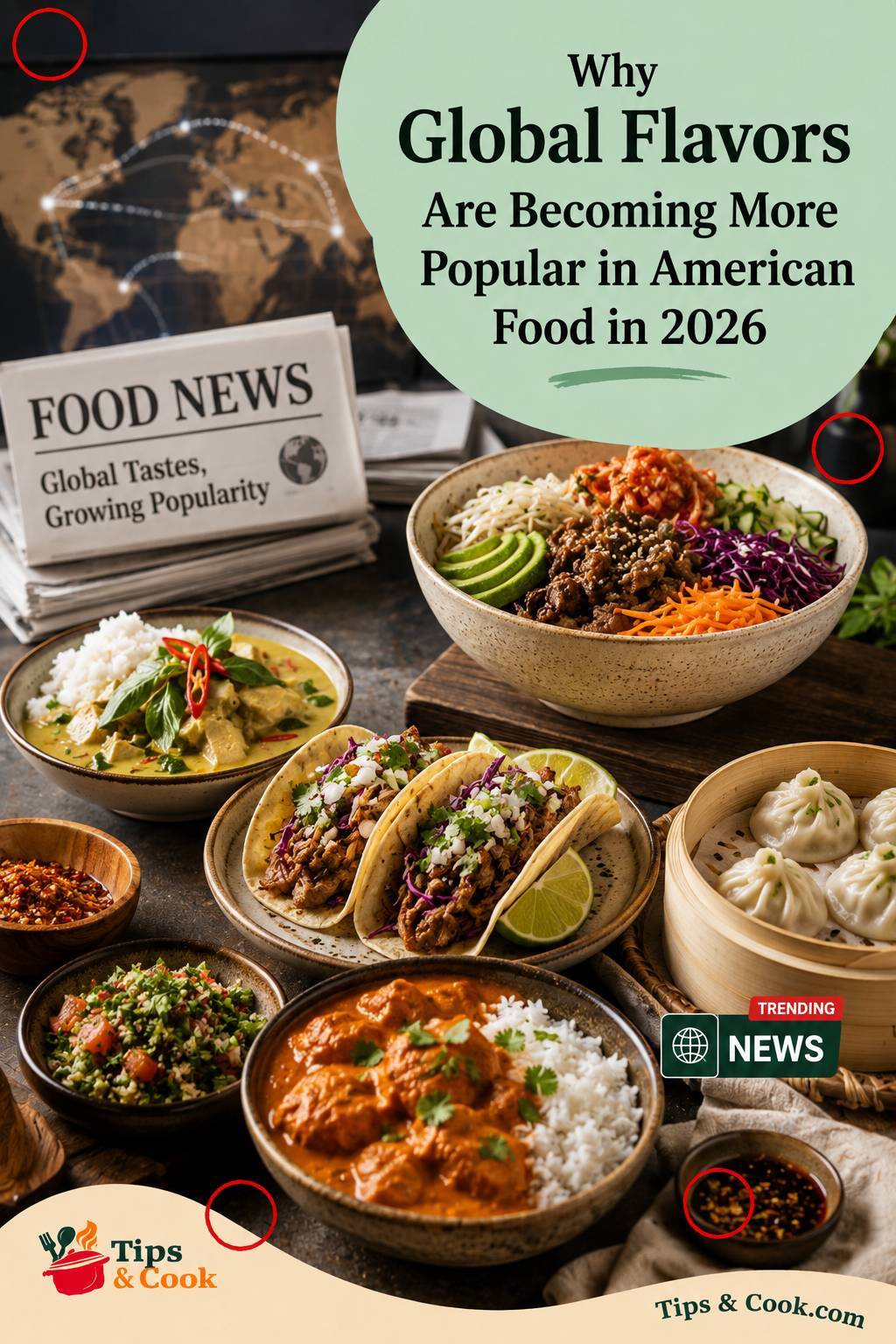
Food in the United States is becoming more diverse, creative, and globally influenced. In 2026, American consumers are showing greater interest in flavors and dishes inspired by different cultures, from Korean and Japanese cuisine to Mexican, Indian, Middle Eastern, and Southeast Asian foods.
This growing interest is part of broader global food trends 2026, with social media, travel, cultural exchange, and food innovation helping international flavors reach mainstream American consumers. Industry research also points to growing interest in new foods and hybrid combinations that combine local and global influences.
Global Food Trends 2026
International flavors are no longer limited to specialty restaurants or specific communities. They are increasingly appearing in supermarkets, fast-food menus, snacks, beverages, and everyday home cooking.
American consumers can now find products featuring ingredients such as gochujang, Tajín, chili crisp, harissa, tahini, yuzu, miso, and various global spice blends.
This expansion makes unfamiliar flavors easier to try. Consumers do not necessarily need to visit a specialty restaurant to experience something new. They may discover an international flavor through a snack, sauce, frozen meal, beverage, or restaurant special.
Social Media Is Accelerating Food Discovery
Social media has become one of the biggest forces behind food discovery. TikTok, Instagram, YouTube, and other platforms can turn an unfamiliar dish into a viral sensation within a short period.
Visually appealing foods are particularly effective at attracting attention. Bright colors, unusual textures, creative toppings, and unexpected combinations encourage people to share food experiences online.
The influence of social media is also encouraging restaurants and food brands to experiment. A traditional dish may receive a modern presentation, while familiar American foods may be combined with international ingredients.
This creates a cycle in which consumers discover new flavors online, try them in restaurants or stores, and then share their experiences with others.
Younger Consumers Are More Open to Experimentation
Younger consumers are playing an important role in the growth of global flavors. Research into 2026 food and flavor preferences shows strong interest among younger generations in trying new and global flavors.
For many consumers, food is not simply about satisfying hunger. It can also be an opportunity to explore culture, creativity, and new experiences.
This openness is encouraging brands to introduce more adventurous products. Spicy, sweet-and-spicy, sour, fermented, smoky, and umami-rich flavors are increasingly being used to create distinctive food experiences.
Fusion Food Is Becoming More Popular
Another important development is the rise of fusion cuisine. Instead of simply reproducing traditional dishes, chefs and food brands are combining influences from different culinary traditions.
For example, a restaurant might combine familiar American ingredients with Korean sauces or Mexican spices. A snack brand might use Indian-inspired seasoning on a familiar product.
This type of fusion food allows consumers to try global flavors in formats they already understand.
The trend is also reflected in the growing popularity of hybrid flavor combinations. Innova’s 2026 research highlights “Cultural Remix,” describing how globalization, social media, and travel are encouraging consumers to embrace combinations of global and local flavors.
Bold and Unexpected Flavors Are Getting Attention
Consumers are also becoming more interested in bold flavors. Sweet-and-spicy combinations, often described as “swicy,” are appearing across different food categories.
The combination of fruit with chili, for example, can create a contrast between sweetness, acidity, and heat.
Global ingredients can add additional layers of flavor, making familiar foods feel new.
Recent food-industry coverage has highlighted how global-inspired flavor combinations are appearing in mainstream products and restaurant menus.
This trend gives food companies an opportunity to create products that stand out in crowded markets.
Restaurants Are Adapting Their Menus
Restaurants are responding to consumer interest by introducing more globally inspired dishes and limited-time menu items.
Large restaurant chains can use these products to test whether consumers are ready for new flavors. Smaller restaurants can use cultural specialties and creative combinations to differentiate themselves from competitors.
Recent examples show how major restaurant brands are incorporating international seasonings into familiar menu items. For example, Taco Bell recently partnered with Tajín for limited-time products featuring chile-lime seasoning.
This demonstrates how a recognizable global flavor can be introduced through a familiar food format.
Grocery Stores Are Expanding Global Options
The trend is also visible in grocery stores. Consumers can increasingly find international sauces, seasonings, snacks, beverages, and ready-to-eat meals alongside traditional American products.
This gives shoppers more opportunities to experiment at home.
Instead of purchasing an unfamiliar ingredient without knowing how to use it, consumers can now find products designed for convenient everyday cooking. Global sauces, spice blends, frozen foods, and ready-made meals can make international flavors easier to incorporate into familiar dishes.
What This Means for Food Businesses
The growth of global flavors creates opportunities for restaurants, food brands, retailers, and content creators.
Businesses can experiment with international ingredients while still offering familiar formats. A burger with a Korean-inspired sauce, tacos with global seasonings, or snacks featuring international spices can introduce consumers to new flavors without making the product feel completely unfamiliar.
However, businesses should approach cultural flavors thoughtfully. Authenticity, accurate descriptions, respectful representation, and quality ingredients can help create a stronger connection with customers.
What Consumers Can Expect Next
The popularity of global flavors is likely to continue influencing American food culture. Consumers are becoming more comfortable exploring unfamiliar ingredients and combining different culinary influences.
At the same time, traditional favorites are unlikely to disappear. Instead, the future may involve more combinations of familiar foods and global flavors.
The result could be a food landscape where cultural boundaries become less restrictive and experimentation becomes a normal part of everyday eating.
Conclusion
The growing popularity of global flavors is one of the most interesting global food trends 2026. Social media, travel, cultural exchange, younger consumers, restaurant innovation, and expanded grocery options are making international flavors easier to discover and enjoy.
For American consumers, this means more variety and opportunities to explore different culinary traditions. For food businesses, it creates opportunities to develop exciting products and reach customers looking for something new.
As global influences continue to shape American food, the most successful trends may be those that combine bold international flavors with familiar formats, giving consumers an easy and enjoyable way to discover something different.