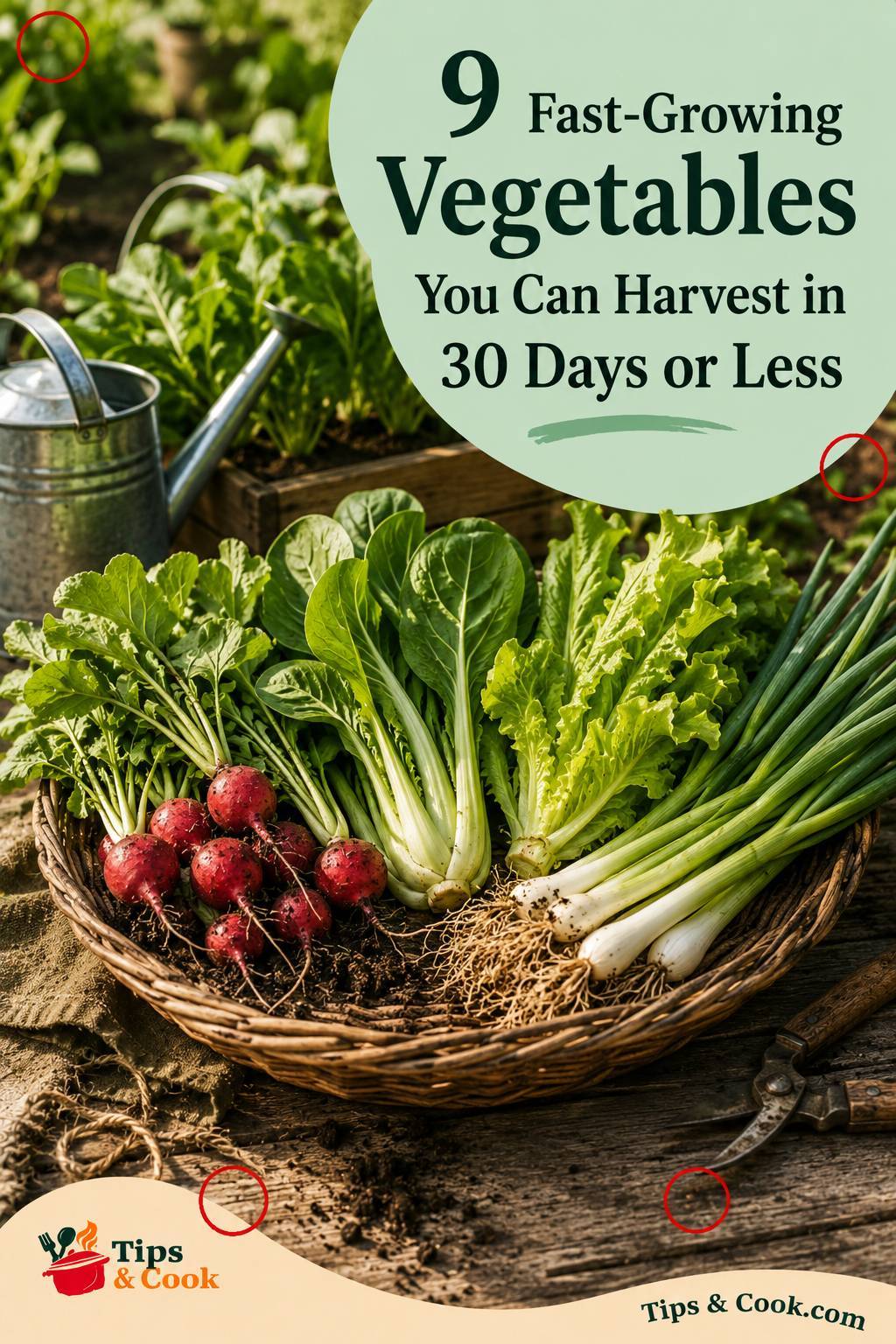
If you want fresh produce without waiting through an entire growing season, fast growing vegetables are a great place to start. Many quick-growing crops can give you a useful harvest in 30 days or less, especially when harvested young. They are ideal for beginners, container gardens, balconies, and anyone who wants to enjoy homegrown food quickly.
The exact harvest time depends on the small garden vegetables variety, temperature, sunlight, soil, and growing conditions. However, with the right choices and proper care, you can start harvesting several crops surprisingly soon.
9 Fast Growing Vegetables
1. Radishes
Radishes are among the fastest growing vegetables for a home garden. Many varieties can be ready for harvesting in around three to four weeks for easy vegetables to grow.
Plant radish seeds directly in loose, well-drained soil and keep the soil consistently moist. You can also grow them in containers as long as the container is deep enough for the roots.
For the fastest results, choose an early-maturing variety and harvest the roots when they reach a usable size.
2. Lettuce
Lettuce is another excellent choice when you want vegetables to harvest quickly. While mature heads may take longer, baby lettuce leaves can often be harvested within a few weeks.
Instead of waiting for the entire plant to mature, pick the outer leaves as needed. This allows you to enjoy fresh greens while the plant continues producing new leaves.
Lettuce also works well in containers and small garden spaces.
3. Arugula
Arugula grows quickly and is especially useful if you enjoy fresh salads. Young leaves can often be harvested within a few weeks after planting.
Sow the seeds in fertile soil and provide regular moisture. Harvest the leaves while they are young for a mild, peppery flavor.
For a continuous supply, plant small batches every couple of weeks rather than planting everything at once.
4. Spinach
Spinach is one of the most useful quick growing vegetables for cool weather. Baby spinach leaves can be ready for harvesting in roughly three to four weeks under suitable conditions.
You don’t need to wait for large mature leaves. Pick the outer leaves first and allow the center of the plant to continue growing.
Spinach prefers cooler temperatures, so timing your planting according to your local climate can make a big difference.
5. Green Onions
Green onions are a simple option for gardeners who want a relatively quick harvest. They can be grown from seeds, sets, or even the white root ends of store-bought green onions.
Plant the roots in moist soil and place them somewhere with adequate sunlight. Once the green shoots have developed enough, you can trim what you need.
For an ongoing supply, plant several batches at different times.
6. Mustard Greens
Mustard greens are fast-growing leafy vegetables that can provide a harvest while the leaves are still young.
They generally prefer cooler conditions and can grow well in garden beds or containers. Keep the soil evenly moist and harvest the outer leaves as the plants develop.
Young mustard greens have a fresh, slightly spicy flavor that works well in salads, sandwiches, and cooked dishes.
7. Turnips
Turnips are useful when you want both edible greens and roots. The greens can be harvested relatively early, while the roots need additional time to reach full size.
For a harvest within a month, focus on harvesting young turnip greens and small, tender roots rather than waiting for large mature turnips.
Loose soil is important because compacted soil can interfere with healthy root development.
8. Peas
Peas can be a rewarding crop for a home garden, although not every variety will produce mature pods within 30 days. Young shoots and some early varieties can provide something to harvest relatively quickly.
Choose a fast-maturing variety and plant during the appropriate cool growing season. Peas generally perform best with good sunlight and consistent moisture.
If you’re growing them in a container, provide support for the vines.
9. Baby Carrots
Carrots are usually associated with a long growing period, but you don’t always have to wait for full-sized roots. Some baby carrot varieties can be harvested young much earlier.
Choose a short or baby variety and grow it in loose, stone-free soil. Containers can also work well because you can control the soil conditions.
Harvesting young carrots gives you tender roots while making room for the remaining plants to develop.
How to Grow Vegetables Faster
Choosing the right crop is only part of getting a quick harvest. Your growing conditions can have a major impact on how quickly plants develop.
Choose Early-Maturing Varieties
Check the seed packet for the expected days to maturity. Varieties bred for early harvest can help you get fresh produce sooner.
Give Plants Enough Sunlight
Most vegetables grow best with plenty of sunlight. Before planting, check the light requirements of each crop and choose a location that meets them.
Keep the Soil Moist
Young plants need consistent moisture to establish healthy roots. Avoid allowing the soil to become extremely dry, but don’t keep it constantly waterlogged either.
Start With Healthy Soil
Good soil provides plants with the nutrients and structure they need to grow. Adding suitable organic matter or compost can help improve soil quality.
Harvest Young Crops
One of the easiest ways to enjoy a quicker harvest is to pick leafy vegetables while they are young. Lettuce, spinach, arugula, and mustard greens don’t necessarily need to reach full maturity before you can eat them.
Can You Really Harvest Vegetables in 30 Days?
Yes, but it depends on what you consider a harvest. Some crops can produce mature roots or leaves within about 30 days, while others can provide baby leaves, shoots, or small roots within that timeframe.
Weather, variety, soil, sunlight, watering, and planting conditions all affect growth speed. Rather than treating 30 days as a guarantee, use it as a realistic target for selecting quick crops.
Conclusion
Growing your own food doesn’t always require months of patience. With the right fast growing vegetables, you can start enjoying fresh produce surprisingly quickly.
Radishes, lettuce, arugula, spinach, green onions, mustard greens, turnips, peas, and baby carrots are all worth considering when speed matters. Start with a few easy crops, provide them with suitable growing conditions, and harvest young when appropriate.
A small garden can produce fresh ingredients much sooner than many beginners expect—and that’s one of the most rewarding parts of growing your own food.