

Coconut butter vs coconut oil
Coconut butter vs coconut oil is a common comparison among people looking for healthier cooking fats and natural food options. Although both products come from coconuts, they have different textures, nutritional profiles, and uses. Understanding the difference between coconut butter and coconut oil can help you choose the right option for cooking, baking, skincare, and daily nutrition.
What Is Coconut Butter?
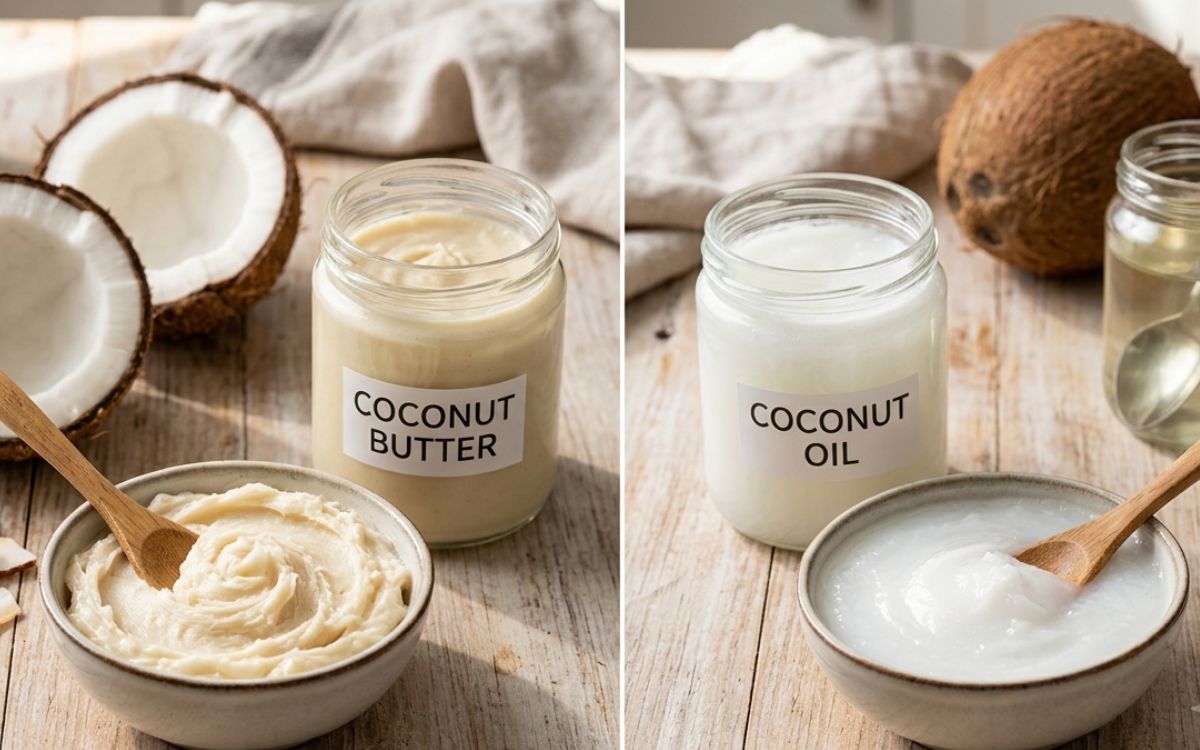
Coconut butter is made by blending the entire coconut flesh into a smooth, creamy spread. Unlike coconut oil, it contains coconut meat along with natural fiber and nutrients. It has a thick texture and a slightly sweet coconut flavor, making it a popular ingredient in smoothies, desserts, sauces, and spreads.
Because coconut butter includes the whole coconut, it provides more fiber and plant-based nutrients compared to pure coconut oil. It also contains healthy fats that can help provide long-lasting energy.
What Is Coconut Oil?
Coconut oil is extracted from coconut meat and contains almost 100% fat. During production, the coconut solids and fiber are removed, leaving behind a clear or white oil with a smooth texture. Coconut oil is widely used for frying, baking, cooking, hair care, and skincare.
There are different types of coconut oil, including virgin coconut oil and refined coconut oil. Virgin coconut oil is less processed and keeps more of the natural coconut flavor and compounds.
Coconut Butter vs Coconut Oil: Main Differences
The biggest difference between coconut butter and coconut oil is their composition. Coconut butter contains the whole coconut, while coconut oil only contains extracted fat.
Coconut butter has fiber, carbohydrates, and a richer coconut taste. It works well as a spread or ingredient for creamy recipes. On the other hand, coconut oil has a higher fat concentration and is better suited for high-heat cooking and recipes that require oil.
When comparing coconut butter vs coconut oil, your choice depends on your goal. If you want more nutrients and a whole-food coconut product, coconut butter may be a better option. If you need a versatile cooking oil, coconut oil is usually more practical.
Nutrition Comparison
Coconut butter provides additional nutrients because it contains coconut flesh. It offers dietary fiber and minerals while still being high in saturated fat.
Coconut oil mainly provides medium-chain fatty acids, including lauric acid. It does not contain fiber because the coconut solids are removed during processing.
For more details about coconut oil composition, saturated fats, and health considerations, you can explore coconut oil nutrition and health effects.
Both products are calorie-dense, so portion control is important. Adding too much coconut butter or coconut oil to your diet can increase overall calorie intake.
Best Uses for Coconut Butter
Coconut butter works especially well in recipes where you want a creamy texture and coconut flavor. Some popular uses include:
- Spreading on toast or crackers
- Adding to smoothies
- Making homemade energy bars
- Creating dairy-free desserts
- Thickening sauces
Its natural sweetness makes it a great alternative for people who enjoy whole-food ingredients.
Best Uses for Coconut Oil
Coconut oil is one of the most versatile kitchen oils available. Common uses include:
- Cooking and frying
- Baking cakes and cookies
- Making homemade skincare products
- Hair conditioning treatments
- Preparing coffee or smoothies
Its higher fat concentration and stable structure make it useful for many cooking methods.
Which One Should You Choose?
The answer depends on your personal needs. If you are looking for a nutrient-rich coconut product with fiber, coconut butter is a great choice. If you want a simple cooking oil with a longer shelf life, coconut oil may be more suitable.Making the right choice also depends on maintaining a balanced diet and understanding different types of fats. Learn more about healthy fats and dietary guidance when planning your daily nutrition.
For many people, using both products in moderation provides the best balance. Coconut butter can add flavor and nutrition to meals, while coconut oil can support everyday cooking needs.
Conclusion
When comparing coconut butter vs coconut oil, neither product is automatically better for everyone. Coconut butter offers the benefits of whole coconut nutrition, while coconut oil provides a pure source of coconut fat with many practical uses.
Choosing between them depends on your recipe, dietary goals, and personal preference. By understanding their differences, you can make a smarter decision about which coconut product fits your lifestyle.
Explore More..