
Butter vs Margarine
Butter vs margarine is a debate that has continued for decades, especially among home cooks and health-conscious consumers. Both are popular spreads and cooking fats, but they differ in ingredients, nutritional value, flavor, and cooking performance. Whether you’re baking cookies, sautéing vegetables, or simply spreading it on toast, understanding the difference between butter and margarine can help you make the right choice for your kitchen and your health.
While butter is made from dairy cream, margarine is typically produced from vegetable oils. Each has its own advantages, and the best option depends on your dietary goals, favorite recipes, and personal preferences.
What Is Butter?
Butter is a natural dairy product made by churning cream until the butterfat separates from the buttermilk. It has been a kitchen staple for centuries because of its rich flavor, creamy texture, and versatility in cooking.
Butter contains saturated fat, cholesterol, and small amounts of vitamins A, D, E, and K. Since it is minimally processed, many people choose butter for its natural ingredients and authentic taste. It performs exceptionally well in baking, helping create flaky pastries, tender cakes, and flavorful cookies.
What Is Margarine?
Margarine is a butter alternative made primarily from vegetable oils such as soybean, sunflower, canola, or palm oil. Modern margarine is often fortified with vitamins A and D and is available in both stick and soft spreadable forms.
Many soft margarines contain more unsaturated fats than butter, making them a popular choice for people looking to reduce saturated fat intake. Today’s high-quality margarines are generally free from artificial trans fats, although it’s still important to check nutrition labels before purchasing.
Butter vs Margarine: Key Differences
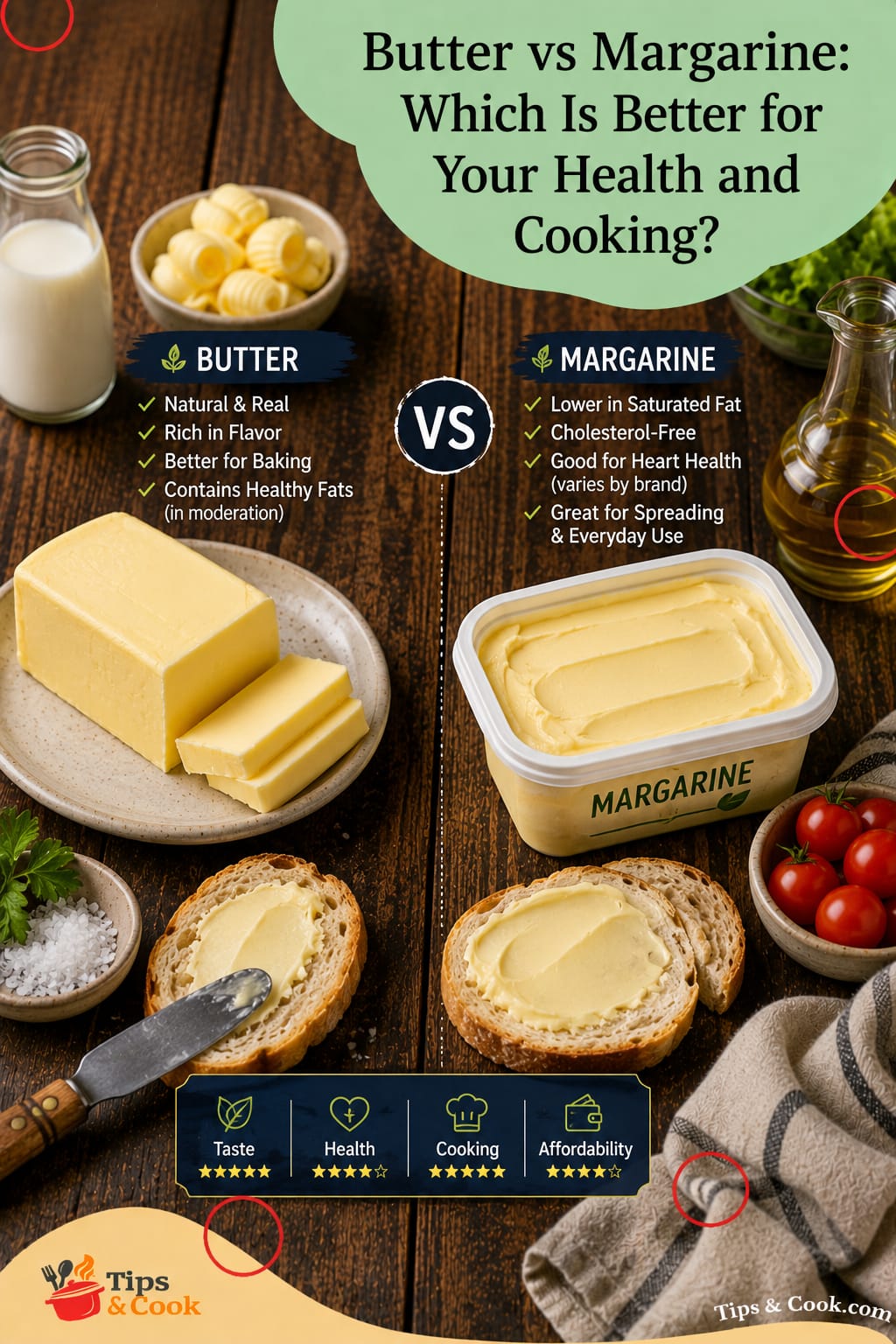
The biggest difference between butter vs margarine is their source. Butter comes from animal-based dairy, while margarine is produced from plant-based oils.
Butter offers a rich, creamy flavor that enhances baked goods, sauces, and many traditional recipes. Margarine has a milder taste, spreads easily even when refrigerated, and is often preferred for everyday use.
From a nutritional perspective, butter is higher in saturated fat and cholesterol, while margarine usually contains more heart-friendly unsaturated fats. However, the nutritional quality of margarine depends on the ingredients used by each manufacturer.
Nutrition Comparison
Butter provides naturally occurring fat-soluble vitamins along with small amounts of beneficial compounds like conjugated linoleic acid (CLA). However, it also contains more saturated fat, so moderation is recommended.
Margarine generally contains less saturated fat and more unsaturated fats, which may support heart health when used as a replacement for saturated fats in a balanced diet. Some products are also enriched with vitamins to improve their nutritional value.
For a healthier choice, always read the ingredient label and choose margarine made with quality vegetable oils and no artificial trans fats. You can learn more about different dietary fats from the American Heart Association – Healthy Fats.

Which Is Better for Cooking?
Both butter and margarine have their strengths in the kitchen.
Butter is best for:
- Baking cakes, cookies, and pastries
- Making rich sauces
- Browning vegetables
- Finishing steaks and seafood
- Spreading on warm bread and toast
Its rich flavor and aroma make it the preferred choice for recipes where taste is the priority.
Margarine is best for:
Everyday cooking
Toast and sandwiches
Baking muffins and quick breads
Dairy-free recipes (depending on the brand)
Recipes requiring a soft spread
Because margarine remains soft at cooler temperatures, it’s convenient for daily use and easy to spread.
Which One Is Healthier?
Choosing between butter vs margarine depends on your overall eating habits and health goals.
If you prefer natural, minimally processed foods and use them in moderation, butter can fit into a balanced diet. If you’re aiming to reduce saturated fat or follow a plant-based lifestyle, a soft margarine made with healthy vegetable oils may be the better choice.
Rather than focusing on a single ingredient, experts recommend paying attention to your overall dietary pattern. Eating plenty of fruits, vegetables, whole grains, lean proteins, and healthy fats has a much greater impact on long-term health than choosing butter or margarine alone. For evidence-based nutrition guidance, visit the Harvard T.H. Chan School of Public Health – The Nutrition Source.
Tips for Choosing the Right Option
To make the best choice for both health and cooking:
- Read nutrition labels before buying.
- Choose margarine without artificial trans fats.
- Use butter in moderation because it’s high in saturated fat.
- Select products with fewer processed ingredients.
- Match your choice to your recipe and dietary preferences.
- Consider plant-based margarine if you’re vegan or lactose intolerant.
Conclusion
When comparing butter vs margarine, there isn’t a single winner for everyone. Butter delivers rich flavor and outstanding performance in baking and cooking, making it a favorite for recipes where taste matters most. Margarine offers a convenient plant-based alternative that is often lower in saturated fat and may be a better option for people focusing on heart health.
The smartest approach is to use whichever product best fits your cooking needs while enjoying it in moderation as part of a balanced diet. By understanding their nutritional differences, cooking performance, and ingredient quality, you can confidently choose the option that supports both your health and your favorite recipes.
Discover more healthy food tips, cooking guides, and nutrition articles Click here.