Foraging can provide an abundance of wild mushrooms, herbs, berries, fruits, and edible plants during the right season. The challenge is preserving that harvest before it spoils. One of the simplest solutions is a food dehydrator.
The best wild food dehydrators allow you to remove moisture from properly prepared foods while maintaining useful flavor and texture. Dehydrated foods also take up considerably less space than fresh produce, making them convenient for storage, cooking, and backpacking.
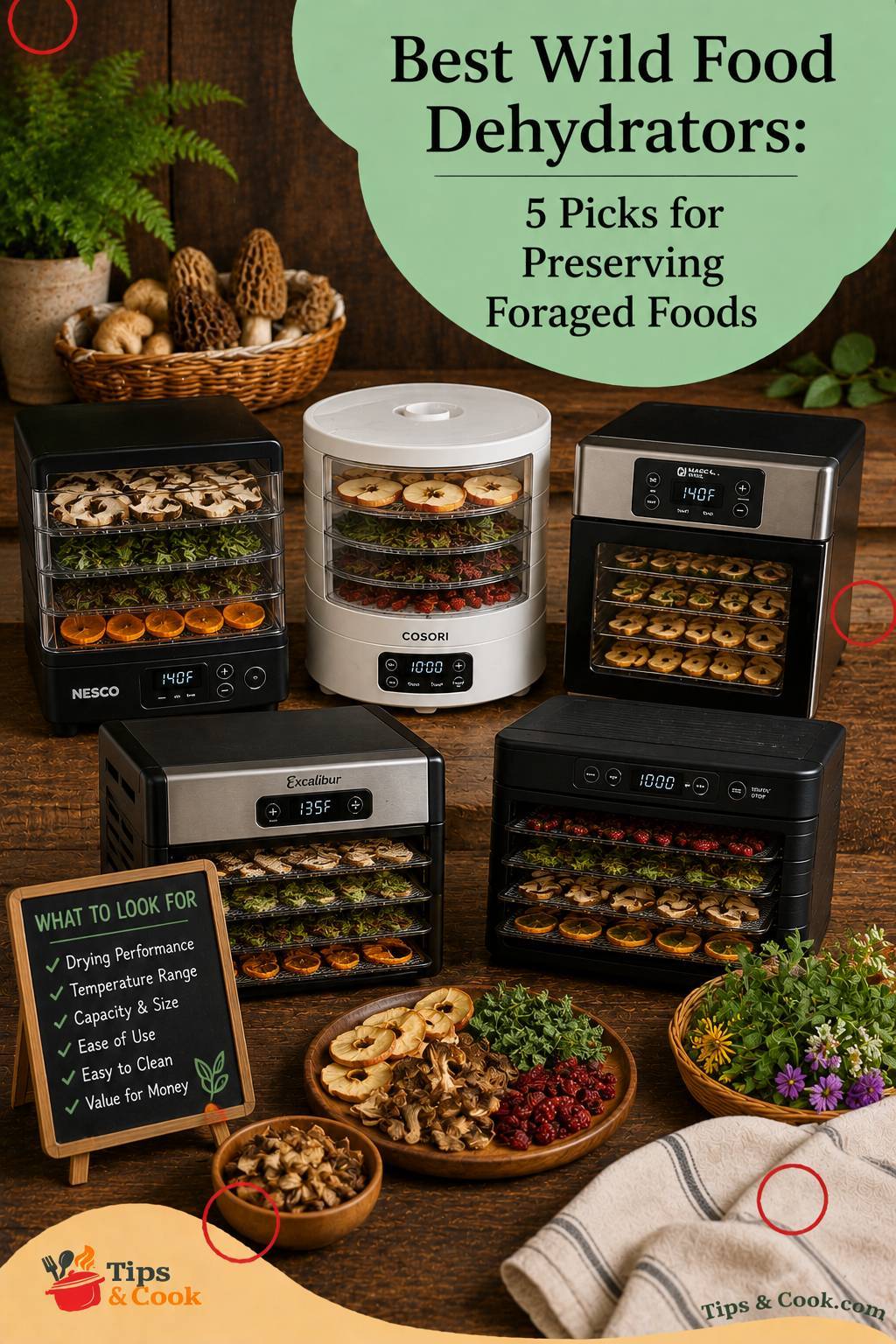
Not every dehydrator is equally suitable for foraged foods. Temperature control, airflow, tray capacity, cleaning, and the ability to handle delicate ingredients are important considerations. Current 2026 testing from sources such as Food Network and WIRED highlights models from Excalibur, COSORI, NESCO, and other established brands for different preservation needs.
Here are five dehydrators worth considering if you regularly preserve foods from your garden, local market, or responsible foraging trips.
Quick Comparison
| Dehydrator | Best For | Main Advantage |
| Excalibur 9-Tray | Large foraged harvests | Large capacity |
| COSORI Food Dehydrator | Beginners | Easy controls and good value |
| NESCO Snackmaster Pro | Budget users | Affordable and expandable |
| Magic Mill Food Dehydrator | Large batches | Multiple trays and strong capacity |
| Brod & Taylor Sahara | Small kitchens | Foldable, space-saving design |
Best Wild Food Dehydrators

Excalibur 9-Tray Food Dehydrator – Best Overall for Large Harvests
If you regularly bring home large quantities of wild herbs, mushrooms, fruits, or other suitable foods, an Excalibur 9-tray dehydrator is one of the strongest options to consider.
The major advantage is capacity. A larger dehydrator allows you to process more food in a single batch instead of repeatedly running a small machine. This can be particularly useful during periods when wild foods are abundant.
The Excalibur design has also developed a strong reputation among food-preservation enthusiasts. Recent WIRED testing named an Excalibur model its best overall dehydrator, highlighting drying performance, relatively quiet operation, and usability.
For wild foods, look for a model with adjustable temperature settings so you can choose an appropriate setting for the particular ingredient rather than simply using the highest temperature.
Pros
- Large drying capacity
- Well suited to frequent preservation
- Good choice for large batches
- Established reputation among dehydrator users
Cons
- Takes more counter and storage space
- More expensive than basic dehydrators
- May be excessive for occasional users
Best for: Serious foragers and homesteaders who regularly process large harvests.
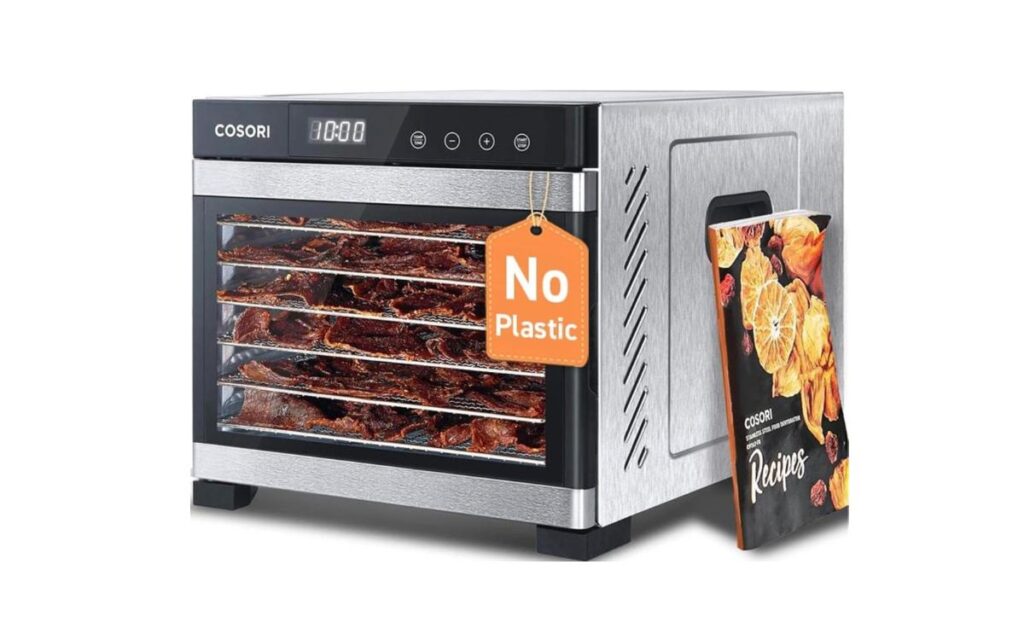
COSORI Food Dehydrator – Best for Beginners
COSORI is a practical option for someone purchasing their first dehydrator. Food Network’s 2026 testing lists a COSORI Food Dehydrator as its best overall pick and highlights its performance across foods such as fruit leather and jerky.
For beginners, the appeal is straightforward operation. You don’t necessarily need an advanced preservation setup when you’re starting out. A machine with understandable controls and sufficient capacity can make the learning process easier.
A COSORI dehydrator can be useful for properly prepared herbs, fruits, vegetables, and other suitable foods collected during foraging.
Another advantage is versatility. Once your foraging season slows down, you can continue using the dehydrator for ordinary kitchen preservation, including fruit, vegetables, herbs, and snacks.
Pros
- Beginner-friendly
- Versatile for different foods
- Good everyday kitchen appliance
- Suitable for herbs and other suitable foraged foods
Cons
- Not the cheapest option available
- Counter space is still required
- Capacity varies by model
Best for: Beginners who want one dehydrator for both foraged foods and everyday kitchen use.
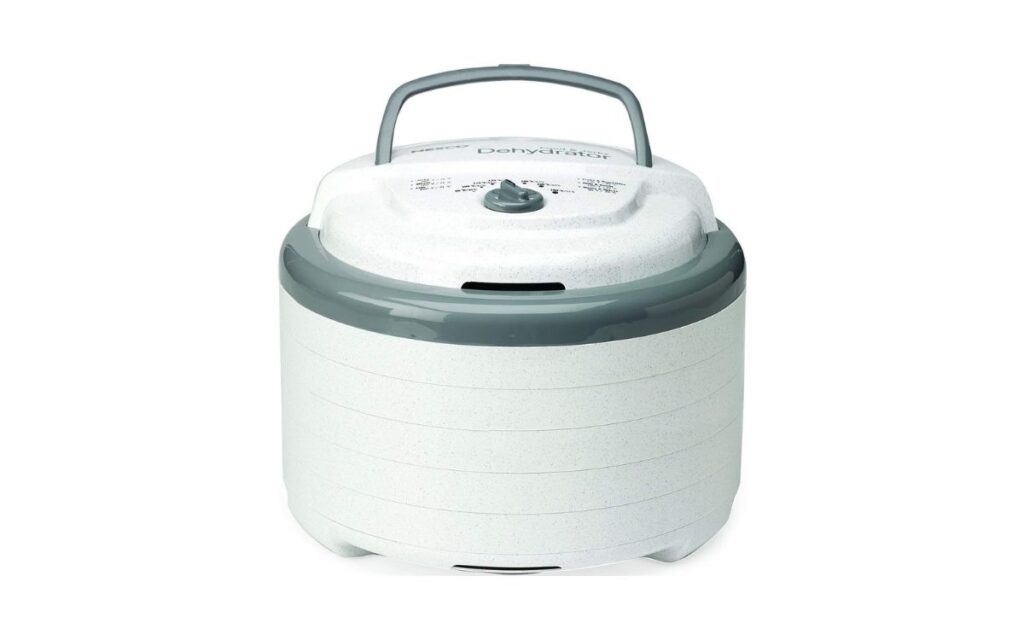
NESCO Snackmaster Pro – Best Budget Pick
If you’re interested in trying food dehydration without making a major investment, the NESCO Snackmaster Pro is worth considering.
Food Network lists the NESCO Snackmaster Pro among its 2026 recommendations and identifies it as a value-oriented option.
One useful feature of the NESCO system is its expandable design on applicable models. That can be helpful if your preservation needs increase over time.
For a beginner who occasionally collects herbs, berries, mushrooms, or other foods suitable for dehydration, a budget-friendly machine may make more sense than immediately buying a large premium appliance.
The main thing to consider is how much food you expect to process. A smaller setup can become frustrating if you routinely return from a foraging trip with a large harvest.
Pros
- Budget-friendly
- Good starting point
- Expandable on applicable models
- Useful for everyday dehydration
Cons
- Smaller capacity than large premium machines
- Round tray design may be less convenient for some foods
- Not ideal for very large harvests
Best for: New foragers who want an affordable introduction to food dehydration.
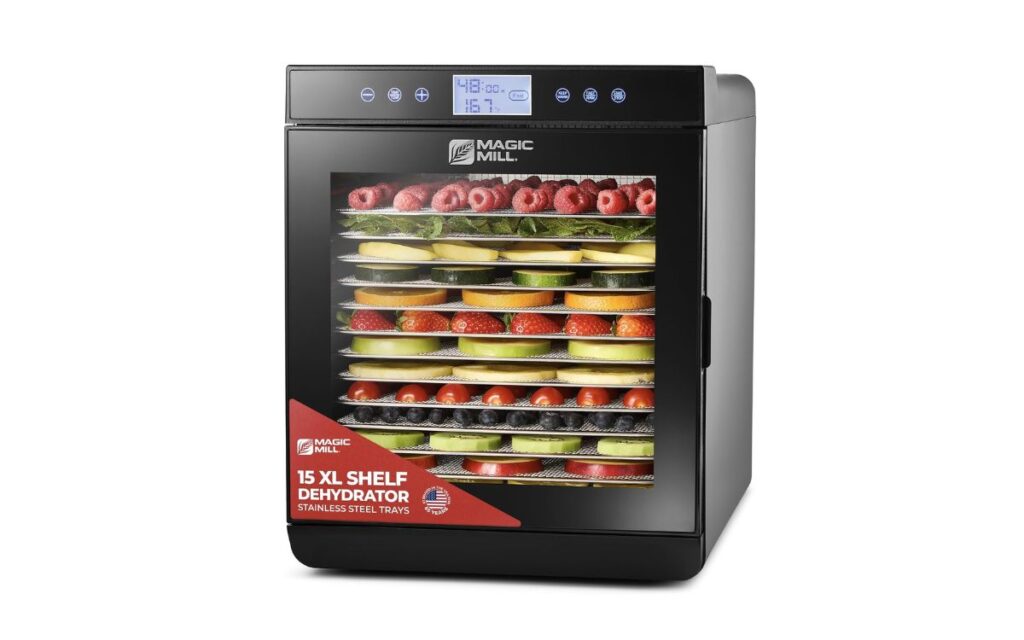
Magic Mill Food Dehydrator – Best for Large Batches
Magic Mill offers larger dehydrator configurations that can be useful when you need substantial drying capacity.
Large-batch dehydration is particularly helpful during peak foraging periods. Instead of allowing a large harvest to sit around while you wait for previous batches to finish, multiple trays let you process more food at once.
Recent food-dehydrator testing has included Magic Mill models among the stronger choices for home food preservation. Food & Wine, for example, highlighted a Magic Mill 10-tray model for its performance and ease of use. Serious Eats has also tested Magic Mill models and praised features such as stainless-steel trays and quiet operation on the model it reviewed.
This makes Magic Mill particularly interesting for people who regularly preserve large amounts of produce.
Pros
- Large capacity options
- Suitable for batch preservation
- Useful for a variety of foods
- Some models feature stainless-steel trays
Cons
- Larger models require more storage space
- Can be excessive for occasional users
- Model specifications vary
Best for: Families, homesteaders, and serious foragers processing large quantities.

Brod & Taylor Sahara – Best Space-Saving Pick
If kitchen storage space is limited, the Brod & Taylor Sahara Folding Food Dehydrator offers an interesting alternative.
Its major selling point is its foldable design. Better Homes & Gardens named the Sahara its best overall dehydrator in its testing, particularly highlighting its space-saving design and ease of use.
This can be especially useful for people who don’t want a large appliance permanently occupying their countertop.
The Sahara can also make sense for seasonal foragers. You can bring it out during periods when wild foods are abundant and fold it away when you’re finished preserving your harvest.
Pros
- Foldable design
- Easier to store
- Good option for smaller kitchens
- Suitable for seasonal users
Cons
- Higher-end purchase
- Folding design may not suit everyone
- Capacity is less important than with large 9- or 10-tray machines
Best for: Foragers with limited kitchen or storage space.
What Makes a Good Wild Food Dehydrator?
When choosing among wild food dehydrators, don’t focus only on the number of trays. Several other features can have a major effect on your results.
Adjustable Temperature
Different foods have different dehydration requirements. A machine with adjustable temperature settings gives you greater control than a basic appliance with only one heat setting.
This is particularly useful when preserving delicate herbs.
Consistent Airflow
Even airflow helps food dry more consistently. Some modern dehydrators use rear-mounted or horizontal airflow systems to reduce the need for manually moving trays during a drying cycle. Serious Eats specifically notes the advantages of back-placed fans for more balanced airflow.
Tray Capacity
Think about how much food you normally collect.
If you only dry a small amount of herbs at a time, a compact five-tray machine may be sufficient. If you regularly process large quantities of mushrooms, fruits, or vegetables, a nine- or ten-tray machine may save considerable time.
Easy Cleaning
Wild foods can bring dirt, plant material, and other debris into your kitchen. Removable trays and easy-to-clean surfaces make the appliance much more convenient.
Low-Temperature Capability
For delicate herbs and some other ingredients, having a sufficiently low temperature setting can be important. Current dehydrator guides emphasize checking the temperature range rather than assuming every machine is suitable for delicate herbs.
What Wild Foods Can You Dehydrate?
Depending on the species and proper food-safety preparation, dehydration can be used for a variety of foods, including:
- Wild herbs
- Edible mushrooms
- Berries
- Apples and other suitable fruits
- Certain vegetables
- Edible flowers
- Properly prepared greens
However, dehydration does not make an incorrectly identified poisonous plant or mushroom safe to eat.
Identification should always happen before preservation.
How to Choose the Right Dehydrator for Foraging
Choose a Small Model If:
- You forage occasionally
- You live in a small apartment
- You usually collect small quantities
- Storage space is limited
Choose a Large Model If:
- You forage frequently
- You process mushrooms in large quantities
- You preserve seasonal harvests
- You want to dehydrate several foods at once
Choose a Premium Model If:
- You dehydrate regularly
- You want precise controls
- You care about long-term durability
- You want better airflow and convenience
Tips for Dehydrating Foraged Foods
Before putting wild foods into a dehydrator, make sure they have been correctly identified and are appropriate for dehydration.
Clean and prepare the food according to the characteristics of the specific ingredient. Cut larger pieces into reasonably consistent sizes so they dry more evenly.
Avoid overcrowding trays because air needs to circulate around the food.
After dehydration, allow the food to cool before packaging. Store completely dried foods in appropriate airtight containers and keep them in a cool, dry, dark location.
Most importantly, follow reliable food-preservation guidance for the specific food you are processing.
Dehydration reduces moisture, but proper drying and storage are still essential for maintaining quality and safety. WIRED’s current dehydrator guide also emphasizes proper storage practices for extending the useful life of dehydrated foods.
Are Food Dehydrators Worth It for Foragers?
Yes, especially if you regularly find more wild food than you can consume immediately.
A dehydrator can turn a short seasonal harvest into something you can store and use later. It can also reduce the amount of freezer or refrigerator space required for preservation.
The best choice depends on your harvesting habits. A NESCO can be a sensible budget starting point, while COSORI is attractive for beginners looking for an everyday machine. For large harvests, Excalibur and Magic Mill offer larger-capacity options, while the Brod & Taylor Sahara is particularly interesting if storage space is a priority.
Final Thoughts
The best wild food dehydrators aren’t necessarily the largest or most expensive models. The right choice depends on how much you forage, what types of foods you preserve, how much space you have, and how frequently you plan to use the machine.
For large harvests, the Excalibur 9-Tray is a strong choice. The COSORI Food Dehydrator is well suited to beginners, while the NESCO Snackmaster Pro offers a more budget-conscious entry point. Magic Mill is worth considering for larger batches, and the Brod & Taylor Sahara stands out when compact storage matters.
Whatever model you choose, remember that successful wild-food preservation starts with correct identification and responsible harvesting-not with the dehydrator itself.
Frequently Asked Questions
What is the best dehydrator for wild foods?
For large harvests, a high-capacity model such as an Excalibur can be a strong choice. Beginners may prefer a COSORI, while budget-conscious users can consider a NESCO Snackmaster Pro.
Can you dehydrate wild mushrooms?
Some properly identified edible mushrooms can be dehydrated. However, dehydration does not remove the danger of poisonous mushrooms, so accurate identification is essential before processing.
What temperature should I use for wild herbs?
The appropriate temperature depends on the specific herb and preservation method. Choose a dehydrator with a low enough adjustable setting and follow reliable guidance for the particular herb rather than using one temperature for everything.
How many trays do I need?
For occasional foraging, five trays may be enough. Frequent foragers processing large seasonal harvests may benefit from nine or more trays.
Is a dehydrator better than freezing wild foods?
Neither method is universally better. Dehydration can reduce storage space and provide convenient long-term pantry storage, while freezing may preserve the texture of some foods better. The best method depends on the specific food.
Can I use a food dehydrator for both foraged and store-bought foods?
Yes. A food dehydrator can be used for many suitable foods from both sources, including herbs, fruits, vegetables, and other foods intended for dehydration.