What Is a CSA Box?
A CSA box is a box of fresh, seasonal produce supplied through a community-supported agriculture (CSA) program. It usually contains vegetables, fruits, herbs, or other farm products collected from a local farm. Instead of buying every item separately at a grocery store, members subscribe to a farm’s harvest and receive regular shares throughout the growing season.
If you enjoy fresh food, want to support local farmers, or are interested in sustainable food systems, learning what a CSA box is can help you decide whether this approach suits your household. CSA programs connect consumers directly with farms and offer a different way to access seasonal ingredients.
What Does CSA Stand For?
CSA stands for community-supported agriculture. It is a farming model in which consumers become members of a farm by paying for a share of its harvest, often before the growing season begins.
This early financial support helps farmers cover expenses such as seeds, equipment, labor, and supplies. In return, members receive a portion of the farm’s produce according to the program’s schedule.
CSA arrangements vary by farm. Some provide weekly boxes, while others offer deliveries every other week or seasonal pickup options. Certain programs also include eggs, dairy products, flowers, bread, or other locally produced goods.
What Comes in a CSA Box?
The contents of a CSA box depend on the farm, growing season, local climate, and subscription plan. Because the produce follows seasonal harvests, the items can change from one delivery to the next.
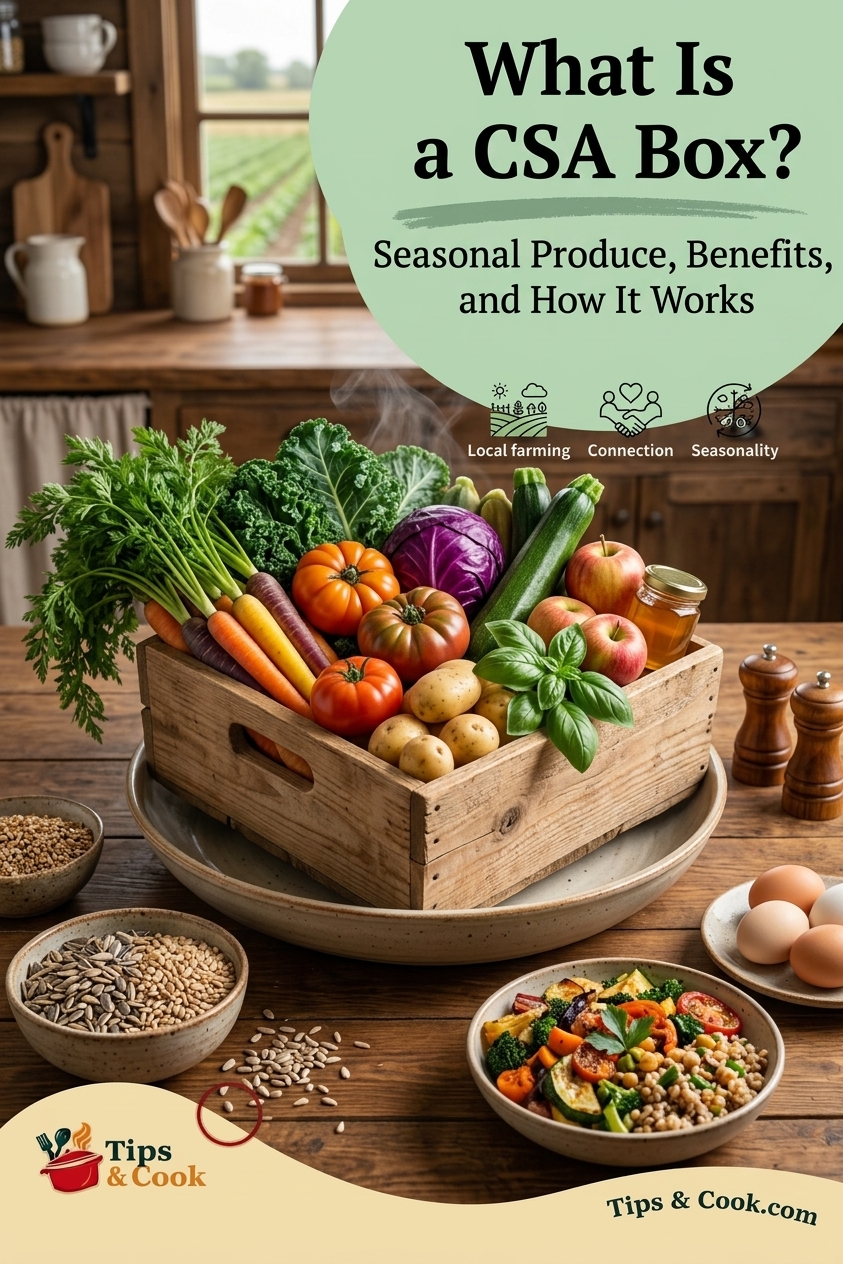
A typical CSA box may include:
- Leafy greens: Lettuce, spinach, kale, or other seasonal greens.
- Vegetables: Carrots, tomatoes, cucumbers, peppers, potatoes, or squash.
- Fruits: Apples, berries, peaches, or other fruits grown in the region.
- Fresh herbs: Basil, parsley, cilantro, or mint.
- Additional farm products: Some programs offer eggs, honey, flowers, or other locally produced items.
Not every CSA box contains all these products. Some farms allow members to customize their selections, while others provide a standard box based on what is ready to harvest.
How Does Community-Supported Agriculture Work?
Joining a CSA program is usually straightforward. Although each farm has its own rules, most programs follow a similar process.
1. Choose a Local Farm
Start by researching farms that offer CSA subscriptions in your area. Review their growing practices, available products, delivery locations, pickup arrangements, and membership options.
2. Select a Subscription
Choose a share size and payment plan that fit your household. A small share may suit one or two people, while a larger share may be more practical for a family.
Some farms require payment upfront for an entire season. Others offer installment payments or shorter subscription periods.
3. Receive Your Seasonal Produce
Once the harvest begins, the farm prepares boxes according to its schedule. Members may collect their boxes at a designated pickup point, receive home delivery, or visit the farm.
4. Prepare Meals Around the Harvest
Because CSA boxes reflect seasonal availability, you may receive vegetables or fruits you do not usually purchase. Planning meals around the ingredients can help you use the produce before it spoils and explore new recipes.
What Are the Benefits of a CSA Box?
A CSA subscription can offer several advantages for consumers who enjoy fresh, seasonal food.
Access to seasonal produce: CSA boxes introduce you to ingredients that are currently being harvested in your region. Depending on the farm, you may receive produce soon after harvest.
Support for local farmers: Membership fees provide farmers with financial support and help establish a direct relationship between growers and consumers.
Opportunities to try new foods: A changing selection encourages you to experiment with unfamiliar vegetables, herbs, and recipes.
More intentional meal planning: Receiving a regular box can help you plan meals around available ingredients instead of making unplanned grocery purchases.
Connection to local agriculture: Some CSA programs offer farm visits, newsletters, harvest updates, or volunteer opportunities that help members understand how their food is grown.
However, these benefits depend on the farm’s practices and the terms of its program. A CSA subscription does not automatically guarantee organic certification, lower prices, or a particular level of environmental sustainability.
What Are the Disadvantages of a CSA Box?
Although CSA programs appeal to many households, they are not the right choice for everyone.
Limited control over the contents: Standard CSA boxes often contain whatever is ready for harvest. You may not be able to choose every vegetable or fruit.
Seasonal availability: The selection changes throughout the year, and some products may be unavailable during certain growing periods.
Food waste concerns: If you receive unfamiliar ingredients or more produce than you can use, some items may spoil. Choosing an appropriate share size and planning meals ahead can help.
Upfront costs: Some subscriptions require payment before the season begins. This arrangement may not suit every household budget.
Weather-related uncertainty: Crop yields can change because of extreme temperatures, pests, disease, or other growing conditions. Some CSA programs share this risk with members, so the quantity and variety of produce may vary.
Before joining, read the membership agreement carefully to understand payment rules, missed pickups, cancellation policies, and how the farm handles poor harvests.
CSA Box vs. Grocery Store Produce
A CSA box and grocery store produce both provide access to fruits and vegetables, but they offer different shopping experiences.
| Feature | CSA Box | Grocery Store |
|---|---|---|
| Product selection | Often based on seasonal harvests | Usually offers a wider selection |
| Shopping method | Subscription or membership | Buy individual items |
| Produce choices | May be limited or predetermined | Typically more flexible |
| Farmer relationship | Often direct | Usually through retailers and suppliers |
| Payment | May require advance payment | Usually paid at purchase |
| Meal planning | Often built around the box contents | Built around your chosen ingredients |
The better option depends on your preferences. A CSA box may suit people who enjoy seasonal cooking and supporting local farms. Grocery stores may be more convenient for shoppers who want specific ingredients whenever they need them.
How to Choose the Right CSA Box
Before subscribing, compare a few local programs rather than choosing the first available option.
Consider these factors:
- Share size: Estimate how much fresh produce your household uses each week.
- Price: Compare the total subscription cost with the quantity and variety of products offered.
- Delivery or pickup: Choose an arrangement that fits your schedule and location.
- Growing practices: Ask about pesticide use, organic certification, and other farming methods if these matter to you.
- Customization: Find out whether you can swap items, skip a delivery, or choose specific products.
- Season length: Check when deliveries start and end and whether the farm offers year-round shares.
It is also helpful to ask whether the farm provides recipes, storage guidance, or advance notice of the upcoming box contents.
Is a CSA Box Worth It?
A CSA box can be worthwhile if you regularly cook with fresh produce, appreciate seasonal variety, and want to support local agriculture. It can also make meal planning more interesting by introducing ingredients you might not normally buy.
However, households that prefer complete control over their grocery choices or have limited time to prepare fresh ingredients may find a traditional shopping routine more practical.
The best approach is to choose a share size that matches your eating habits and understand the subscription terms before paying. If available, a smaller share or short-term trial can help you determine whether the program fits your lifestyle.
Conclusion
A CSA box offers a practical way to connect with local farms and receive seasonal produce through a community-supported agriculture program. Members provide financial support to growers and receive a share of the harvest, with box contents changing according to the season and farm availability.
By comparing subscription costs, share sizes, pickup arrangements, and farming practices, you can decide whether a CSA box is a suitable addition to your food shopping routine.