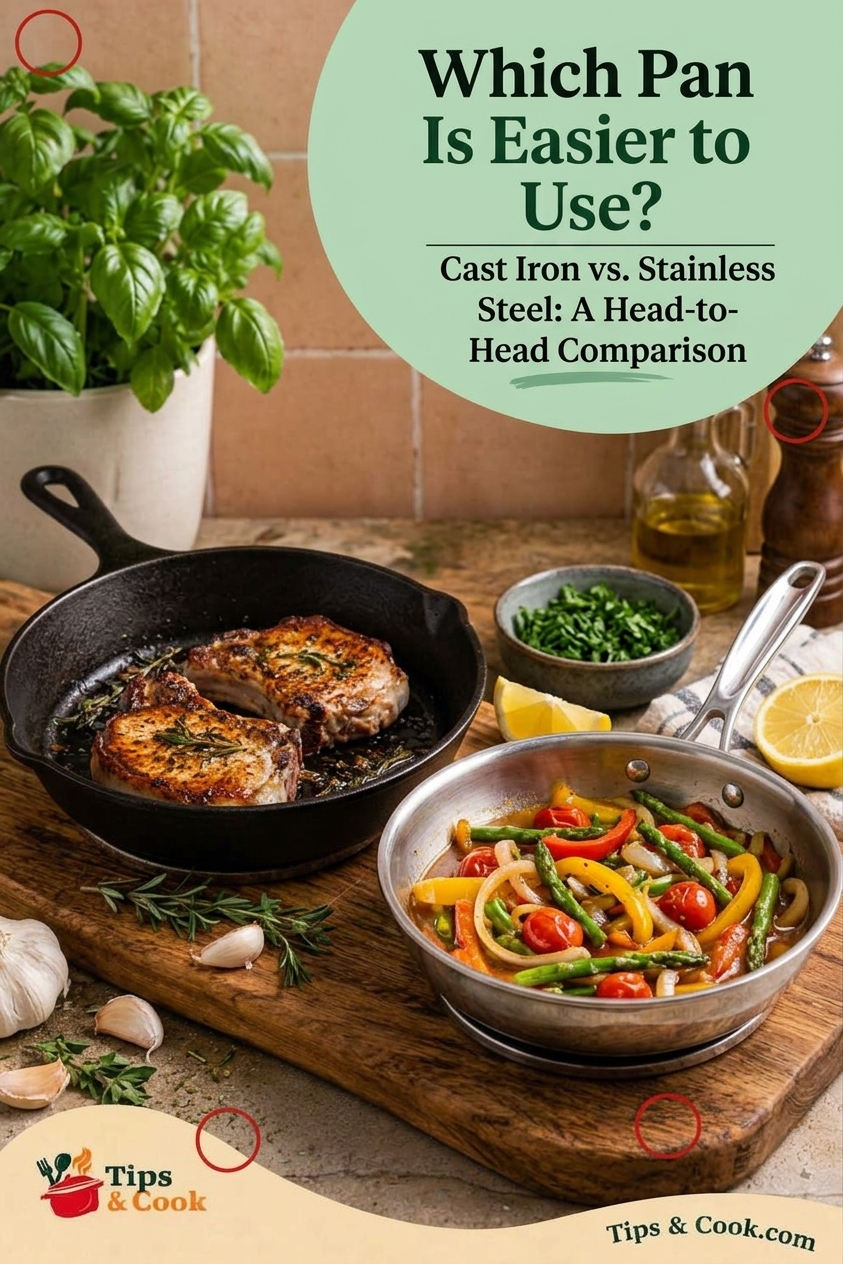
Choosing between cast iron vs stainless steel can be difficult if you want a pan that is reliable, versatile, and easy to use. Both materials are popular for cooking, but they behave differently on the stovetop and require different levels of care.
Cast iron is known for excellent heat retention and durability, while stainless steel is valued for its versatility, lighter maintenance, and resistance to rust. So, which one is easier to use?
For most beginners and everyday cooks, stainless steel is generally easier to use and maintain. Cast iron can be an excellent choice once you become comfortable with seasoning, preheating, and proper cleaning.
Cast Iron vs Stainless Steel: Quick Comparison
| Feature | Cast Iron | Stainless Steel |
| Ease of use | Moderate | Easy |
| Maintenance | Higher | Low |
| Heat retention | Excellent | Good |
| Heat response | Slower | Faster |
| Seasoning | Usually required | Not required |
| Rust resistance | Can rust | Highly rust-resistant |
| Weight | Heavy | Usually lighter |
| Cleaning | Requires more care | Generally easy |
| Durability | Excellent | Excellent |
| Beginner-friendly | Moderate | High |
Both pans can produce excellent results, but the better choice depends on how you cook and how much maintenance you want to handle.
Is Stainless Steel Easier to Use?
For everyday cooking, stainless steel is usually the simpler option.
A stainless steel pan does not require seasoning. You can heat it, cook your food, wash it, dry it, and put it away without worrying about maintaining a protective seasoning layer.
It is also versatile. You can use stainless steel for sautéing vegetables, cooking meat, making sauces, frying foods, and many other tasks.
The main learning curve is preventing food from sticking. Preheating the pan and adding enough cooking oil can make a significant difference.
Stainless steel can also tolerate acidic ingredients such as tomatoes, citrus, and vinegar without the same concerns associated with damaging a cast iron seasoning layer.
Is Cast Iron Easy to Use?
Cast iron is simple in some ways but requires more attention.
Its biggest advantage is heat retention. Once a cast iron pan becomes hot, it can maintain a high, steady temperature for a long time. This makes it useful for searing steaks, browning meat, roasting, and other high-heat cooking tasks.
However, cast iron is heavy and takes longer to heat up.
Traditional cast iron also needs seasoning. A properly seasoned surface helps protect the pan from rust and can improve its cooking performance. You also need to avoid leaving the pan wet because moisture can encourage rust.
For someone who enjoys traditional cookware and does not mind regular maintenance, these requirements may not be a problem. For someone who wants quick and convenient cooking, stainless steel is usually easier.
Which Pan Is Easier to Clean?
Stainless steel generally wins when it comes to cleaning convenience.
After cooking, you can wash a stainless steel pan with dish soap and water. Stubborn food can usually be loosened by soaking the pan or simmering a little water in it before scrubbing.
Cast iron requires more careful cleaning.
You should avoid leaving traditional cast iron submerged in water for long periods. After washing, the pan should be dried thoroughly. Some cooks also apply a thin layer of cooking oil to help protect the surface.
This does not mean cast iron is difficult to clean. It simply requires a more consistent routine.
Which Pan Needs More Maintenance?
Cast iron requires more maintenance than stainless steel.
A traditional cast iron pan benefits from regular seasoning. Seasoning involves applying a thin layer of oil and heating the pan so the oil bonds to the cooking surface.
If the seasoning becomes damaged or the pan develops rust, additional cleaning and re-seasoning may be necessary.
Stainless steel does not require this type of maintenance. It does not need a seasoning layer, and it is naturally resistant to rust.
If low maintenance is your priority, stainless steel is the easier choice.
Heat Control and Cooking Performance
The two materials behave differently when heated.
Cast iron heats relatively slowly but holds heat extremely well. This makes it excellent for tasks where stable high heat is important.
Stainless steel generally responds more quickly to changes in heat, although its performance also depends on the construction of the pan. Many stainless steel pans have an aluminum or copper core that improves heat distribution.
For delicate cooking and recipes that require frequent temperature adjustments, stainless steel can be easier to control.
For strong searing and heat retention, cast iron has a major advantage.
Which Pan Is Better for Beginners?
For most beginners, stainless steel is the easier starting point.
You do not need to learn how to season the pan, and cleaning is relatively straightforward. It is also suitable for a wide variety of recipes.
However, beginners can absolutely use cast iron. The key is learning a few basic habits:
- Preheat the pan gradually.
- Use enough cooking oil.
- Avoid excessively high heat when it is unnecessary.
- Dry the pan thoroughly after washing.
- Maintain the seasoning when needed.
Once these habits become routine, cast iron can be very easy to use.
Cast Iron vs Stainless Steel for Different Foods
The type of food you cook can also influence your decision.
Cast iron is especially useful for:
- Steaks and other meats
- Burgers
- Roasted vegetables
- Cornbread
- Foods requiring strong searing
- Recipes that benefit from steady heat
Stainless steel is especially useful for:
- Sautéed vegetables
- Pan sauces
- Pasta sauces
- Meat and seafood
- Acidic foods
- Everyday cooking
- Recipes requiring quick heat adjustments
Neither pan is perfect for every recipe, so many home cooks eventually choose to keep both.
Pros and Cons of Cast Iron
Pros
- Excellent heat retention
- Great for high-heat cooking
- Extremely durable
- Can last for generations with proper care
- Excellent for searing
Cons
- Heavy
- Takes longer to heat
- Requires seasoning and maintenance
- Can rust if improperly stored
- Requires more care when cleaning
Pros and Cons of Stainless Steel
Pros
- Easy to maintain
- No seasoning required
- Resistant to rust
- Good for many different cooking methods
- Suitable for acidic ingredients
- Generally easier for beginners
Cons
- Food can stick if the pan is not used correctly
- Can develop discoloration
- Heat distribution varies by pan construction
- Does not retain heat as well as cast iron
So, Which Pan Is Easier to Use?
When comparing cast iron vs stainless steel, stainless steel is the better choice if your main priority is convenience.
It requires less maintenance, does not need seasoning, is resistant to rust, and works well for a wide variety of everyday recipes. That makes it particularly suitable for beginners and cooks who want simple cleanup.
Cast iron is the better choice if you prioritize heat retention, high-temperature cooking, and long-term durability. It requires more care, but its excellent searing performance makes the extra effort worthwhile.
Ultimately, there is no need to choose only one. Stainless steel is easier for everyday convenience, while cast iron excels at heat retention and high-heat cooking. Having both can give you more flexibility in the kitchen.
Frequently Asked Questions
Is stainless steel easier to use than cast iron?
Yes. Stainless steel is generally easier for everyday cooking because it does not require seasoning and needs less maintenance.
Does cast iron require more maintenance?
Yes. Traditional cast iron requires seasoning and should be dried properly after washing to help prevent rust.
Which pan is easier to clean?
Stainless steel is generally easier to clean because it can be washed normally with dish soap and water. Cast iron needs more careful handling.
Is stainless steel better for everyday cooking?
For many home cooks, yes. Stainless steel is versatile, low-maintenance, and suitable for a wide range of ingredients and cooking methods.
Can beginners use cast iron?
Absolutely. Beginners can use cast iron successfully by learning basic techniques such as preheating, using enough oil, cleaning properly, and maintaining the seasoning.