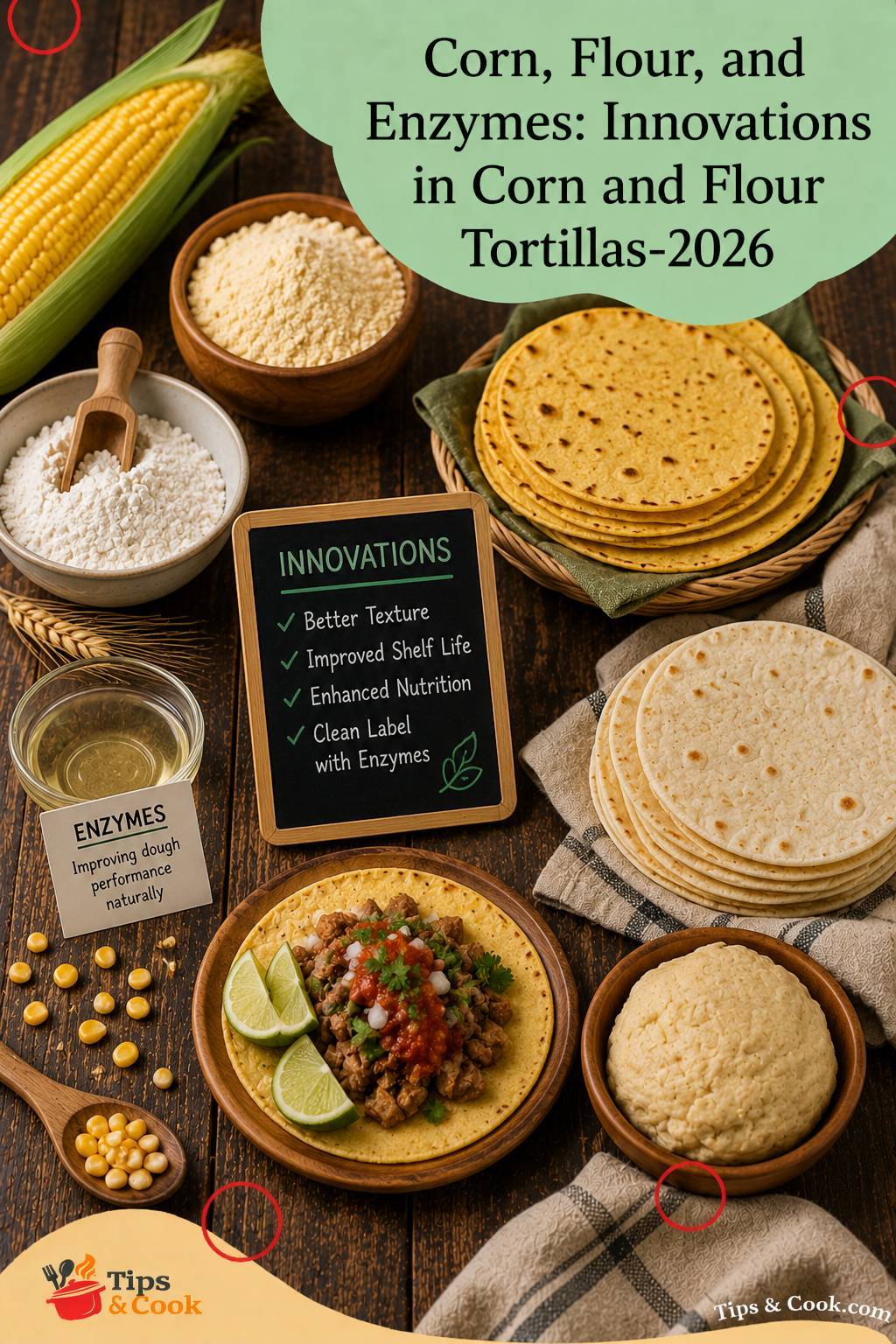
Tortillas are more than just flatbreads-they are cultural icons, staples of Latin American cuisine, and increasingly global products. Traditionally made from masa (corn dough) or wheat flour, tortillas have long been produced using age‑old techniques. But in recent decades, science has stepped in to refine these processes.
The rise of enzymatic innovations in corn and flour tortillas is reshaping how tortillas are made, improving texture, extending shelf life, and supporting sustainability.
The Traditional Foundation: Masa and Flour
Corn tortillas begin with masa, prepared through nixtamalization-a process where corn kernels are soaked and cooked in an alkaline solution, usually limewater. This ancient technique enhances nutrition by increasing calcium and making niacin bioavailable. Flour tortillas, on the other hand, rely on wheat flour, fat, and water, producing a softer, more pliable bread.
While these methods remain central, industrial production demands consistency, efficiency, and longer shelf life. That’s where enzymes enter the picture.
What Are Enzymes in Food Processing?
Enzymes are natural proteins that accelerate biochemical reactions. In food processing, they are used to break down starches, proteins, and fats in controlled ways. For tortillas, enzymes can:
- Improve dough handling.
- Enhance softness and flexibility.
- Delay staling by modifying starch retrogradation.
- Reduce reliance on chemical additives.
This makes them ideal for modern tortilla production, where quality and sustainability are key.
Enzymatic Innovations in Corn Tortillas
Corn tortillas face challenges such as rapid staling, cracking, and limited shelf life. Enzymes help overcome these issues:
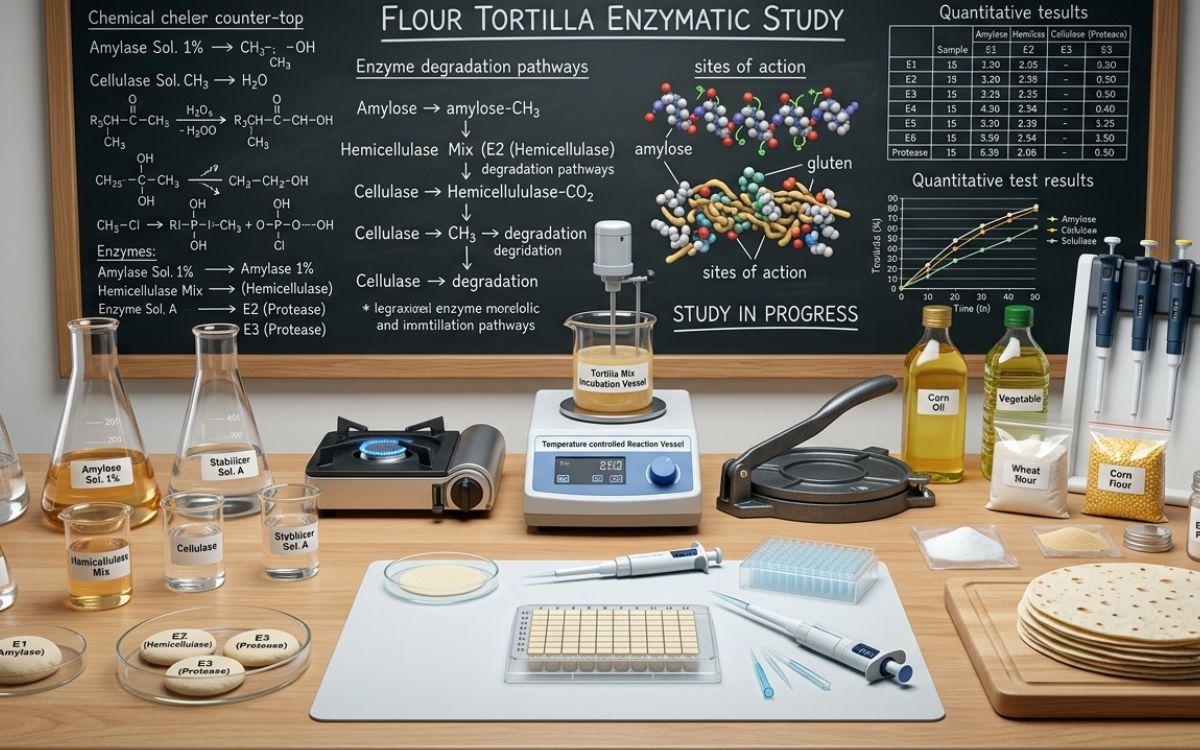
- Amylases – These enzymes break down starch into simpler sugars, improving dough fermentation and extending freshness.
- Cellulases and Hemicellulases – They modify fiber components, enhancing dough elasticity and reducing breakage.
- Proteases – By breaking down proteins, they improve masa pliability, making tortillas softer and easier to roll.
Together, these innovations allow corn tortillas to stay fresher longer, reducing food waste and improving consumer satisfaction.
Enzymatic Innovations in Flour Tortillas
Flour tortillas benefit from enzymes in slightly different ways:
- Lipases – Improve dough extensibility and reduce reliance on added fats.
- Xylanases – Strengthen gluten networks, enhancing texture and flexibility.
- Amylases – Delay staling, keeping tortillas soft for days instead of hours.
These enzymes help manufacturers produce tortillas that meet consumer expectations for softness and durability, especially in packaged products sold worldwide.
Sustainability Benefits
The enzymatic innovations in corn and flour tortillas also contribute to sustainability:
- Reduced Additives – Enzymes replace synthetic chemicals, making tortillas cleaner‑label products.
- Energy Efficiency – Improved dough handling reduces processing time and energy use.
- Less Food Waste – Longer shelf life means fewer tortillas discarded due to staling.
- Local Sourcing – Enzyme‑based processes can adapt to regional grains, supporting local agriculture.
This aligns with consumer demand for eco‑friendly and health‑conscious food products.
Market Impact
The global tortilla industry is booming, with demand rising not only in Latin America but also in North America, Europe, and Asia. Enzymatic technologies allow producers to scale up while maintaining quality. From artisanal bakeries to multinational food companies, enzymes are now standard tools in tortilla production.
According to industry reports, enzyme applications in baking and tortilla production are expected to grow significantly in the next decade, driven by consumer preference for natural ingredients and sustainable practices.
Challenges and Considerations
Despite the benefits, challenges remain:
- Cost – Enzymes can be expensive, especially for small producers.
- Knowledge Gap – Traditional tortilla makers may resist adopting new technologies.
- Regulation – Food safety authorities must approve enzyme use, which varies by country.
Balancing tradition with innovation is key. Many producers are finding ways to integrate enzymes without losing the cultural authenticity of tortillas.
The Future of Tortilla Innovation
Looking ahead, enzymatic research continues to evolve. Scientists are exploring tailored enzyme blends that address specific challenges in tortilla production, such as gluten‑free formulations or enhanced nutritional profiles. The fusion of biotechnology and culinary tradition promises tortillas that are not only tastier and longer‑lasting but also healthier and more sustainable Innovations in Corn and Flour Tortillas.
Conclusion
From masa to market, the enzymatic innovations in corn and flour tortillas represent a remarkable intersection of tradition and science. Enzymes are helping producers deliver tortillas that honor cultural heritage while meeting modern demands for quality, sustainability, and convenience. As food systems evolve, tortillas stand as a powerful example of how innovation can enhance-not replace-tradition.
For more insights into enzyme applications in food processing, visit Novozymes – a global leader in industrial biotechnology.