
London, May 2026
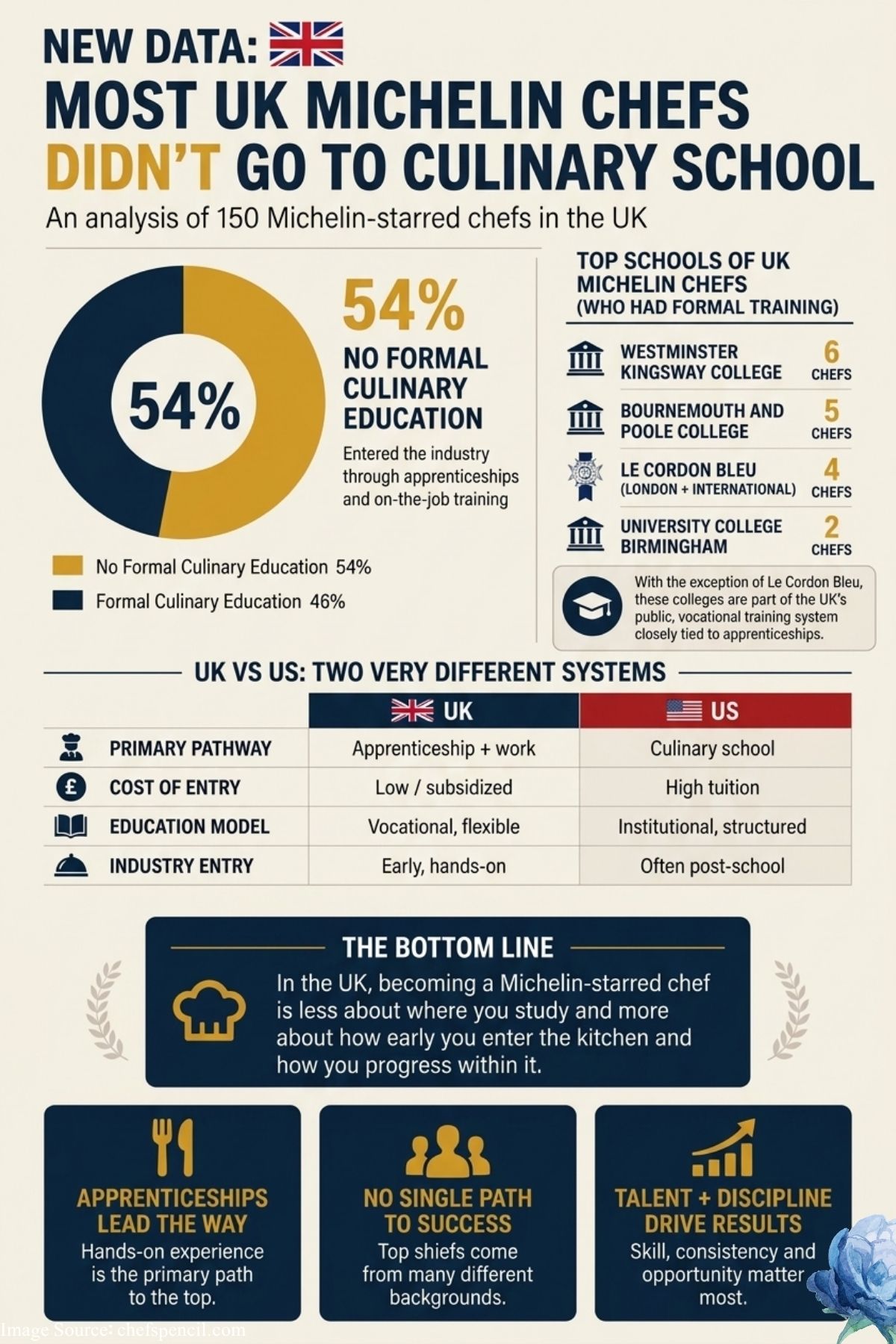
A new analysis has shed light on the educational pathways of Britain’s top chefs, revealing that most Michelin-starred professionals in the UK did not attend culinary school. Instead, apprenticeships and hands-on kitchen experience remain the dominant route to success in the country’s fine dining scene.
The study, conducted by Chef’s Pencil, examined the backgrounds of 150 Michelin-starred chefs across major culinary hubs including London, Birmingham, Manchester, and Edinburgh. Findings show that 54% of these chefs entered the industry without formal culinary education, relying instead on apprenticeships, family restaurants, or self-directed learning.
Prominent names illustrate this trend. Heston Blumenthal is famously self-taught, while Jeremy Chan transitioned into the kitchen after studying PPE at Princeton. Aktar Islam honed his skills through his family’s restaurant, and Nieves Barragán Mohacho built her career through practical kitchen experience rather than catering college.
By contrast, the United States presents a different picture. There, a significant proportion of Michelin-starred chefs have attended private culinary schools such as the Culinary Institute of America, institutions known for their prestige but also for high tuition costs.
Apprenticeships Dominate in the UK
The UK’s apprenticeship-led model offers a more accessible and affordable pathway. Many chefs combine college-based learning with day-release training and real kitchen experience. Leading institutions include Capital City College (formerly Westminster Kingsway College), Bournemouth and Poole College, and University College Birmingham.
Le Cordon Bleu, with its international campuses, remains the only private institution prominently represented among UK Michelin chefs.
Cost and Accessibility
One of the most striking differences between the UK and US systems is cost. In Britain, vocational programs are often state-funded or heavily subsidized, particularly for younger students. Apprenticeships combine paid work with training, reducing financial barriers and allowing aspiring chefs to progress without the burden of significant debt.
Perspectives from the Kitchen
Opinions among chefs vary on the necessity of formal education. Tyler King, Head Chef at Michelin-starred Condita in Edinburgh, believes practical experience often accelerates career growth, though he acknowledges the advantages of globally recognised institutions.
Conversely, Stephen McLaughlin of Restaurant Andrew Fairlie emphasises the importance of structured training, arguing that formal education builds the technical foundation essential for long-term success.
The Bottom Line
The findings highlight a defining feature of the UK culinary landscape: Michelin-level success is not contingent on a culinary degree. Instead, discipline, consistency, and early exposure to professional kitchens remain the most reliable ingredients for reaching the top.