Looking for storing rice noodles tips? Here you go!! Rice noodles are one of those ingredients that can instantly elevate a dish. Whether you’re making a quick stir-fry, a comforting bowl of pho, or fresh spring rolls, they bring that soft, chewy texture that pairs beautifully with bold flavors.
But here’s the challenge: rice noodles are delicate, and if you don’t store them properly, they can turn sticky, dry, or lose their bite. Over time, I’ve picked up some reliable tricks for storing rice noodles and to keep them fresh and tasty, and I’m excited to share them with you.
Understanding Rice Noodles
Before we dive into storage tips, it’s worth knowing a little about rice noodles themselves. Made from rice flour and water, they’re naturally gluten-free and lighter than wheat-based pasta. Their delicate texture means they absorb flavors quickly, but it also makes them more prone to clumping or drying out if not handled correctly. That’s why proper storage is key to keeping their quality intact.
Why Proper Storage Matters
Unlike wheat pasta, rice noodles don’t have the same resilience. They can easily clump together, break apart, or dry out quickly. That’s why storing rice noodles correctly is just as important as cooking them well.
When stored properly:
- They stay soft and don’t dry out.
- They don’t stick together in one big lump.
- Their flavor and texture remain consistent.
Think of it as giving your noodles a little extra care so they’re ready to shine in your next dish.
Ways of Storing Rice Noodles
1. Storing Dry Rice Noodles
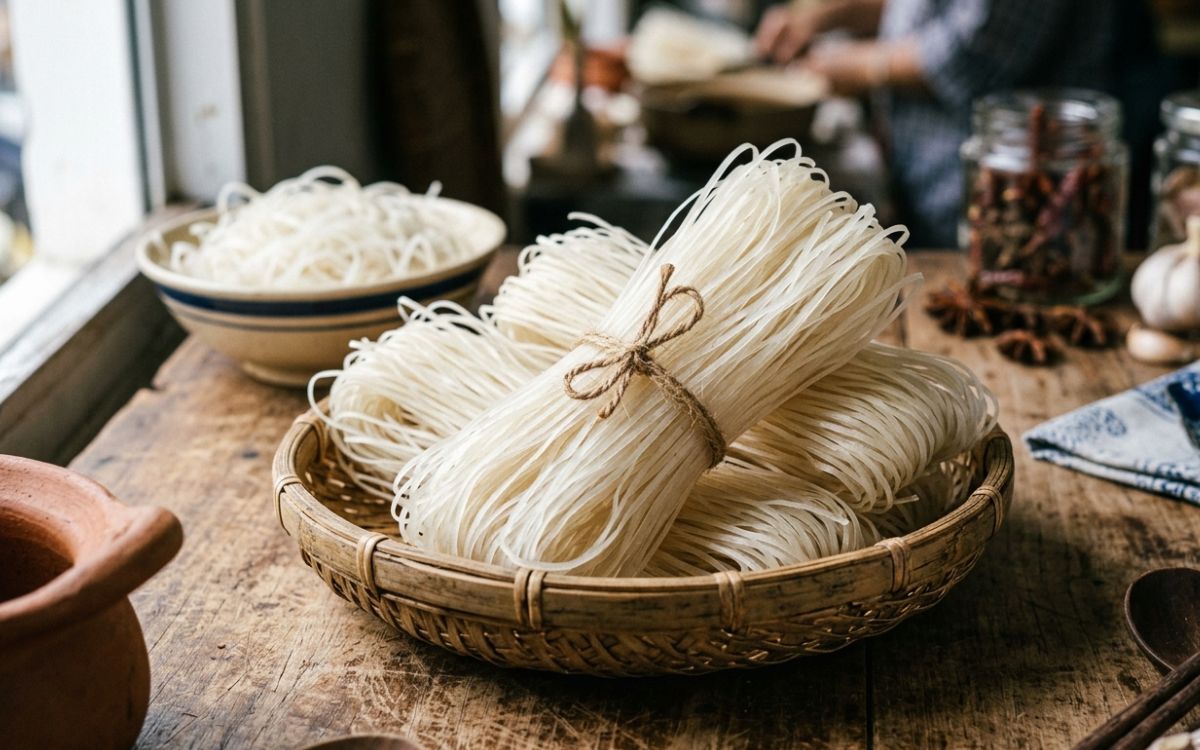
Dry rice noodles are the easiest to handle. They usually come in sealed packages and can last for months if kept in the right conditions. The key is to protect them from moisture and sunlight.
Keep them in an airtight container or resealable bag once opened, and store them in a cool, dry pantry. This way, they’ll stay fresh for up to a year. I always keep a few packs on hand because they’re perfect for last-minute meals.
2. Storing Fresh Rice Noodles
Fresh rice noodles, often found in Asian grocery stores, are softer and more perishable. They need a bit more attention. Wrap them tightly in plastic wrap or place them in an airtight container to prevent drying. Then, store them in the refrigerator, where they’ll stay good for about 3-4 days.
If they start to feel dry, sprinkle a little water over them before reheating. Fresh noodles are best enjoyed quickly, so plan to use them within a few days of purchase.
3. Storing Cooked Rice Noodles
Cooked rice noodles can be tricky because they clump together fast. To avoid ending up with one sticky lump, rinse them with cold water right after cooking. This stops the cooking process and washes away excess starch.
Next, toss them lightly with a teaspoon of oil – sesame or vegetable oil works well – to keep them separate. Store them in an airtight container in the fridge, and they’ll last for up to 2 days. When reheating, don’t just microwave them until they’re dry. Instead, dip them briefly in hot water or toss them in a pan with sauce. This brings them back to life without ruining the texture.
4. Freezing Rice Noodles
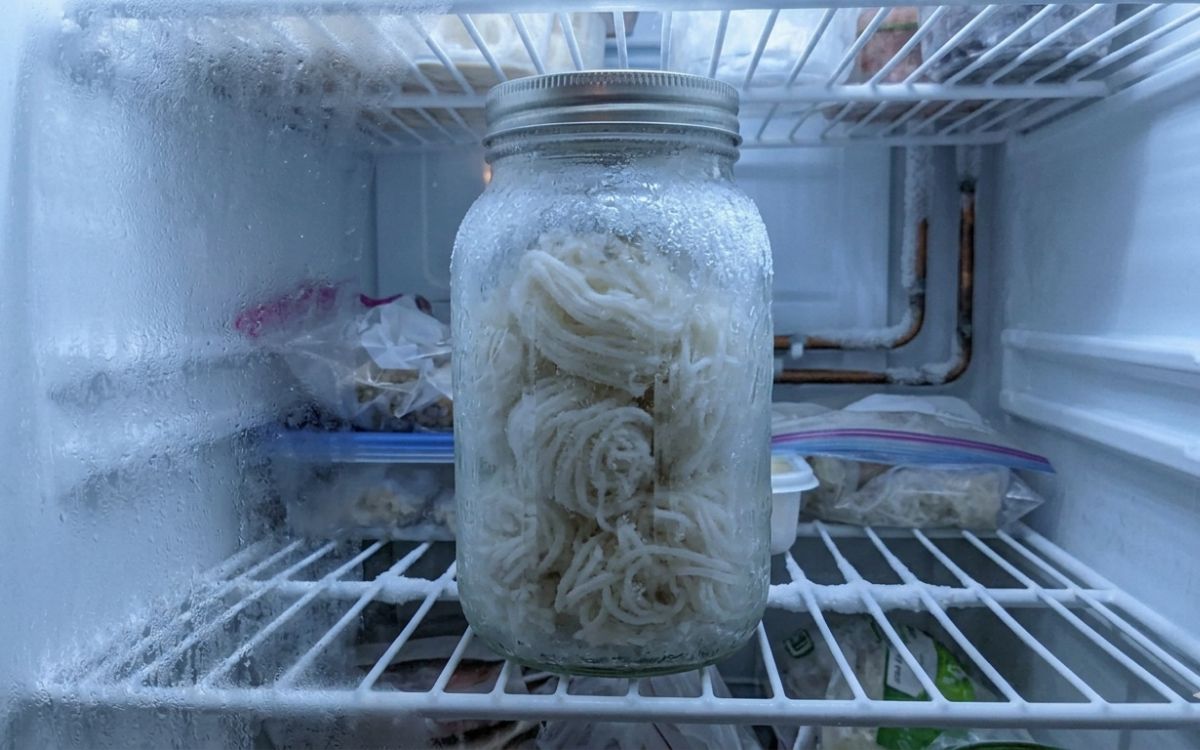
Freezing rice noodles isn’t always ideal, but it can work if you need to store them longer. Cooked noodles can be portioned into freezer-safe bags, with as much air removed as possible. When you’re ready to use them, thaw gently in the fridge before reheating.
The texture may change slightly – they might be a bit softer – but they’re still great for soups, stir-fries, or noodle salads.
Extra Tips for Freshness and Quality
Over the years, I’ve found a few bonus tricks that make a big difference:
- Slightly undercook noodles if you plan to store them. They’ll hold up better when reheated.
- A light coating of oil prevents sticking without making them greasy.
- Label and date containers if you’re storing multiple batches, so you know which to use first.
- Reheat gently – a quick stir-fry or hot water dip works best.
Final Thoughts
Storing rice noodles doesn’t have to be complicated. Whether they’re dry, fresh, or cooked, a little care goes a long way in keeping them delicious. Airtight containers, a touch of oil, and gentle reheating are your best friends.
With these tips, you’ll never have to deal with sticky, clumpy noodles again — just fresh, flavorful rice noodles ready to make your favorite dishes shine. For more tips, visit here!!