
What is Almond Milk?
Looking for Almond Milk Health Benefits??? Here I am to help!!! Almond milk is a plant-based drink made by blending almonds with water and straining out the solids. It has a light, nutty flavor and a creamy texture that makes it a popular substitute for cow’s milk.
Many people choose almond milk because it’s naturally lactose-free, vegan-friendly, and often lower in calories than dairy. Commercial versions are usually fortified with vitamins and minerals to improve their nutritional value.
Almond Milk Nutrition Facts
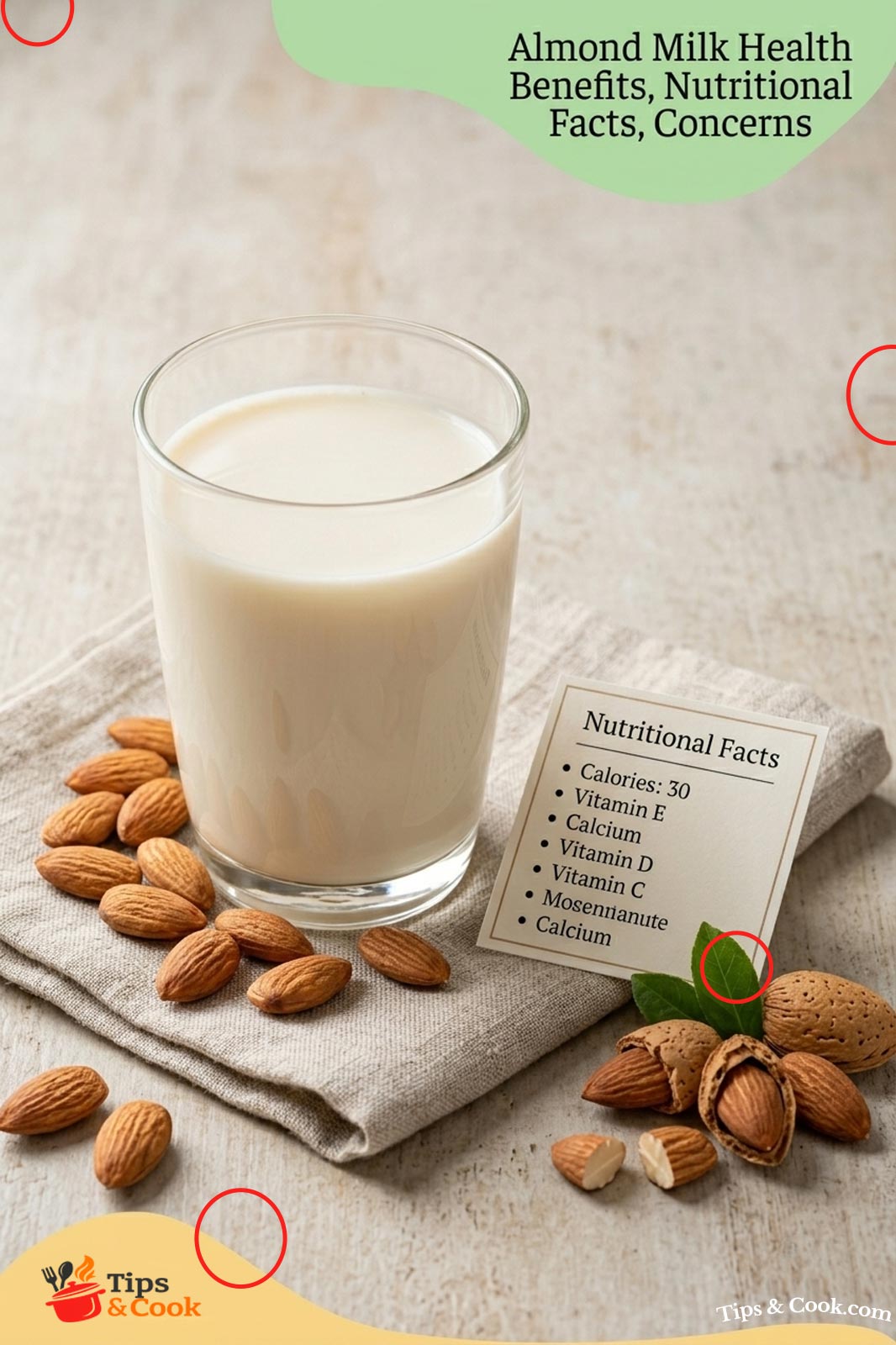
A cup of unsweetened almond milk typically contains only 30-50 calories, making it much lighter than cow’s milk. It has about 1 gram of protein, 2-3 grams of fat, and 1-2 grams of carbohydrates. The standout nutrient is vitamin E, which acts as a powerful antioxidant. Fortified almond milk also provides calcium and vitamin D, helping to support bone health.
In short, almond milk is:
• Low in calories compared to dairy milk
• Naturally rich in vitamin E
• Often fortified with calcium and vitamin D
Almond Milk Health Benefits
1. High in Vitamin E
Vitamin E is one of almond milk’s biggest strengths. It helps protect your cells from damage, supports healthy skin, and may even reduce the risk of certain chronic diseases. Just one cup of almond milk can provide up to half of your daily vitamin E needs.
2. Unsweetened Varieties are Low in Sugar
Unsweetened almond milk is naturally low in sugar, making it a good choice for people managing blood sugar levels or following a low-carb diet. This makes it especially appealing for diabetics or anyone trying to cut back on added sugars.
Potential Downsides
While almond milk has many benefits, there are some limitations to keep in mind:
- Lacks protein: Unlike cow’s milk, which has about 8 grams of protein per cup, almond milk only contains around 1 gram. This makes it less suitable as a primary protein source.
- Unsuitable for infants: Almond milk should never replace breast milk or formula for babies, as it lacks the essential nutrients needed for growth and development.
- May contain additives: Some commercial brands add sugar, thickeners, or preservatives. Always check the label to make sure you’re choosing a healthier option.

How to Make Your Own Almond Milk
Making almond milk at home is simple and allows you to control the ingredients.
- Soak 1 cup of raw almonds in water overnight.
- Drain and rinse the almonds, then blend them with 3-4 cups of fresh water until smooth.
- Strain the mixture using a nut milk bag or fine sieve to remove solids.
- Store in the refrigerator and consume within 3-4 days.
You can also add a touch of honey, vanilla, or cinnamon for extra flavor. Homemade almond milk is fresh, free from additives, and customizable to your taste.
Final Thoughts
When it comes to Almond Milk Health Benefits, the positives are clear: it’s light, dairy-free, and packed with vitamin E. Unsweetened varieties are low in sugar, making them a smart choice for weight management and blood sugar control.
However, almond milk isn’t perfect – it lacks protein, may contain additives, and isn’t suitable for infants. The best option is unsweetened, fortified almond milk, or better yet, making your own at home for maximum freshness and quality. Get more guides here!!!