
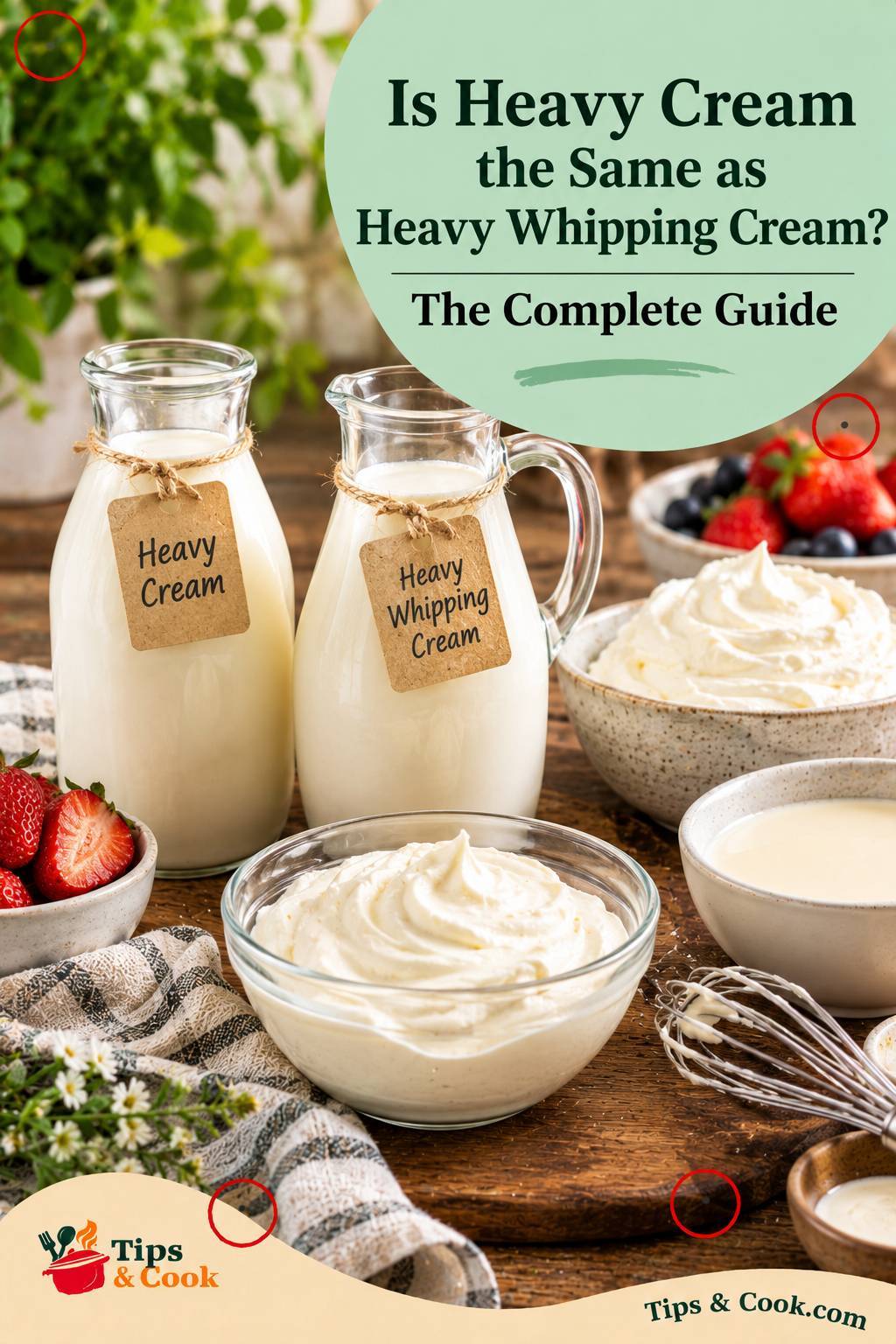
If you’ve ever stood in the dairy aisle wondering is heavy cream the same as heavy whipping cream, you’re certainly not alone. Many recipes call for one or the other, leaving home cooks unsure whether they’re interchangeable or if choosing the wrong one could ruin a dish.
The good news is that heavy cream and heavy whipping cream are extremely similar. In fact, most people use them interchangeably without ever noticing a difference. However, there are a few subtle distinctions that can affect the texture, consistency, and overall results of your recipes.
Whether you’re making a creamy pasta sauce, whipping up a dessert topping, baking a cake, or preparing a rich soup, understanding the differences can help you achieve better results in the kitchen. This guide explains everything you need to know about these popular dairy products.
What Is Heavy Cream?
Heavy cream is the thick, high-fat layer that rises to the top of fresh milk before processing. It contains at least 36% milk fat, giving it a rich texture and luxurious mouthfeel.
Because of its higher fat content, heavy cream is often used in recipes that require stability and richness. It blends smoothly into sauces, soups, and desserts without easily separating or curdling.
Heavy cream is commonly used for:
- Cream-based pasta sauces
- Soups and chowders
- Ice cream
- Cheesecakes
- Ganache
- Homemade whipped cream
One reason chefs love cooking with heavy cream is its ability to withstand heat. Unlike lower-fat dairy products, it can simmer without breaking apart, making it ideal for hearty dishes.
What Is Heavy Whipping Cream?
Heavy whipping cream is another high-fat dairy product that comes from milk. It typically contains between 30% and 36% milk fat, making it slightly lighter than traditional heavy cream.
The lower fat content means it still whips beautifully but may produce a softer texture compared to heavy cream. Despite this small difference, the two products look almost identical when poured into a recipe.
Heavy whipping cream is frequently used in:
- Whipped cream toppings
- Cake fillings
- Frostings
- Mousses
- Puddings
- Dessert sauces
Because it whips easily into soft, airy peaks, many bakers rely on heavy whipping cream for decorating cakes and pastries.
Is Heavy Cream the Same as Heavy Whipping Cream?
The short answer is yes, but not exactly.
When people ask is heavy cream the same as heavy whipping cream, they are usually asking whether they can use one instead of the other. In most cases, the answer is absolutely yes.
The primary distinction comes down to fat content:
- Heavy Cream
- Contains at least 36% milk fat
- Richer consistency
- More stable under heat
- Produces firmer whipped cream
- Heavy Whipping Cream
- Usually contains 30% to 36% milk fat
- Slightly lighter texture
- Whips well but may create softer peaks
- Often preferred for lighter desserts
These differences are relatively minor, which is why many recipes won’t show a noticeable change if you swap one for the other.
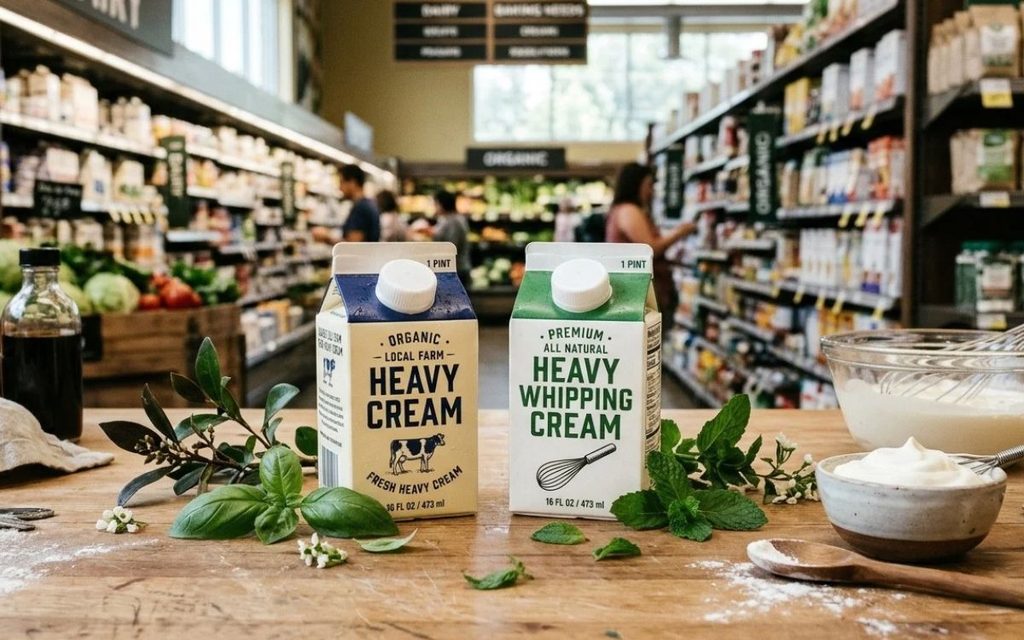
Heavy Cream vs Heavy Whipping Cream for Baking
When it comes to baking, the distinction between these two products is often negligible.
Cakes, muffins, cheesecakes, custards, and many pastries can be made successfully with either heavy cream or heavy whipping cream. The slight variation in fat content usually doesn’t impact the final flavor enough for most people to notice.
However, if you’re creating a dessert where whipped cream is a central component, heavy cream may provide slightly better structure. This can be particularly useful for layered cakes and desserts that need to hold their shape for several hours.
For everyday baking, both options perform exceptionally well.
Heavy Cream vs Heavy Whipping Cream for Cooking
In savory recipes, heavy cream tends to have a slight advantage because of its greater stability.
When making dishes that require extended simmering or high heat, heavy cream is less likely to separate. This makes it a favorite ingredient in:
- Alfredo sauce
- Creamy soups
- Gravy
- Casseroles
- Rich seafood dishes
Heavy whipping cream can still be used successfully in these recipes. The finished dish may simply be a bit lighter in texture.
If you’re wondering can you substitute heavy cream for whipping cream, the answer is yes for virtually all cooking applications.
Which One Is Better for Whipped Cream?
One of the most common heavy whipping cream uses is, unsurprisingly, making whipped cream. However, heavy cream also works extremely well.
Heavy cream generally produces:
- Firmer peaks
- Longer-lasting whipped cream
- Richer flavor
- Better stability
Heavy whipping cream often provides:
- Softer peaks
- Lighter texture
- Fluffier consistency
For decorating cakes or preparing desserts in advance, heavy cream often holds up slightly better. If you’re serving the whipped cream immediately, either product works beautifully.
Nutritional Differences
The nutritional gap between these products is relatively small.
Since heavy cream contains slightly more fat, it generally has:
- More calories
- More saturated fat
- Richer flavor
Heavy whipping cream usually contains:
- Slightly fewer calories
- A bit less fat
- A lighter mouthfeel
Neither option should be considered a low-calorie dairy product. However, both can be enjoyed in moderation as part of a balanced diet.
Best Substitutes for Heavy Cream
Sometimes you may not have either type of cream available. In those situations, several substitutes can work depending on the recipe.
Popular alternatives include:
- Whole milk and butter
- Half-and-half
- Coconut cream
- Greek yogurt
- Evaporated milk
Keep in mind that substitutes may not whip properly or provide the same richness. For recipes where texture is important, real cream remains the best option.
How to Store Heavy Cream and Heavy Whipping Cream
Proper storage is essential to maintain freshness and quality.
For best results:
- Keep cream refrigerated at all times.
- Store it in the coldest part of the refrigerator.
- Seal the container tightly after each use.
- Avoid exposing it to room temperature for long periods.
Once opened, both products are generally best used within seven days, although you should always check the expiration date and packaging instructions.
You can also freeze cream for future use, particularly if you plan to incorporate it into cooked dishes rather than whip it.
Common Mistakes When Using Cream
Many home cooks make small mistakes that affect the outcome of recipes.
Some common issues include:
- Using warm cream when whipping
- Overwhipping until it becomes grainy
- Boiling cream too aggressively
- Storing cream improperly
- Using low-fat substitutes in recipes that require richness
Keeping cream cold and following recipe instructions carefully will help you achieve the best results every time.
Final Thoughts
So, is heavy cream the same as heavy whipping cream? For most practical purposes, yes. Both are rich dairy products with very similar uses, and most recipes allow them to be substituted for one another without significantly affecting the final result.
The biggest difference lies in their fat content. Heavy cream is slightly richer and more stable, while heavy whipping cream is a bit lighter and often used for fluffy whipped toppings. Whether you’re preparing soups, sauces, baked goods, or desserts, both products are excellent choices.
The next time you see either one listed in a recipe, you can feel confident knowing that the difference is minor and that both can help you create delicious results in the kitchen.