
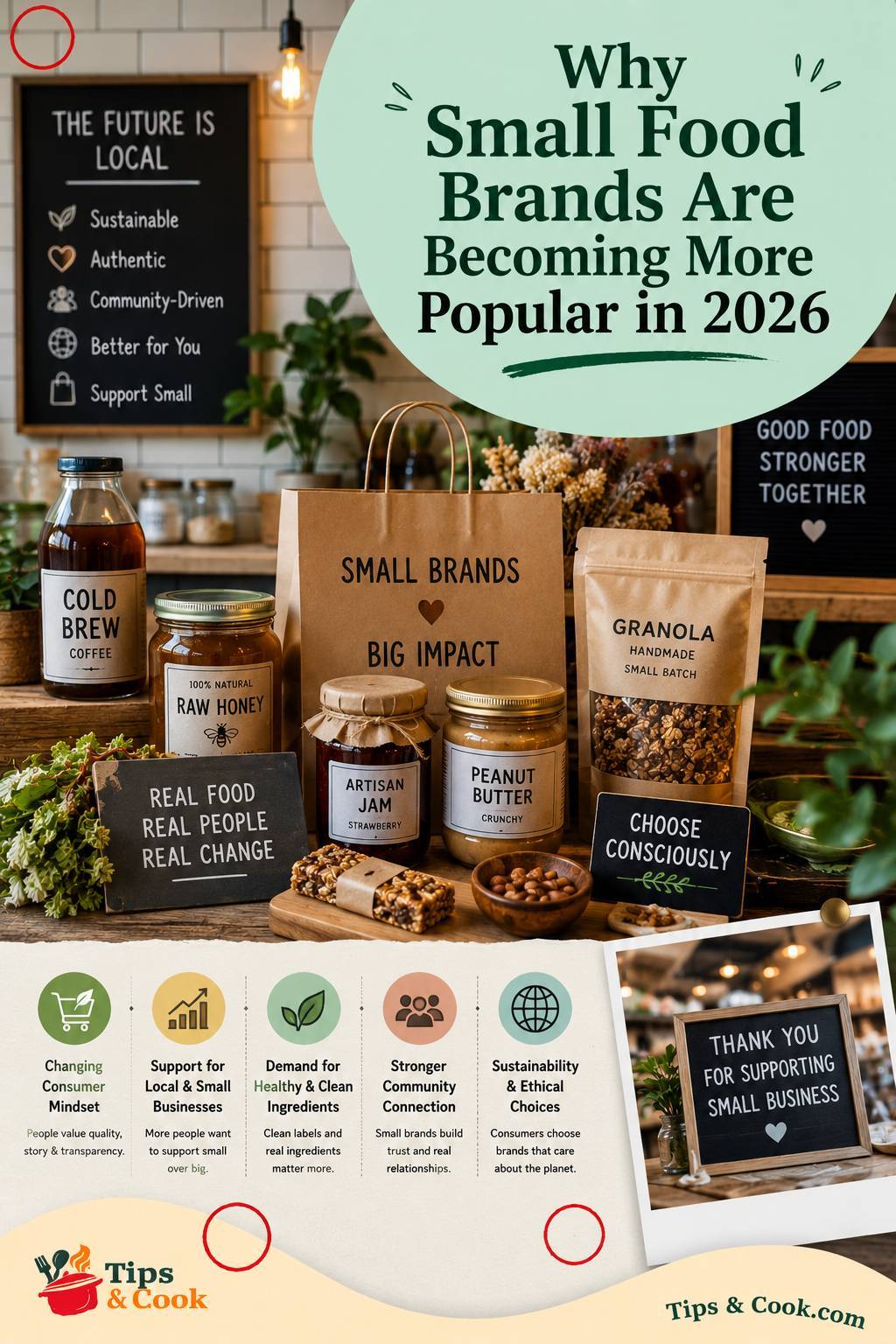
Small food brands are having a bigger impact on what people buy and eat in 2026. From small-batch sauces and specialty snacks to artisan beverages and chef-created pantry products, independent brands are finding new ways to compete with established food companies.
This growth is being supported by several changes in consumer behavior. People are increasingly interested in where their food comes from, how it is made, and the story behind the product. At the same time, social media and direct-to-consumer shopping have made it easier for smaller businesses to reach customers without relying entirely on traditional retail distribution.
So, why are emerging food brands becoming more popular in 2026?
One reason for the popularity of small food brands is their ability to offer products that feel different. Large food companies typically focus on products that can appeal to a mass audience. Smaller brands can concentrate on narrower interests, unusual flavors, regional ingredients, and specialty products. For consumers, discovering a small brand can feel more exciting than buying another familiar supermarket product.
Small Food Brands in 2026
Storytelling has become an important part of food marketing. A small food company might be built around a family recipe, a regional ingredient, a traditional cooking technique, or a founder’s personal experience. That story can make a product feel more personal. Consumers don’t simply see a jar of sauce or a bag of snacks. They can learn who created it, where the ingredients come from, and why the product exists.
The effect can be particularly powerful for products with strong visual appeal. Recent food coverage has shown how packaging, branding, and social-media visibility can help emerging food companies stand out.
Small food companies no longer need to depend entirely on supermarkets to reach customers. Through their own websites, social platforms, marketplaces, and subscription services, brands can sell directly to consumers.
The direct-to-consumer model can provide greater control over pricing, customer relationships, and product presentation. Shopify’s 2026 analysis also identifies convenience, emotional connection, and health-focused offerings as important factors in DTC food.
Local and artisan food brands are another important part of the trend. Consumers are increasingly interested in knowing where products are made and how ingredients are sourced. FreshDirect’s 2026 trend reporting specifically points to growing interest in artisan products, sourcing, and locally made foods. Small producers can benefit from this interest because their products often have a stronger connection to a particular place or production method. That could mean locally produced honey, handmade pasta, small-batch hot sauce, regional cheese, specialty coffee, or traditional baked goods.
Food packaging is no longer purely functional. Small brands are increasingly using distinctive colors, illustrations, typography, and packaging formats to create recognizable identities. This is particularly useful on social media, where attractive packaging can encourage people to photograph and share products. Recent reporting from Food & Wine highlights how grocery packaging has become increasingly design-focused, with emerging brands using visual identity to stand out in crowded markets.
For example, pickle-flavored snacks and beverages have become a notable 2026 trend, with pickle-flavored snacks reportedly growing much faster than the overall snack category. Trends like this create opportunities for smaller brands to experiment with unusual combinations before they become mainstream. A small company might launch a limited-edition flavor, test customer reactions online, and quickly adjust its product range.
Popularity doesn’t mean consumers are willing to pay any price. Economic pressure continues to influence food purchases. Consumers are looking for products that provide a clear reason to spend more, whether that means better ingredients, distinctive flavor, convenience, freshness, or a strong brand experience. This makes differentiation particularly important for small food businesses.
Customers may follow a founder on social media, participate in product launches, recommend products to friends, or provide feedback on new flavors. This creates a relationship that goes beyond a simple transaction.
Bangladesh is also experiencing a broader rise in digitally native direct-to-consumer brands, including small-batch food, condiment, dessert, and snack businesses that build audiences online.
The growth of small food brands gives consumers more choices. Instead of seeing only products from a handful of major companies, shoppers can discover specialty foods from independent producers, local businesses, chefs, and emerging entrepreneurs. For food lovers, that means more opportunities to try unusual flavors and support businesses with distinctive stories.
The popularity of small food brands in 2026 isn’t driven by one factor. Social media, direct-to-consumer commerce, distinctive packaging, local sourcing, artisan production, and consumer interest in unique products are all contributing to the change. Small brands still face significant challenges, including distribution, production costs, marketing, and competition from larger companies.