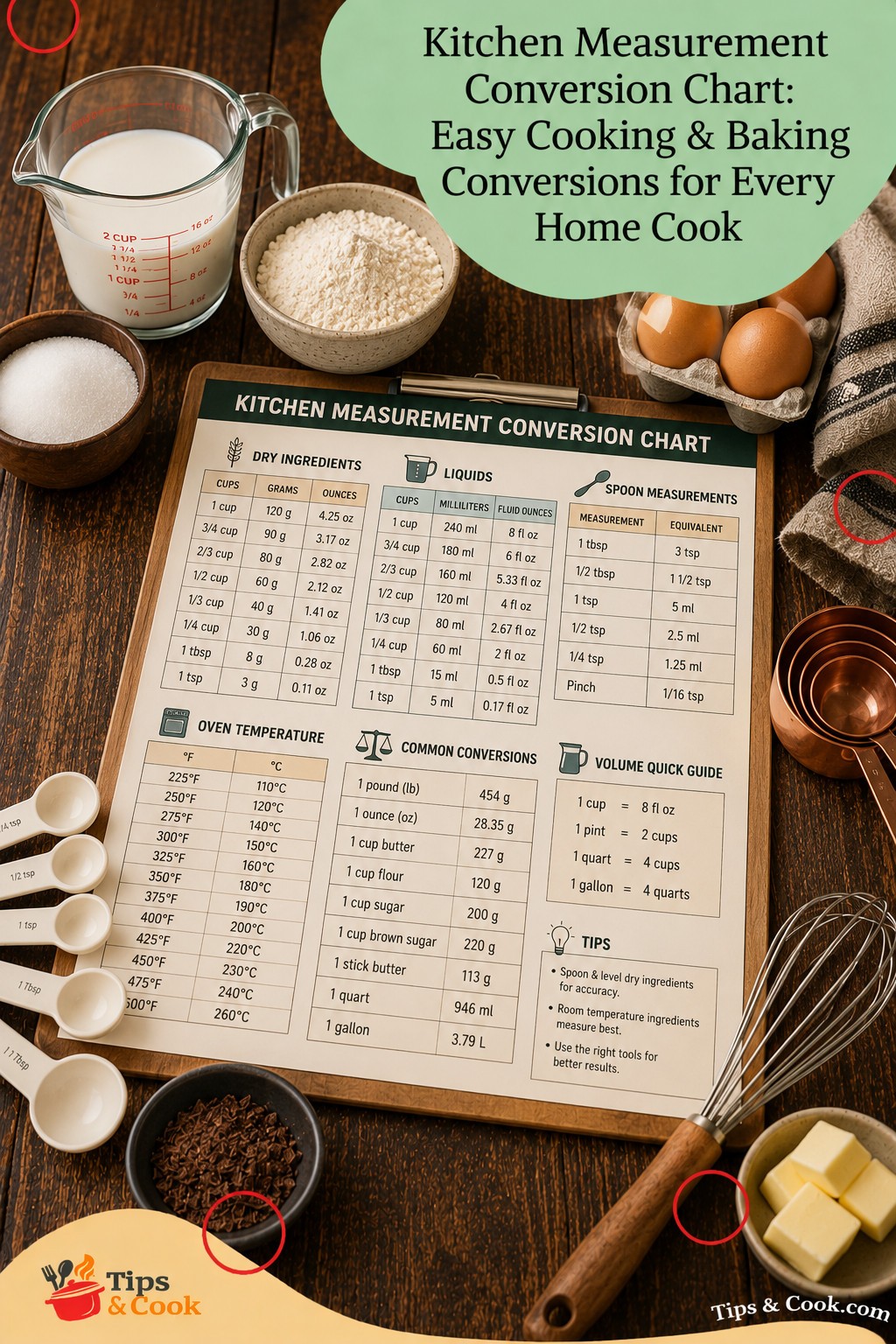
Whether you’re following a family recipe or trying a new dish from another country, using the correct measurements is essential for success. A kitchen measurement conversion chart helps you convert cups, teaspoons, tablespoons, ounces, and milliliters quickly, ensuring your recipes turn out perfectly every time.
Many recipes use either U.S. customary measurements or the metric system. Without a reliable conversion guide, it’s easy to make mistakes that affect the taste, texture, or consistency of your food. Keeping a simple kitchen conversion chart nearby can save time and improve accuracy while cooking or baking.
Why Kitchen Measurement Conversions Matter
Cooking allows for some flexibility, but baking is much more precise. Too much flour, too little liquid, or incorrect spice measurements can change the final result. Using accurate conversions ensures your ingredients remain balanced and your recipes stay consistent.
A measurement chart is especially helpful when:
- Following international recipes
- Halving or doubling recipes
- Converting between metric and U.S. units
- Using different measuring tools
Basic Kitchen Measurement Conversion Chart
Here are the most common kitchen conversions every home cook should know.
Teaspoons and Tablespoons
- 3 teaspoons = 1 tablespoon
- 1 tablespoon = 15 milliliters
- 2 tablespoons = 1/8 cup
- 4 tablespoons = 1/4 cup
- 8 tablespoons = 1/2 cup
- 16 tablespoons = 1 cup
Cups and Larger Measurements
- 1 cup = 8 fluid ounces
- 2 cups = 1 pint
- 4 cups = 1 quart
- 16 cups = 1 gallon
Metric Conversions
- 1 teaspoon = 5 mL
- 1 tablespoon = 15 mL
- 1 cup = 240 mL
- 1 liter = 1,000 mL
Weight Conversions
- 1 ounce = 28 grams
- 8 ounces = 227 grams
- 16 ounces = 454 grams (1 pound)
- 1 kilogram = 2.2 pounds
Tips for Accurate Measuring
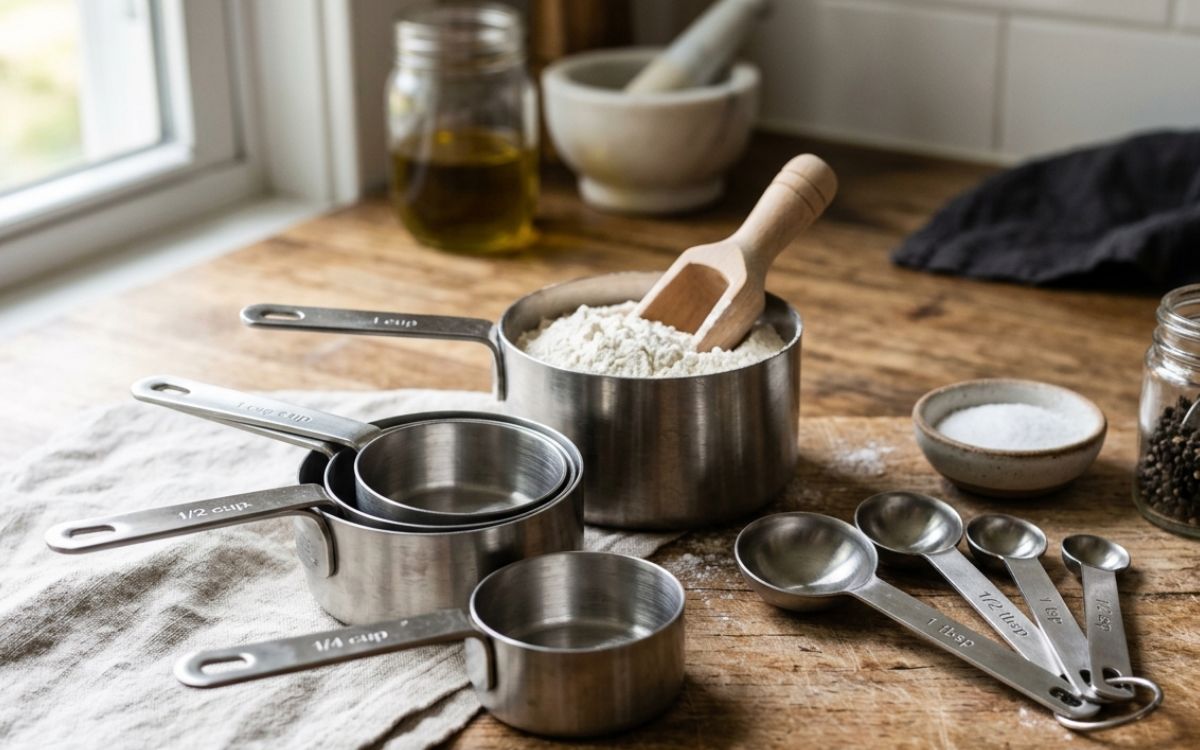
Always use proper measuring cups and spoons instead of regular kitchen utensils. For dry ingredients like flour or sugar, spoon the ingredient into the measuring cup and level it with a straight edge. Avoid packing ingredients unless the recipe specifically instructs you to do so.
For liquid ingredients, use a clear liquid measuring cup and check the measurement at eye level to ensure accuracy.
Common Measurement Mistakes
One of the biggest mistakes is confusing fluid ounces with weight ounces. Fluid ounces measure volume, while ounces measure weight. Another common error is using a coffee mug instead of a standard measuring cup.
When baking, even a small measurement mistake can affect the texture and rise of cakes, cookies, and bread.
Keep a Conversion Chart Handy
Printing a kitchen measurement conversion chart or saving it on your phone makes cooking much easier. Instead of searching online every time you need a conversion, you’ll have the information ready whenever you prepare meals.
Whether you’re an experienced cook or just starting, understanding basic kitchen measurements builds confidence and helps you achieve consistent results.
Conclusion
A reliable kitchen measurement conversion chart is one of the most useful tools in any kitchen. It simplifies recipe conversions, reduces mistakes, and makes cooking and baking more enjoyable. Keep this guide nearby, and you’ll always have the right measurements for delicious, successful recipes.