Introduction
Wild food recipes are becoming popular again as people move toward natural, organic, and chemical-free eating. These recipes use ingredients found in forests, fields, and wild landscapes instead of processed food from stores. Many people are now exploring it because they are healthy, seasonal, and deeply connected to nature.
In simple terms, wild food recipes teach you how to cook with ingredients that grow naturally without farming. This includes edible plants, herbs, berries, and sometimes mushrooms. When done safely, it becomes one of the most rewarding ways to cook and eat.
In this guide, you will learn easy wild food recipes, beginner-friendly tips, and practical ideas for turning foraged ingredients into delicious meals at home.
Why Wild Food Recipes Are Becoming Popular
There are several reasons why wild food recipes are gaining attention:
1. Natural Nutrition
Wild plants often contain more nutrients than farmed vegetables because they grow in natural soil conditions.
2. Free and Sustainable Food Source
Foraging reduces grocery dependency and connects you directly with nature.
3. Unique Flavors
Wild ingredients offer stronger and more earthy flavors compared to store-bought produce.
4. Health and Wellness Trend
People want cleaner diets, and wild food recipes fit perfectly into that lifestyle.
Easy Wild Food Recipes for Beginners
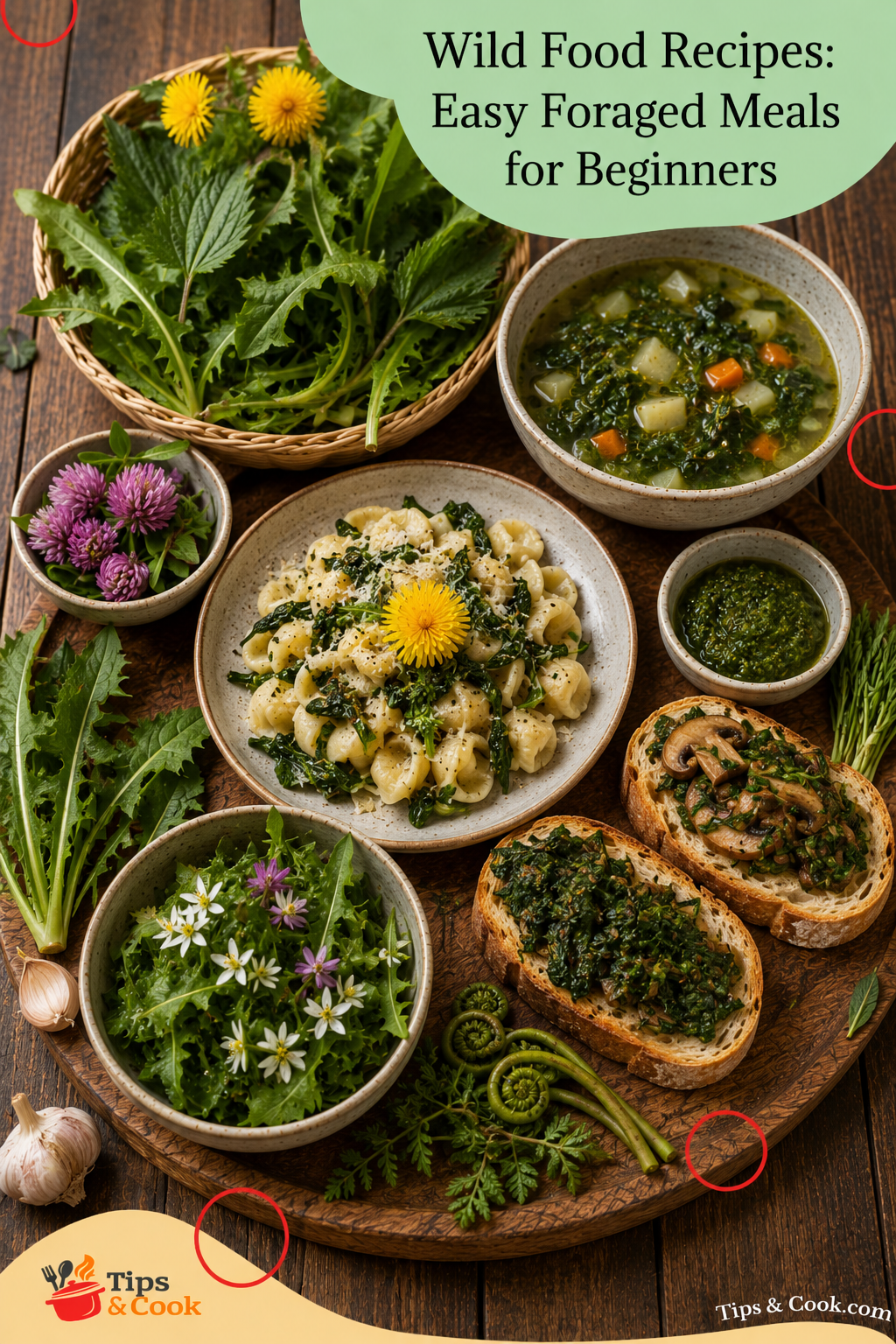
1. Wild Green Salad
A simple salad made from safe edible greens like dandelion leaves or chickweed.
Ingredients:
- Fresh wild greens
- Olive oil
- Lemon juice
- Salt
Method:
Wash the greens thoroughly. Mix with olive oil, lemon juice, and salt. Serve fresh.
2. Wild Garlic Butter Toast
Wild garlic is one of the safest foraged foods for beginners.
Ingredients:
- Wild garlic leaves
- Butter
- Bread slices
Method:
Blend wild garlic with butter. Spread on toast and lightly toast again. The flavor is rich and aromatic.
3. Foraged Berry Bowl
A refreshing seasonal dish using wild berries.
Ingredients:
- Wild berries (strawberries, blackberries)
- Honey
- Yogurt
Method:
Mix berries with yogurt and drizzle honey on top. This is a sweet and simple foraged food recipe.
Wild Edible Plant Recipes You Should Know
Learning wild edible plant recipes helps you expand your cooking safely and creatively.
Here are some commonly used wild edible plants:
- Dandelion leaves
- Nettle leaves
- Plantain leaves
- Chickweed
- Wild mint
Example: Nettle Soup
Ingredients:
- Fresh nettle leaves
- Onion
- Garlic
- Vegetable broth
Method:
Cook onion and garlic first, then add nettles and broth. Simmer for 10–15 minutes and blend.
Wild Plant Recipes for Beginners
If you are completely new, start with simple preparation styles. These wild plant recipes for beginners are safe and easy:
Boiled Wild Greens
Boil edible greens for a few minutes and serve with salt and olive oil.
Wild Herb Tea
Steep wild mint or safe herbs in hot water for a natural herbal tea.
Simple Stir-Fry
Lightly sauté wild greens with garlic and oil.
These methods keep the natural taste while making the food safe and digestible.
Safety Tips Before Trying Wild Food Recipes
Key safety rules:
- Always identify plants using reliable guides
- Avoid unknown mushrooms
- Harvest from clean, chemical-free areas
- Start with well-known edible plants only
- When in doubt, do not eat it
Benefits of Wild Food Recipes
Here’s why people love wild food recipes:
- Fresh and seasonal nutrition
- Low cost or free ingredients
- Strong connection with nature
- Supports sustainable living
- Encourages healthier eating habits
How to Start With Wild Food Recipes
If you are a beginner, follow this simple path:
- Learn 5–10 safe wild plants
- Start with simple easy wild food recipes
- Use basic cooking methods (salads, teas, soups)
- Avoid risky ingredients like unknown mushrooms
- Practice seasonal foraging
With time, you can expand into more advanced Wild food recipes.
FAQs
What are wild food recipes?
They are recipes made using edible plants, herbs, and ingredients found naturally in the wild.
Are wild food recipes safe?
Yes, but only if you correctly identify edible plants and avoid toxic species.
What is the easiest wild food recipe for beginners?
Simple wild green salads or herbal teas are the easiest to start with.
Can I cook wild edible plant recipes daily?
Yes, but only using safe and well-identified plants.
Why are wild food recipes popular?
Because they are natural, healthy, sustainable, and cost-effective.
Conclusion
Wild food recipes offer a unique way to reconnect with nature while enjoying healthy and natural meals. From simple salads to herbal teas and soups, there are many ways to explore this style of cooking.
If you are just starting, focus on easy wild food recipes and slowly learn more about wild edible plant recipes and foraged food recipes. With the right knowledge and care, wild cooking can become a powerful part of your lifestyle.
Nature already provides everything—you just need to learn how to use it safely and creatively
Explore More>>